Get in touch with AQUA Company

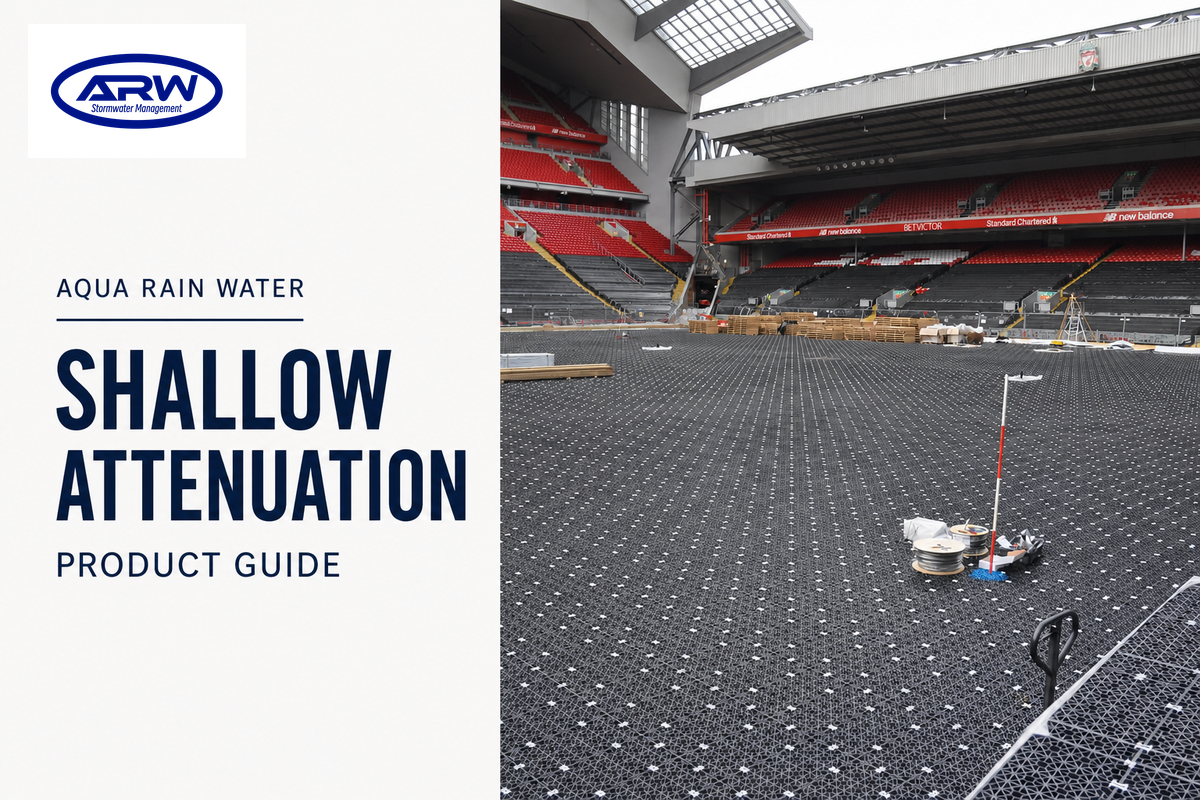
A shallow attenuation tank product is a system of low-profile modules that stores stormwater. Project acceptance will depend on a complete drainage design along with installation evidence, the supplied product and access for maintenance.
With a small excavation margin, several people can be waiting on the same answer: is this installation ready to cover? This guide will help organize the evidence behind that answer to be carried through to the end goal of handover.
- Check the depth budget with base, tank, cover and finished surface.
- Separate the test results of the product from the review of the system installed.
- Resolve recorded deviations and record concealed work prior to the release of the applicable hold point.
- Agree how inspection, sediment removal and maintenance responsibility will work after occupation.
For models and dimensions, and for an enquiry, use the AQUA shallow attenuation tank product page. The checks below support a project discussion, while design and acceptance remain with the responsible parties of the project.
What a Shallow Attenuation Tank Does and What the Datasheet Cannot Confirm
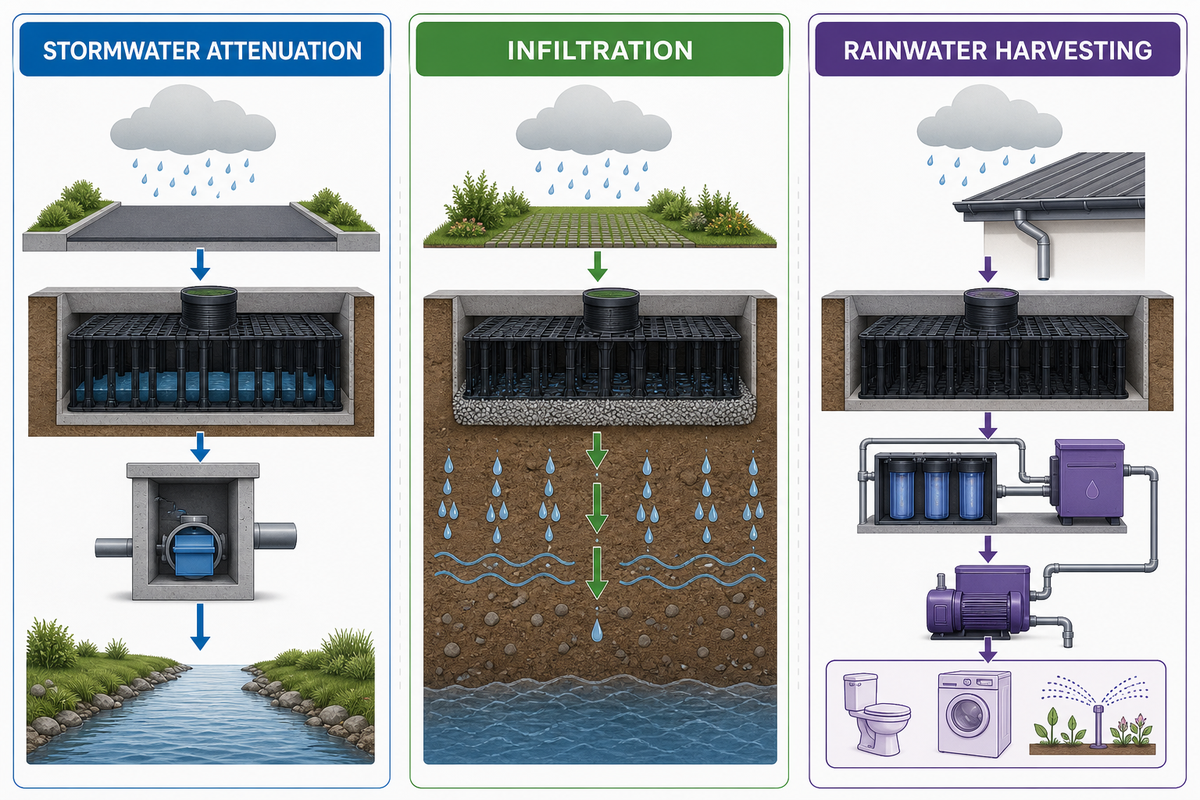
A shallow attenuation tank temporarily holds surface water while a designed outlet controls discharge. Its low profile may suit a constrained layout, but storage capacity alone can’t establish acceptable loading, groundwater suitability or drainage performance. Review the modular tank within the site’s stormwater management plan, including treatment, overflow and maintenance.
Follow the water route. A lined attenuation system stores runoff for controlled release. A soakaway uses infiltration into suitable ground. A geocellular system can serve either arrangement, but its wrap, outlet and ground assessment must match the approved function.
Sustainable drainage systems require review of proposed underground storage within the wider system. England’s national SuDS standards address source control, water quality, amenity and biodiversity alongside the management of runoff, where a tank on its own wouldn’t provide those outcomes.
- Stormwater attenuation: agree the storage volume available during the design event and the discharge arrangement.
- Rainwater harvesting: record any separate water reuse function and its operating assumptions; general water storage isn’t automatically available for attenuation.
- Heavy rainfall: identify the approved exceedance route and residual flood risks when the drainage system’s design capacity is exceeded.
Review note: For a submission providing only a litre value, ask for the drainage drawing to illustrate how water enters and leaves the system, and where excess runoff is disposed of. Foul water must remain outside this surface water review unless and until a separately approved design manages it.
Freeze Site Evidence Before a Shallow Dig or High Water Table Review
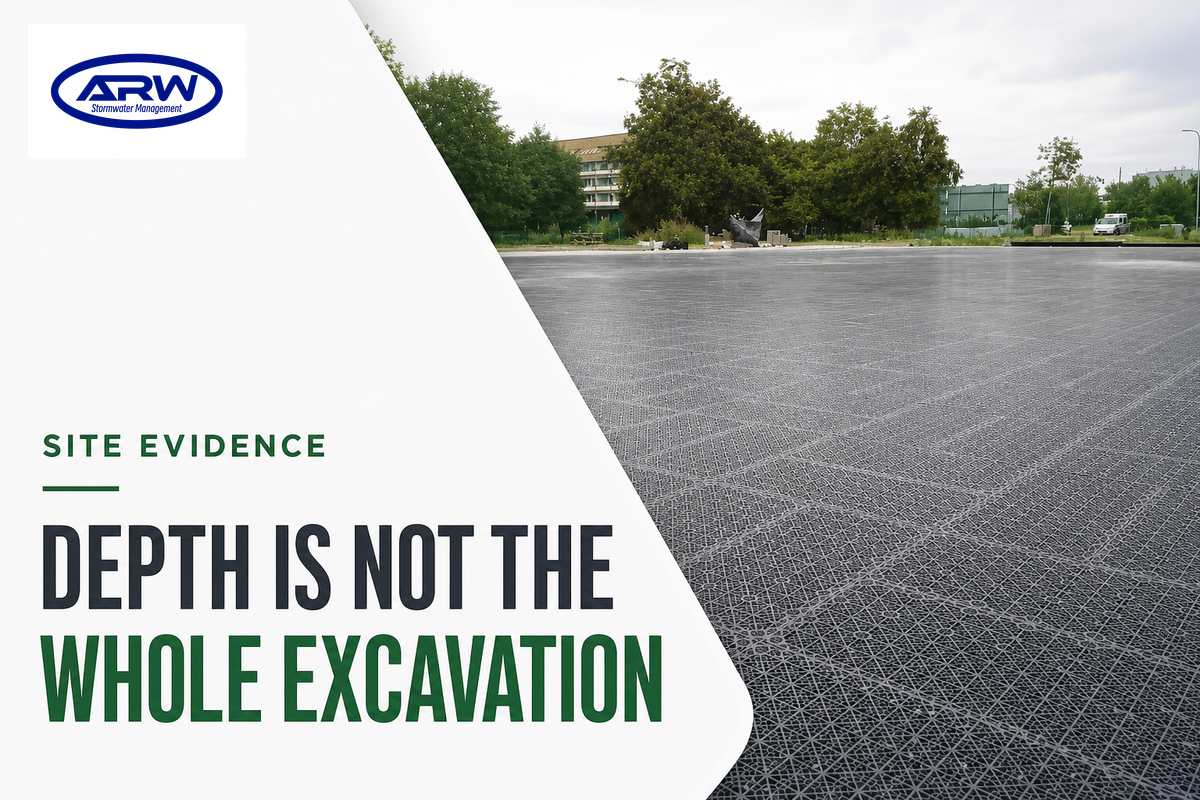
Before proceeding with a shallow tank layout, confirm the surveyed levels and ground conditions, assess the groundwater, and consider the loading assumptions. Module height isn’t the only consideration in the excavation. The proposed build-up must also account for the supporting layers, the covering layer, surface building works, and interfaces with pipes and cables.
Supplier-published facts to verify against the order
- AQUA lists ARW-SA-85, ARW-SA-150, ARW-SA-200 and ARW-SA-250, with nominal heights of 85 mm, 150 mm, 200 mm and 250 mm.
- The shared footprint is 1000 × 500 mm; the published void ratio is 95%.
- These module dimensions aren’t the total excavation depth or an approved cover requirement.
For the review, use the existing shallow-tank depth budget tool and define the dimensions. The output still requires the project’s assumptions of ground and structure. Even a shallow profile doesn’t justify suitability for a high water table.
The US Environmental Protection Agency’s groundwater-protection guidance asks designers to consider soils, groundwater, pollutants, and previous use of the land. Brownfield sites therefore require more than just a statement that a product is specifically designed for use in shallow applications.
- For sites where deep excavation is constrained, ask which revised levels actually reduce the need for deep work.
- Gardens and similar landscaped sites need a stated loading basis too; a pedestrian or non-trafficked designation doesn’t describe every construction or maintenance load.
- Block paving and other finished surfaces belong in the coordinated build-up; shallow depths don’t remove that interface.
Match Product Submittals to the Installed-System Review
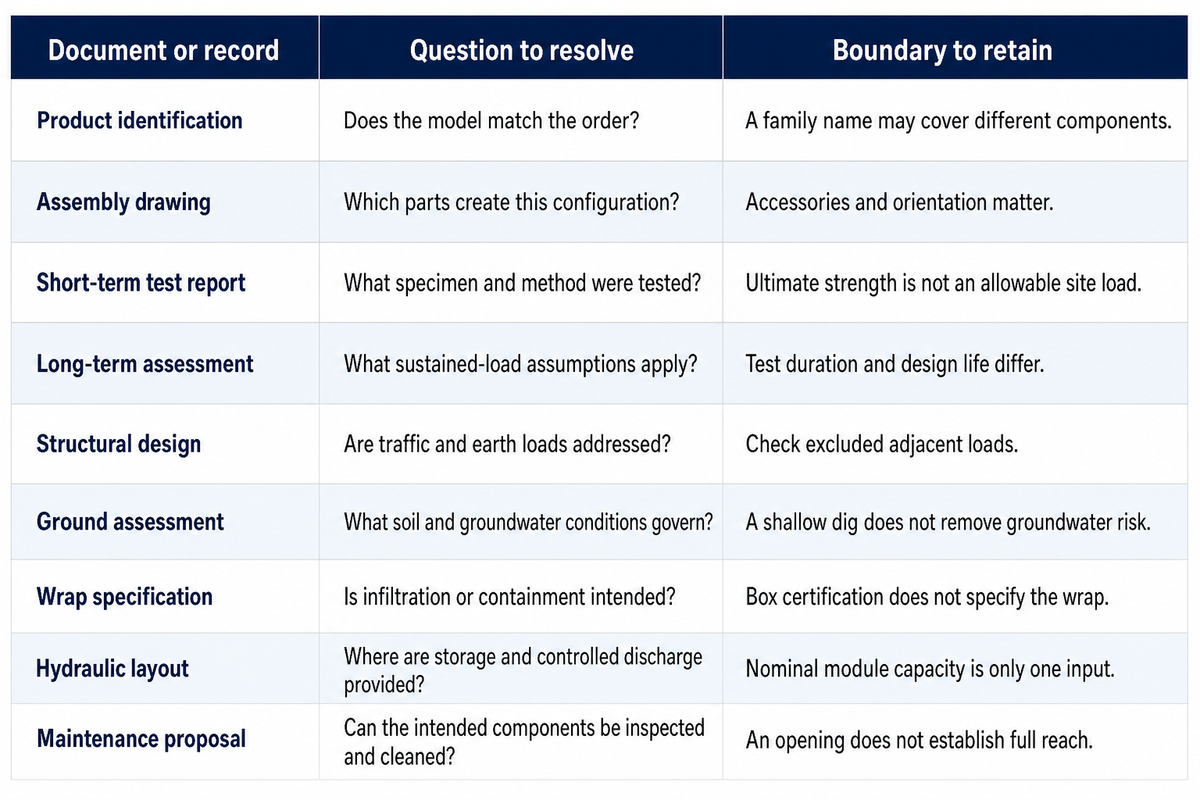
Each shallow attenuation tank product PDF submitted should include a description of the system and the scope of the evidence. Different types of compression results, long-term behavior and the details of the installation answer different questions. Each of these documents should be matched to the proposed configuration and the conditions outside the scope of the documents should be resolved by the responsible designer before the submission can be considered complete.
The BPF Pipes Group’s November 2025 guidance distinguishes short-term and long-term compression tests and identifies guidance for structural design. A reported ultimate compression value can’t on its own justify an allowable project loading or traffic classification.
A standard has a boundary. BSI’s published scope for PD CEN/TS 17152-4:2025 excludes geotextiles and geomembranes, seismic loading, lateral loads from adjacent structures and embankments, tree influence, and backfill outside the specified reference. These conditions need separate consideration where relevant.
| Document or record | Question to resolve | Boundary to retain |
|---|---|---|
| Product identification | Does the model match the order? | A family name may cover different components. |
| Assembly drawing | Which parts create this configuration? | Accessories and orientation matter. |
| Short-term test report | What specimen and method were tested? | Ultimate strength is not an allowable site load. |
| Long-term assessment | What sustained-load assumptions apply? | Test duration and design life differ. |
| Structural design | Are traffic and earth loads addressed? | Check excluded adjacent loads. |
| Ground assessment | What soil and groundwater conditions govern? | A shallow dig does not remove groundwater risk. |
| Wrap specification | Is infiltration or containment intended? | Box certification does not specify the wrap. |
| Hydraulic layout | Where are storage and controlled discharge provided? | Nominal module capacity is only one input. |
| Maintenance proposal | Can the intended components be inspected and cleaned? | An opening does not establish full reach. |
Review note: If a buyer asks if a stronger crate addresses a loading concern, identify the concern first. An unaddressed ground or adjacent structure issue requires a design solution, even with a component that has a higher test value. Expressing a vehicle mass in tonnes also requires the relevant load distribution and design method; it can’t be compared directly with a compression value that’s stated in terms of pressure.
Receive and Assemble Traceable Attenuation Crates
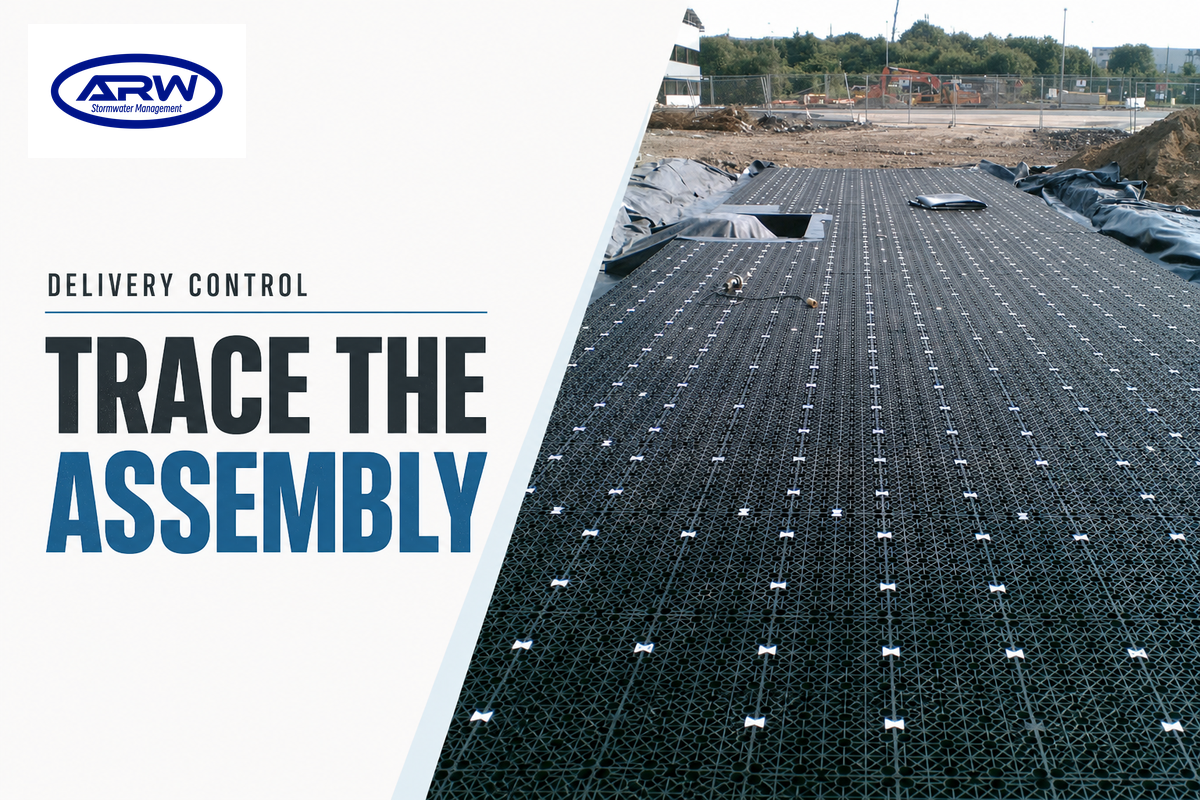
Receiving checks should connect delivered stormwater attenuation crates to the approved order and assembly instructions. Document the identification, quantity, and appearance and note any substitutions before it becomes difficult to identify the parts. Log any damaged or mismatched parts and request a disposition; a supplier’s batch testing or an overview of the testing of the batch doesn’t resolve a particular delivery discrepancy.
AQUA describes approximately 2% sampling checks on its core molded products for dimensions, appearance and compression. That’s a supplier published process statement. This doesn’t indicate that every unit was tested, establish an acceptance quality limit plan or confirm that independent certification was performed.
Do
- Photograph labels and delivery condition.
- Match accessories to the assembly drawing.
- Separate questionable items pending review.
Don’t
- Treat recycled material content as a load rating.
- Accept undocumented substitutions.
- Hide unresolved damage beneath later work.
Separate the purchase description of modules made from recycled polypropylene from performance evidence. If the supplier delivers geotextile or geomembrane as procured supporting materials, identify their specifications and records as well. Shipping multiple components together doesn’t make each component fabricated in-house.
Record the Base, Wrap and Drainage Interfaces Before Cover
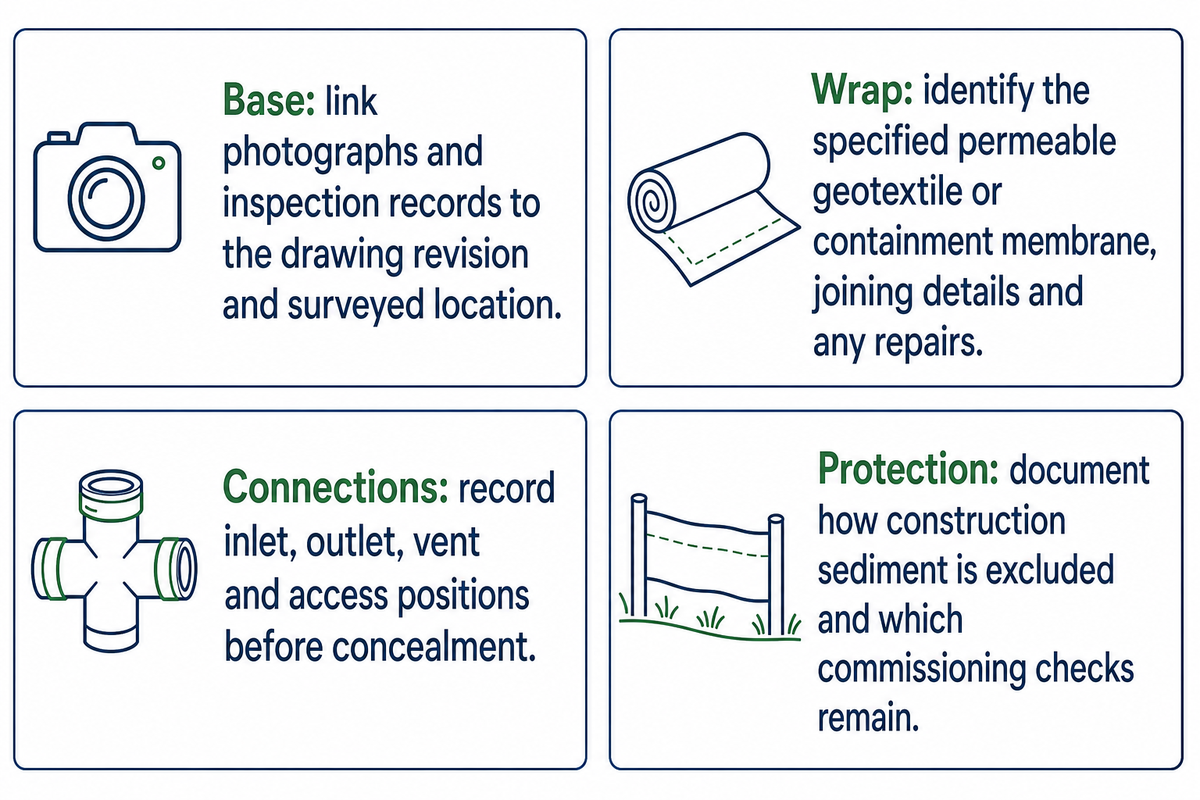
Pre-cover records need to document details that later work will conceal. Agree the inspection points and evidence format before assembling, using the approved design and product instructions. Clear records are needed for base preparation, wrapping, connections, and protection from construction sediment, with a person assigned to verify any deviations.
Protection during construction and commissioning, and the operation phase, is addressed by England’s national standards. The actual base, interfaces, and sequence and method of backfill should be addressed in accordance with the project requirements. This manual doesn’t provide values for compaction, lifting methods, or recommendation of a universal cover depth.
- Base: link photographs and inspection records to the drawing revision and surveyed location.
- Wrap: identify the specified permeable geotextile or containment membrane, joining details and any repairs.
- Connections: record inlet, outlet, vent and access positions before concealment.
- Protection: document how construction sediment is excluded and which commissioning checks remain.
The geotextile specification checklist can help sort material information. Filtration, separation and non-permeable containment have different functions; substitute materials need to be reviewed based on the intended drainage arrangement. Details of the joining and repair of an impermeable membrane also need to be reviewed.
For an attenuation or soakaway arrangement, confirm which interfaces allow water infiltration and which interfaces retain water. Calling a product a soakaway tank doesn’t resolve that design issue, particularly where storage tanks connect to existing drainage assets.
Use the 5-Record Cover-Release File Before Backfill
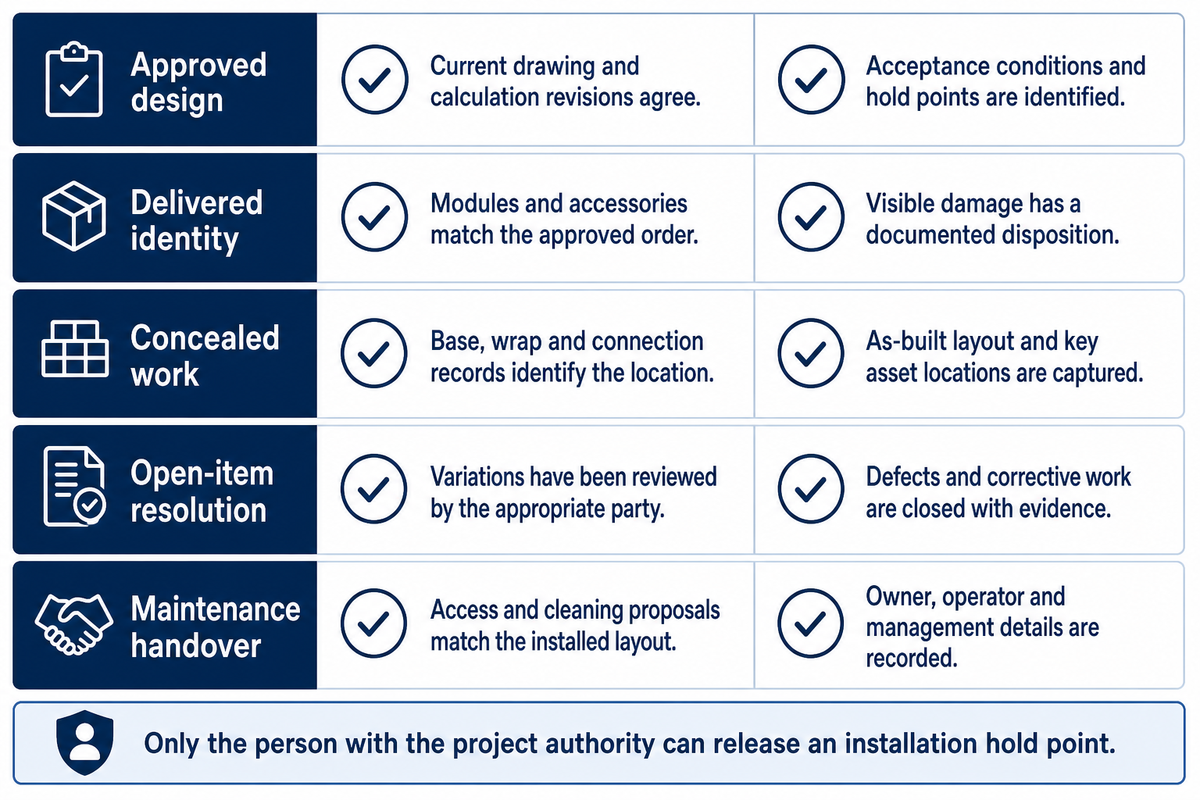
The 5-Record Cover-Release File is an editorial method for organizing design, delivery, concealed work, issue resolution, and maintenance records. Confirm the file with the project team before work commences. The file assists reviewers in locating records; only the person with the project authority can release an installation hold point.
| Record group | Check | If incomplete |
|---|---|---|
| Approved design | Current drawing and calculation revisions agree. | Request the coordinated revision. |
| Approved design | Acceptance conditions and hold points are identified. | Confirm the responsible reviewer. |
| Delivered identity | Modules and accessories match the approved order. | Record the mismatch or substitution. |
| Delivered identity | Visible damage has a documented disposition. | Keep the affected item unresolved. |
| Concealed work | Base, wrap and connections have located records. | Obtain the required inspection evidence. |
| Concealed work | As-built layout and key asset locations are captured. | Arrange the necessary survey or record. |
| Open-item resolution | Variations have been reviewed by the appropriate party. | Refer the change through the project procedure. |
| Open-item resolution | Defects and corrective work are closed with evidence. | Keep the closure item open. |
| Maintenance handover | Access and cleaning proposals match the installed layout. | Resolve reach and method limitations. |
| Maintenance handover | Owner, operator and management details are recorded. | Assign responsibility before handover. |
As evident from the 2026 Epsom and Ewell planning decision, the details do matter. Its SuDS verification condition asks for variations, rectified defects, management-company details, an as-built layout and grid references for key drainage elements. This isn’t a checklist for every project.
Review note: Separate permission to cover a particular region from final commissioning or occupation approval. The reviewer needs to know which stage a record closes and which actions are still pending.
Handover Flow Control, Inspection Access and Maintenance Records
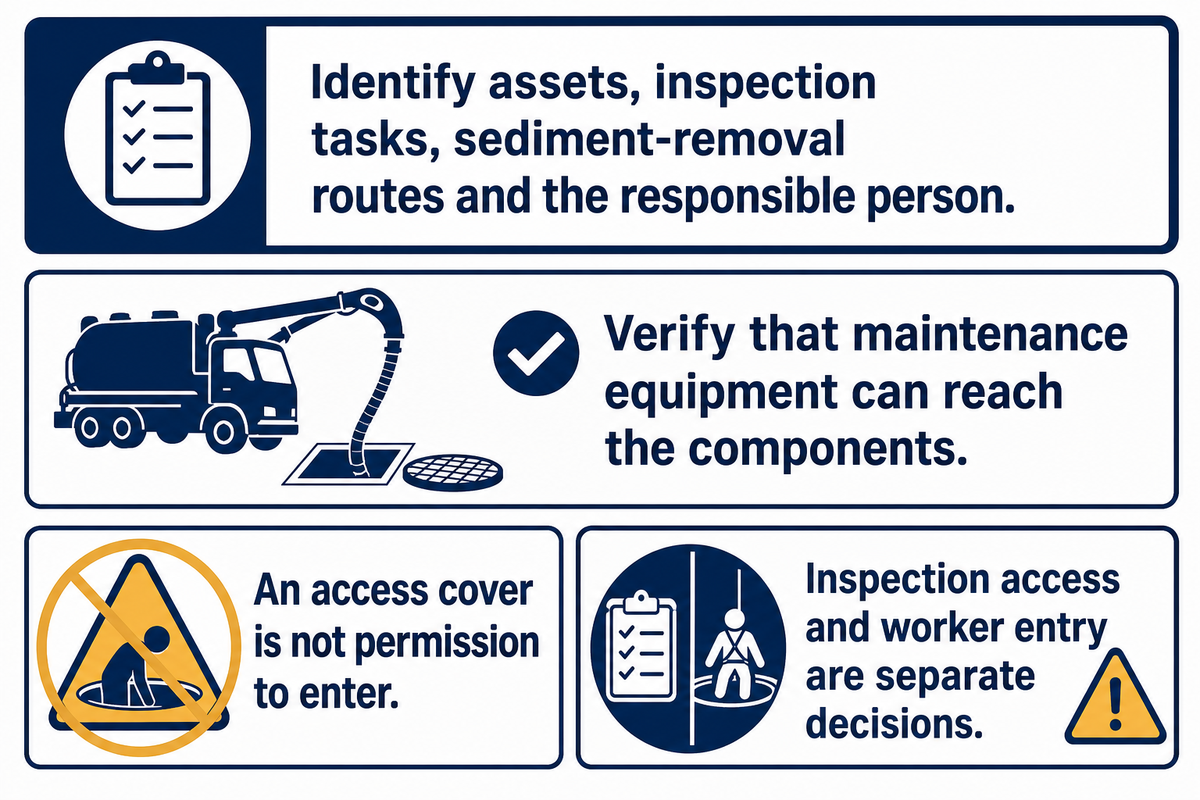
The maintenance handover needs to provide information on the accessible components, inspection tasks, the route to be followed for sediment removal and the person responsible, with enough detail for the future operator to locate the inlet, pretreatment components, outlet and flow-control chamber on the installed drawing and connect each task to the inspection record that will be kept. This plan needs to be in agreement with the installed arrangement and should include pretreatment and the flow control chamber. Even a drawing with access points will be incomplete if the proposed maintenance equipment can’t access the components to be maintained.
“Can be difficult to maintain”
AQUA’s published assembly description states that the module isn’t intended to be reopened once assembled. Ask how much of the proposed tank system can be accessed for inspection and cleaning using which access ways and methods. Just because a pipe is inspectable doesn’t mean that the enclosed space is accessible.
For high-volume attenuation, a large storage volume makes the maintenance drawing more important. Note how the operator will manage stormwater sediment at the accessible points prior to accepting the proposed layout for stormwater storage.
Inspection access and worker entry are separate decisions. The UK HSE advises avoiding confined-space work wherever possible. Where entry cannot be avoided, competent parties need to assess and control the risks and arrange emergency measures. An access cover is not permission to enter.
Check the Applicable SuDS Design Guidance and Acceptance Checklist

Note the jurisdiction, current edition of the document, and the approving body’s requirements before applying the SuDS checklist. For SuDS attenuation tanks, published instructions, the product standard and project conditions play different roles. Record what the requirements are for the installation and who accepts each item, particularly in circumstances where the underground storage combines with other drainage systems.
The 2025 national standards publication defines non-statutory standards for England. This shouldn’t be presented as UK-wide law and shouldn’t automatically be extended to another country’s project.
- Record the edition and relevant clauses rather than writing only “SuDS compliant”.
- Check project-specific approval, adoption and verification conditions.
- Resolve conflicting details between the drainage drawing, product instructions and proposed construction method.
- Identify the documents needed at pre-cover, commissioning and final handover stages.
A request for a written response should be made when a submission claims compliance and fails to state its bounds. The shallow geocellular drainage system overview can frame the product discussion, while the project’s applicable requirements govern acceptance of the proposal.
SuDS is also used in the phrase sustainable urban drainage systems. Whichever terms the project employs, surface water management requires defined results: how the scheme will manage surface water and how it will reduce flood risk, and what risks will remain. Below-ground attenuation is one of the considerations in this assessment.
Compare Installed Cost and Long-Term Responsibility on the Same Scope
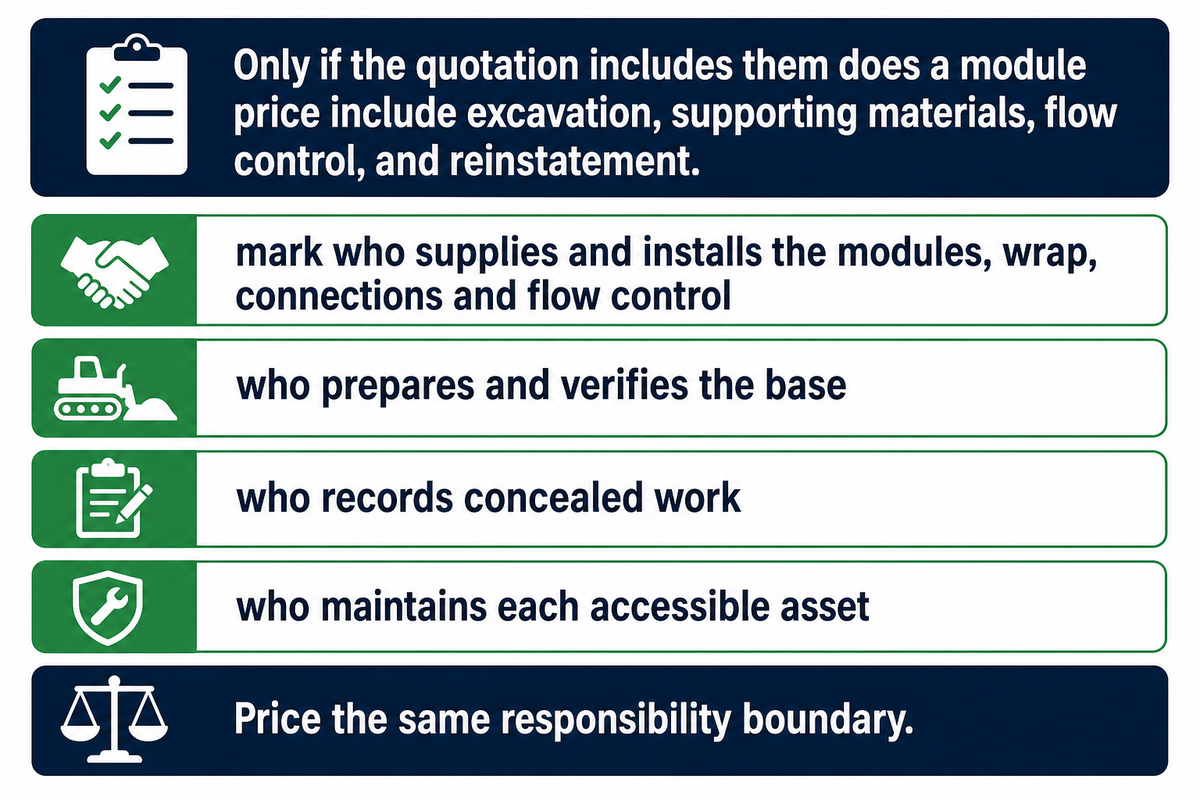
Line-by-line comparisons of shallow attenuation tank product cost against the same drawings and the same work and maintenance scopes will highlight what a given module price includes, particularly when the supplier’s offer, the contractor’s installation allowance and the future operator’s maintenance responsibilities appear in separate documents that must be read together before a total has meaning. Only if the quotation includes them does a module price include excavation, supporting materials, flow control, and reinstatement. Before deciding that a lower supply price results in a lower project cost, it’s important to identify exclusions and who’s responsible for them.
In whole-life comparisons, Stuart Crisp’s Water Magazine specification article includes maintenance, replacement and installation logistics. The commercially affiliated article expands the discussion; it cites no transferable AQUA installed-price benchmark.
Before comparing totals: mark who supplies and installs the modules, wrap, connections and flow control; who prepares and verifies the base; who records concealed work; and who maintains each accessible asset. Price the same responsibility boundary.
Use the product scope checklist to prepare questions for AQUA. Supply information must be separated from the contractor’s construction scope and the designer’s project verification.
When comparing stormwater attenuation systems, ask each bidder to describe the same attenuation solution and its exclusions. An incomplete installed-cost comparison for a water attenuation quotation would be a quotation that omits access or wrap work.
Key takeaway
A shallow attenuation tank handover file should connect the supplied modules to the accepted design, concealed-work records, resolved changes and a workable maintenance plan.
Frequently Asked Questions
What is the purpose of an attenuation tank?
Read the answer
An attenuation tank temporarily stores stormwater and releases it through a designed outlet helping the drainage system manage peak runoff. It has a purpose which goes beyond holding a stated number of litres. For project handover, the approved storage requirement, operating levels, discharge arrangement and overflow route should be recorded. From these, it can be determined how the supplied modules fit the drainage design; the module datasheet alone can’t achieve this.
What is the lifespan of an attenuation tank?
Read the answer
There’s no single lifespan that can be assigned to every attenuation tank. Ask what design life the project specifies and what’s the basis of the proposed material, loading, installation and maintenance. A product warranty, a short-term compression result and design-life assessment answer different questions.
Mention in the handover file the scope and assumptions of the warranty, compression result and design-life assessment, alongside the related maintenance responsibilities needed for the system’s intended function, so that a future reviewer can distinguish the supplier’s commercial promise from the tested specimen and the conditions assumed by the project designer when reviewing the proposed service life.
How much does an attenuation tank cost?
Read the answer
A helpful distinction is the supplied product as opposed to the installed system. Ask for quotes for modules, excavation, base preparation, wrap, pipe interfaces, flow control, access for inspection, backfill, reinstatement, and verification work. Evaluate quotes against the same drawings and responsibilities.
An attenuation tank cost per m3 figure can conceal variations in project location, site conditions, agreed upon supply, and construction.
Is a soakaway the same as an attenuation tank?
Read the answer
A soakaway requires infiltration into suitable ground. A lined attenuation tank stores runoff for controlled release. Confirm the approved water route, conducted soil investigation and assessment, and groundwater conditions and provide wrap detail before accepting either configuration.
Can a shallow attenuation tank be accepted before the maintenance plan is ready?
Read the answer
Treat a missing maintenance plan as an unresolved handover item and refer it to the entity responsible for acceptance. The installer, designer, supplier and the future operator may all have pieces of the answer. Collate them all before agreeing that the system is ready for service.
Note who can inspect the inlet, pretreatment components, outlet, and flow-control chamber; how sediment will be cleared; what access must be left unobstructed; and where the log of inspections will reside. The plan has to include a method of cleaning appropriate to the actual product and installed layout. Don’t assume all crates can be opened or their interiors are accessible for cleaning.
Agree on the resolution of incomplete documentation, damage to components, and inaccessible features and who will finalize each item. The product data sheet provided by the manufacturer is useful; however, it can’t define the owner’s maintenance responsibility or substitute for the project’s completion and acceptance. Safety of personnel and equipment access to the assets also need to be addressed.
Prepare a clearer shallow-tank enquiry
Bring the drawing revision, depth constraints, proposed model and unresolved interface questions. Contact AQUA about product information and keep project design or installation decisions assigned to the responsible team.
References & Sources
- Defra: National standards for sustainable drainage systems, Principles and Standard 7; England, 2025.
- GOV.UK publication status and scope.
- US EPA: Green Infrastructure and Groundwater Protection, siting questions.
- BPF Pipes Group: Design guidance for geocellular systems, November 2025.
- BSI: PD CEN/TS 17152-4:2025, publicly available scope.
- Epsom and Ewell Planning Committee, 26 February 2026, condition 15; project-specific example.
- CIRIA Susdrain: Geocellular storage systems.
- HSE: Introduction to working in confined spaces.
- Water Magazine: Specifying for SuDS, Part One, Stuart Crisp, ADS, 2023; commercial practitioner perspective.
![Aquavoid System Shallow Surface Drainage [Guide]](https://aquarainwater.com/wp-content/uploads/2026/10/aquavoid-system-shallow-surface-drainage-blog-featured-768x512.png)
![Ground Grid Applications & Ground Reinforcement [Guide]](https://aquarainwater.com/wp-content/uploads/2026/09/ground-grid-applications-ground-reinforcement-blog-featured-768x512.png)
![Ground Grid Applications & Ground Reinforcement [Guide]](https://aquarainwater.com/wp-content/uploads/2026/09/ground-grid-applications-ground-reinforcement-blog-featured-150x150.png)