Get in touch with AQUA Company
Geotextile Fabric for Drainage, Separation & Protection
We supply geotextile fabric in woven and nonwoven PP/PET constructions, from 100–800 g/m² and 1–6 m wide. Bring us your project specification for a matched roll configuration, supporting documents and coordinated supply with stormwater or lining products.
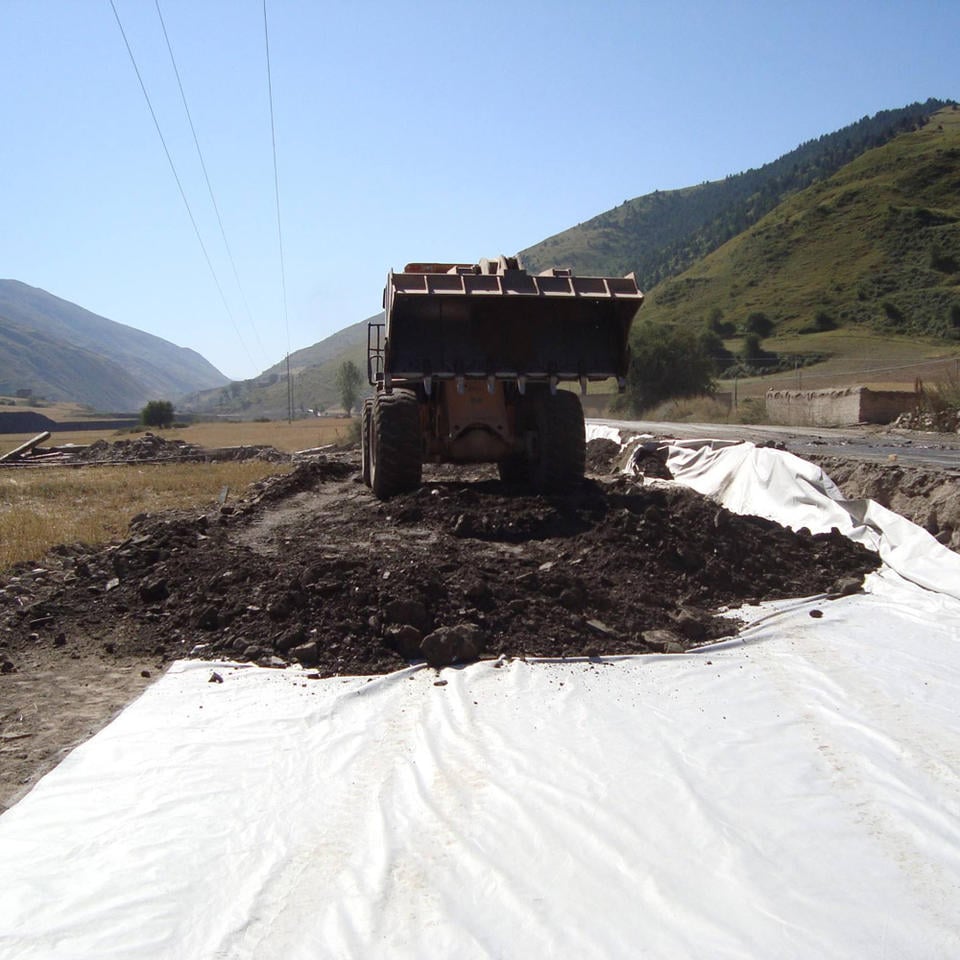
- Road and aggregate separation
- Soil filtration and subsurface drainage
- Geomembrane protection and stormwater applications
CLICK TO TOGGLE ⟲
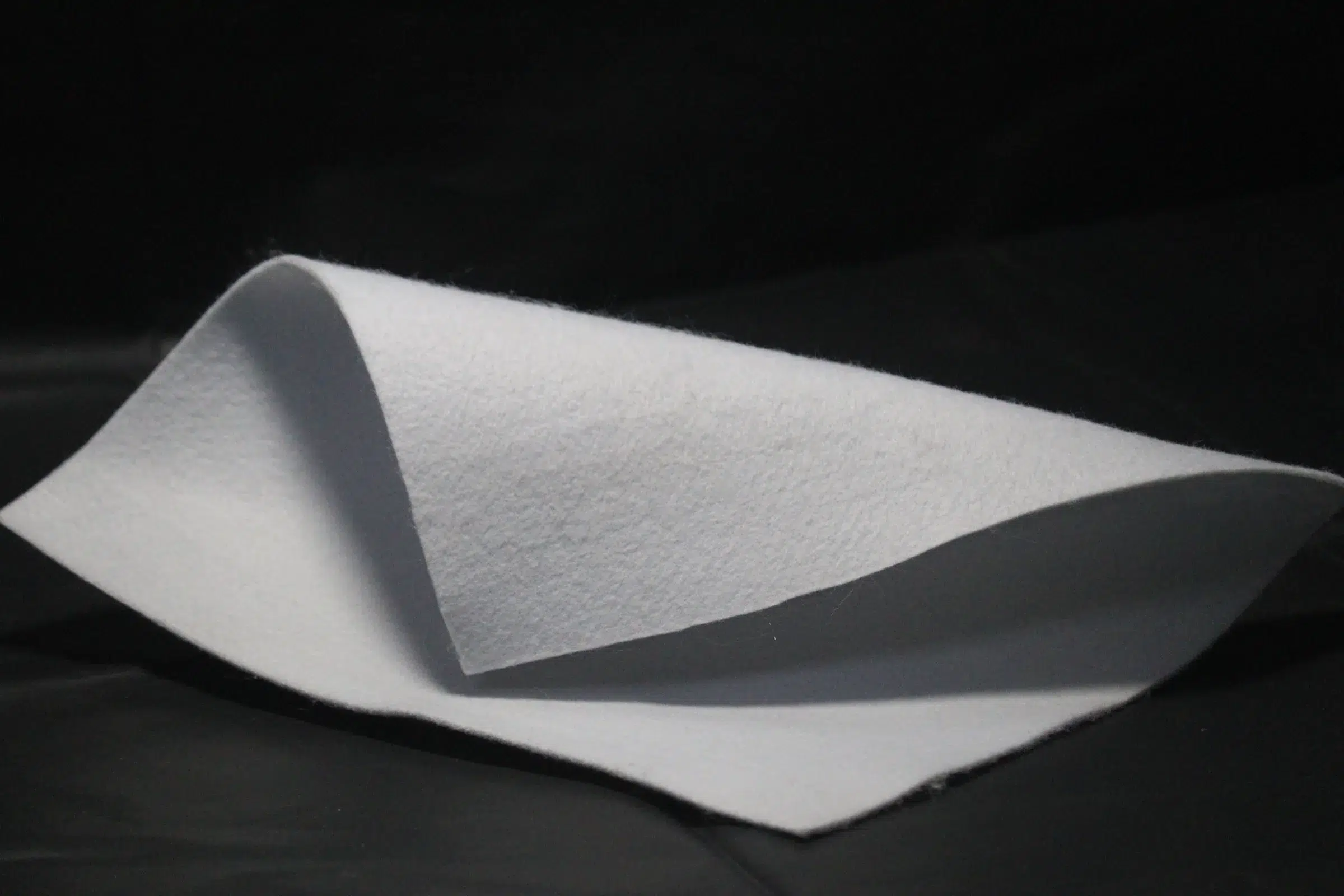
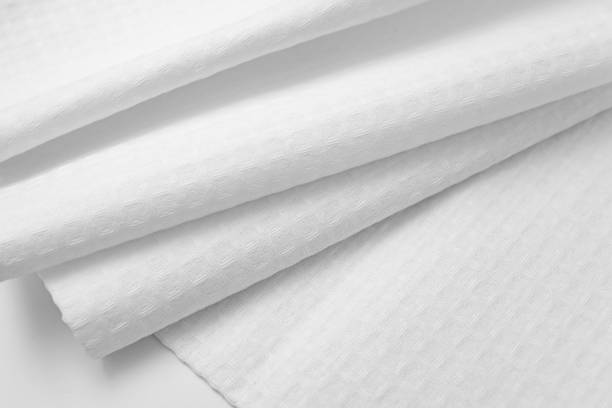
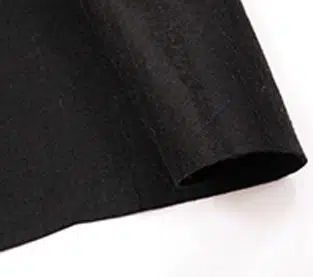
White geotextile roll with folded fabric showing its felt-like surface
Roll format and fabric surface shown for product selection.
Geotextile Supply at a Glance
AQUA supplies engineering geotextile rolls for drainage, separation and protection layers. Request a sample with the specified polymer, construction and nominal mass to review the proposed grade.
100–800 g/m²
Nominal mass options, with 150, 200 and 300 g/m² frequently supplied.
1–6 m wide
widths ordered are supplied with 5.8 meters, this helps you to plan the arrangement around site handling and overlaps.
50 / 100 m
Standard roll lengths, with custom lengths available.
Our material options include polypropylene and polyester geotextiles.
Our constructions include woven, staple-fiber nonwoven and filament nonwoven.
Free A4 sample; customer prepays freight.
AQUA Rain Water Woven and Nonwoven Geotextile Options
Selecting a roll by weight alone can result in the wrong grade: nominal mass does not establish soil retention or water flow. The AQUA Function-to-Roll Specification Map starts with the layer’s function and the project acceptance criteria, keeping the soil-filter requirements with the roll specification.
Selection inputs
Soil grading, retention criteria, opening size, water passage and clogging assessment.
Order discussion
Filter fabric with project-specified hydraulic properties; nonwoven or suitable woven construction.
Selection inputs
Subgrade, aggregate, installation loading and survivability.
Order discussion
Separation and stabilization requirements for roads, driveway or paved areas.
Selection inputs
System drawing, surrounding soil and filter design.
Order discussion
Nonwoven geotextile fabric around the specified system, with approved overlaps and details.
Selection inputs
Contact surfaces, expected loading, puncture and cushioning requirements.
Order discussion
Protection grade selected with the liner-system designer.
Selection inputs
Tensile strength, strain, direction, durability and design requirements.
Order discussion
Woven geotextile fabric or another engineered reinforcement specified for the duty.
Keep the soil and water criteria together
ASTM D4751 opening size and ASTM D4491/D4491M permittivity describe different properties. A permittivity result for an uncompressed, unobstructed specimen does not by itself establish installed-system performance. The filter must also retain the specified soil and be assessed for clogging.
Complete the supply specification
Geotextiles can be supplied with ordered AQUA modules and supporting lining materials. Record the functional requirements in the inquiry checklist before comparing nominal roll prices.
Material Specification
PP and PET Geotextile Materials
For polypropylene (PP) and polyester (PET) products, specify the polymer, fiber type, construction and required performance. Similar nominal mass or color does not establish that two geotextile grades are equivalent.
POLYMER
Structural Detail
Polypropylene geotextile
- PP staple-fiber and filament nonwoven options
- Woven polypropylene options by order
- Polymer and construction identified in the order specification
Polyester geotextile
- PET staple-fiber and filament nonwoven options
- Woven polyester options by order
- Grade reviewed against the project’s mechanical and environmental requirements
Compare performance, not appearance
When comparing proposed materials, check the tensile test method, direction and acceptance criteria alongside the hydraulic properties. ASTM D4595 wide-width tensile and ASTM D4632 grab tests measure different responses; their results should not be treated as interchangeable.
Review a sample
An A4 sample allows you to review handling and visible construction. Specify the polymer, construction and grade when requesting the sample.
Request an A4 SampleFabric Construction and Surface Options
Woven and nonwoven constructions have different characteristics, but a construction name cannot replace performance testing. Specify the construction and the test values required for the application.
MATERIAL_ANALYSIS // V_1.0
Staple-fiber nonwoven
WHAT TO SPECIFY
PP or PET, nominal mass and ordered grade
CHECKPOINT
Filtration, separation or protection criteria for the application
Woven fabric
WHAT TO SPECIFY
Polymer, weave and directional mechanical properties
CHECKPOINT
Hydraulic properties where water must pass through the layer
Filament nonwoven
WHAT TO SPECIFY
Polymer, filament construction and performance requirements
CHECKPOINT
Do not substitute solely on a similar felt-like surface
Heat-calendered surface
WHAT TO SPECIFY
Required finish and finished-fabric properties
CHECKPOINT
Recheck opening size, permittivity and the relevant mechanical tests
Geotextile Fabric Specifications
Use the roll dimensions and ordered grade to plan quantities and shipment loading. For engineering approval, specify the project’s hydraulic, mechanical and durability requirements, together with nominal mass per unit area in g/m².
Supply attribute
Available specification
Supply attribute
Nominal mass range
Available specification
100–800 g/m²
Supply attribute
Frequent nominal masses
Available specification
150 / 200 / 300 g/m²
Supply attribute
Ordered roll width
Available specification
1–6 m, including 5.8 m
Supply attribute
Standard roll length
Available specification
50 m / 100 m; custom lengths available
Supply attribute
150 g/m² nonwoven model
Available specification
ARW-GT-NW-150
Supply attribute
200 g/m² nonwoven model
Available specification
ARW-GT-NW-200
Supply attribute
300 g/m² nonwoven model
Available specification
ARW-GT-NW-300
Supply attribute
Sample format
Available specification
A4; free sample with customer-prepaid freight
Supply attribute
Mass tolerance
Available specification
According to the ordered standard
Supply attribute
Roll and packaging
Available specification
No paper or plastic core; labelled woven bag, normally without pallet or strapping
Performance inputs to add to the order
01
Mass Per Unit Area and Acceptable Limit When determining using the method described above such as ASTM D5261.
02
Opening size, test method and soil-retention criterion.
03
Permittivity or specified water-flow property, including test conditions.
04
Tensile method, machine/transverse directions, strength and elongation.
05
Puncture method and required result; ASTM D6241 uses a 50 mm probe.
06
Sampling, basis of acceptance by roll or lot, durability requirement and what records are required.
DOC.ID: GEO-PRICING-01
Geotextile Pricing and Lead Times
Geotextile pricing depends on the polymer, construction, nominal mass, required performance, roll dimensions, quantity and shipment scope. We review these inputs together so the quotation matches the products and documents required for your project.
 LOGISTICS.VIEW
Quotation Input Requirements
Grade and performance
Why it matters
Equal mass does not establish equal filtration or strength.
What to send
Specification and required test methods.
Roll dimensions and quantity
Why it matters
Layout affects overlaps, handling and usable coverage.
What to send
Width, length and total area or roll count.
Document and testing scope
Why it matters
Project acceptance may require identified samples or shipment records.
What to send
Required submittals and acceptance basis.
Packing and destination
Why it matters
Shipment configuration affects the delivered scope.
What to send
Destination, timing and any combined products.
Quality Assurance and Supporting Documents
Our product-related documentation and selected test reports are agreed for the specified product and order. Send the project’s approval requirements before ordering so the proposed grade and document scope can be checked together.
Align the product, test and acceptance basis
- Identify the polymer, construction, nominal mass and ordered roll dimensions.
- Record the required properties, test methods, units and test directions where applicable.
- Agree sampling, roll or lot acceptance standards and the necessary records.
- Review any proposed substitution against the project’s written requirements.
Method names matter
ASTM D4833 and ASTM D6241 puncture results are not interchangeable. Confirm the method actually used and the identity of the tested specimen before comparing reports or relying on them for a submittal.
“Aqua supplies products, supporting materials and product-related documentation.”
How We Work: Specification to Shipment
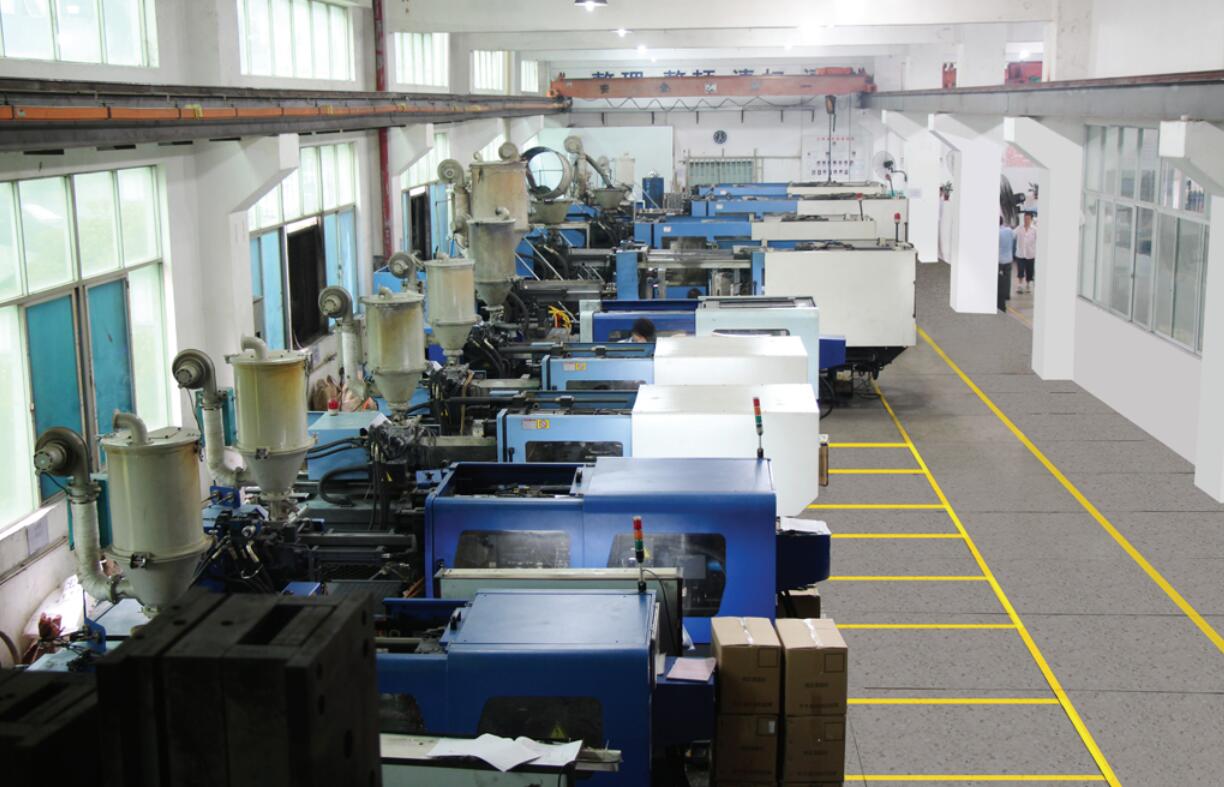
The agreed order defines product selection, packing and shipment requirements. Maintain one written specification throughout the order so a roll substitution does not change the intended filter or protection layer.
01
Submit the inputs
Provide the application, specification, quantity and destination.
02
Go through suggested design
Review the proposed polymer, construction, grade and roll dimensions.
03
Commercial aspects
Confirm quantities, product configurations, documents, packaging, shipment scope and timing at the quotation stage.
SYS_OP // ACTIVE
04
Settle approval
Review the required samples and product documents before finalizing the supply contract.
05
Pack & Load
We package the shipment and accompanying materials in accordance with your agreed requirements.
06
Retain order details
Forward the approved specification along with the related product documentation to the personnel receiving the rolls.
Materials & Applications
Geotextile Products and Applications
From visible construction to ordered grade
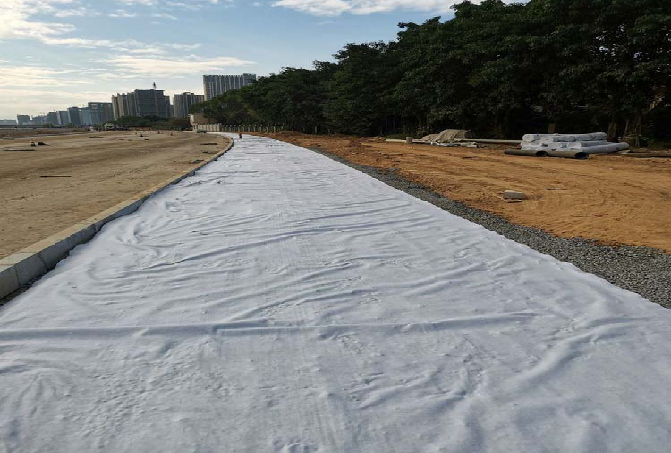
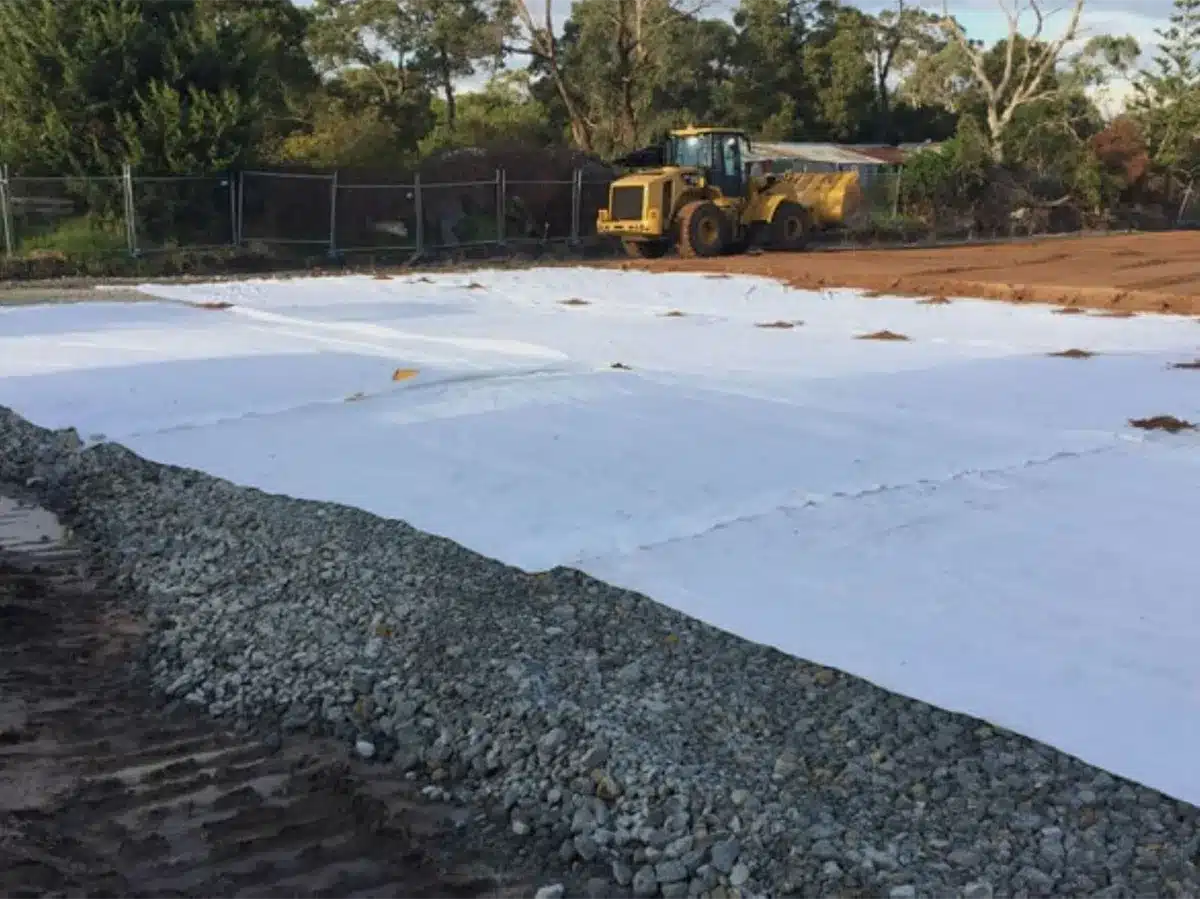
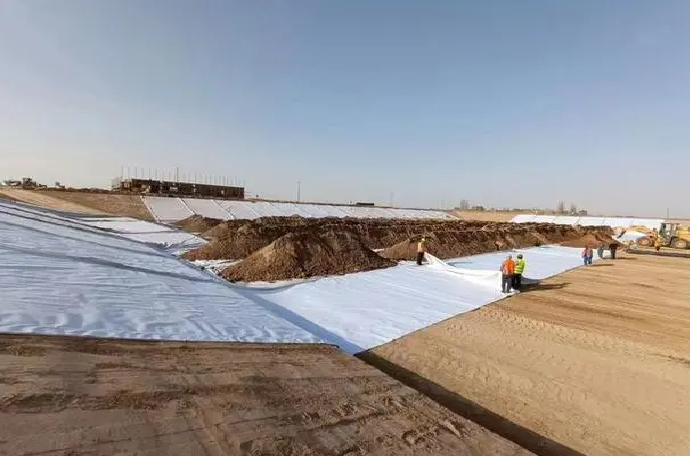
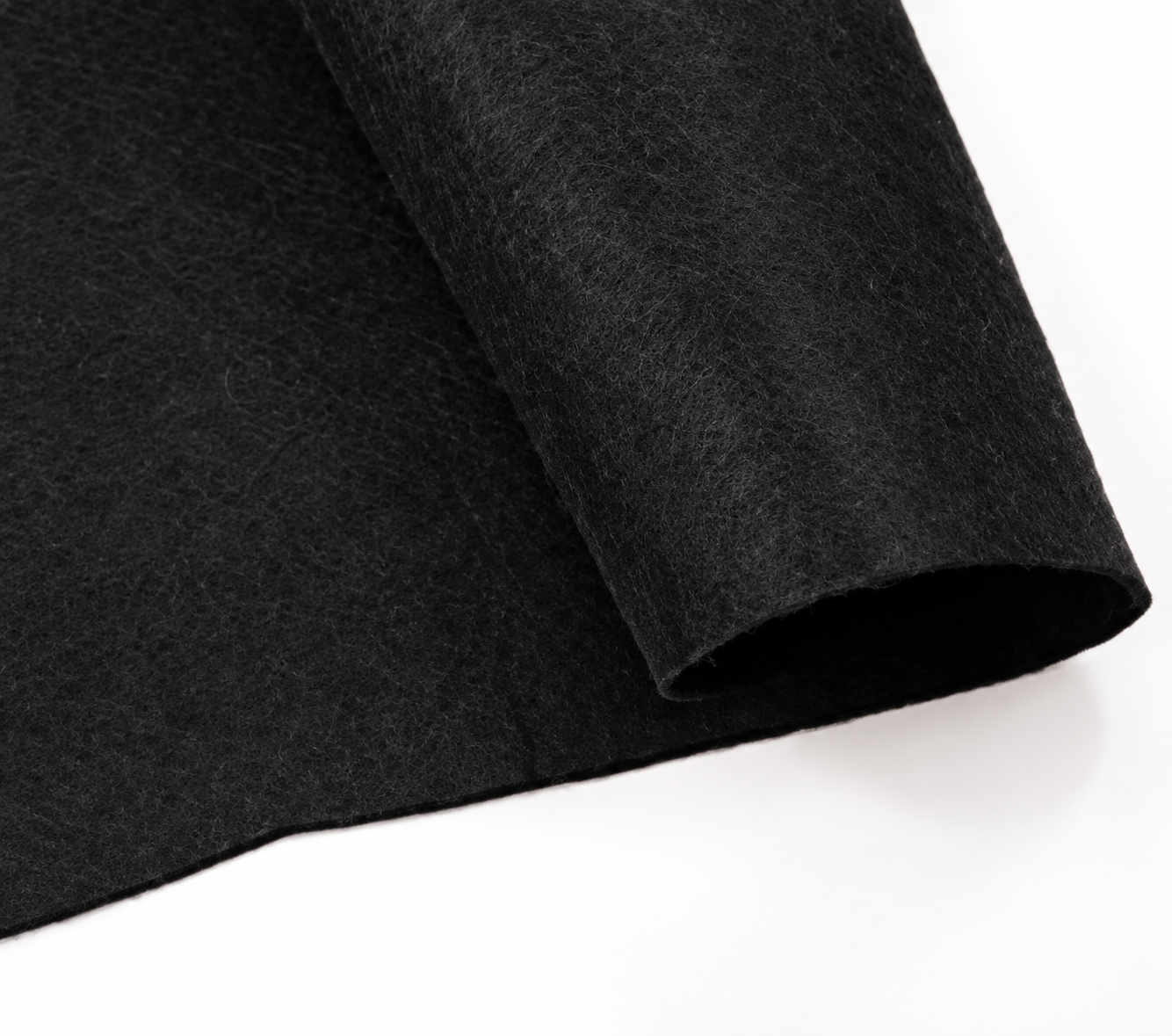
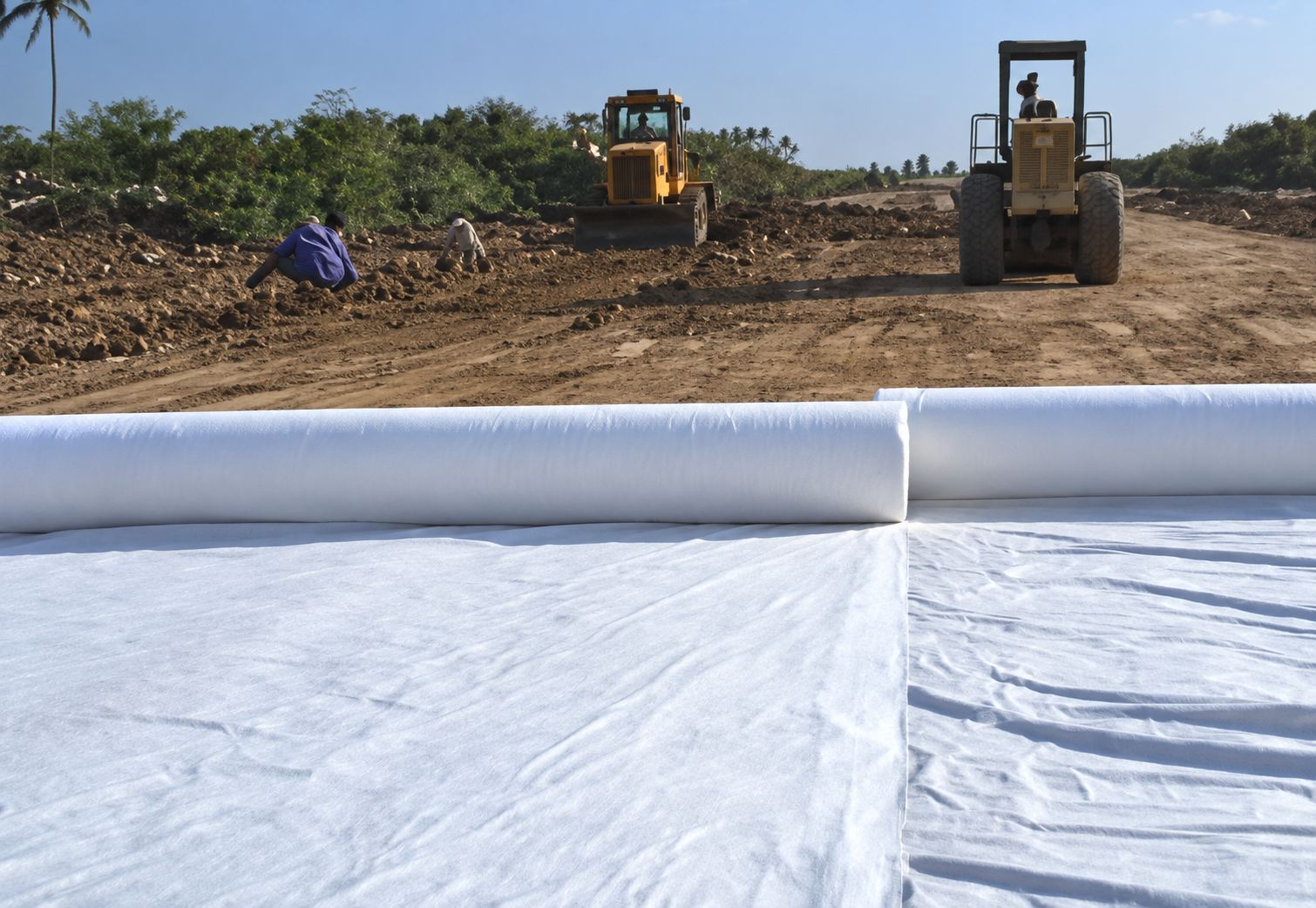
Our geotextile options cover road-base separation, drainage and liner protection. A sample helps review handling and placement; the agreed specification and relevant test results determine whether the proposed grade is suitable.
We keep customer and distributor identities confidential unless publication is specifically approved.
FABRIC DETAIL
SITE APPLICATION
Application Boundaries and Alternatives
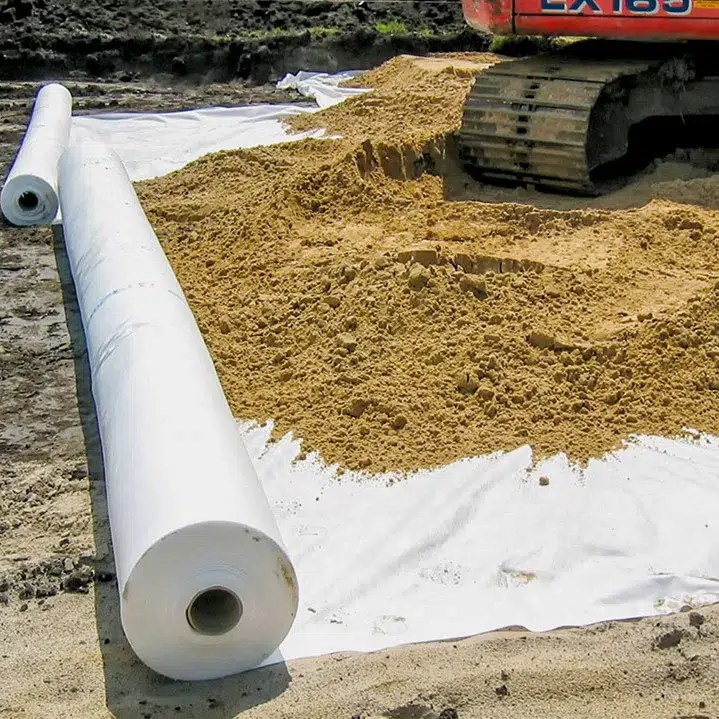
A geotextile may serve a specified function on its own or alongside other layers. Confirm the complete system build-up when ordering so the product name does not lead to an unsuitable installation detail.
VISUAL // GEO_03
SITUATION 01
A watertight tank or pond is required
SELECTION RISK
Permeable geotextile does not provide the watertight barrier.
NEXT STEP
Use the specified geomembrane or EPDM liner, with its designed protection layers.
SITUATION 02
Landscape fabric offered as an engineering substitute
SELECTION RISK
A weed-control description does not establish drainage, tensile or puncture requirements.
NEXT STEP
Compare the engineering specification and required tests.
SITUATION 03
A heavier roll proposed as an automatic upgrade
SELECTION RISK
More mass is not always the right call: mass alone does not establish opening size, water flow or fabric strength.
NEXT STEP
Compare ASTM D5261 mass separately from the performance requirements.
SITUATION 04
Long uncovered exposure planned
SELECTION RISK
Colour alone does not establish ultraviolet resistance or storage life.
NEXT STEP
Specify exposure requirements and agree storage and protection arrangements.
SITUATION 05
Specified filter omitted or replaced on site
SELECTION RISK
The soil-filter and drainage design has changed.
NEXT STEP
Obtain the project designer’s approval before substitution.
Protect the design intent
FHWA guidance treats retention, permeability and survivability as linked selection requirements. Keep the filter criteria in the order even when the immediate task appears to be simple soil separation.
Geotextile Engineering Tools
Nominal Mass
Selecting a roll by weight alone can result in the wrong grade: nominal mass does not establish soil retention or water flow. The AQUA Function-to-Roll Specification Map starts with the layer’s function and the project acceptance criteria, keeping the soil-filter requirements with the roll specification.
Roll Area
Layout affects overlaps, handling and usable coverage. Calculate width, length and total area or roll count for your project parameters.
Specification Checklist
Project acceptance may require identified samples or shipment records. Add your required documents to the specification checklist.
Geotextile Fabric FAQs
Start with the required function and performance specification. Nonwoven geotextiles are commonly selected for filtration, drainage and protection; suitable woven grades may be selected for separation or reinforcement. Match the actual grade to the project requirements rather than choosing by construction name alone.
A wider roll can reduce the number of overlaps, but width alone does not establish cushioning or puncture performance. Submit the proposed material and relevant test results to the liner-system designer before substituting it.
Clogging risk depends on soil characteristics, water conditions and filter selection. Assess water flow and soil retention together; weight or surface feel alone does not establish compatibility.
No. Geotextile is permeable and allows water to pass through the specified filter or separation layer. Where a watertight barrier is required, use the specified geomembrane or pond liner.
In an engineering design, the useful distinction to consider is the performance demanded from your layer, which needs to be documented. Simply stating “landscape fabric” or “weed barrier,” for example, gives you nothing about the strength, opening size, permittivity, or design’s ability to withstand installation.
No. A higher g/m² value means greater mass per unit area, not automatically better overall performance. Compare the required mechanical and hydraulic properties using the specified test methods and acceptance criteria.
Ordered widths run from 1–6 m, including 5.8 m, with standard lengths of 50 m or 100 m and custom lengths available. Confirm the width and length combination alongside the selected construction and grade.
We can provide a free A4 sample, with freight paid by the customer. Specify the polymer, construction and nominal mass required for evaluation.
Standard roll lengths are 50 m or 100 m, with custom lengths available. The standard packing uses no paper or plastic core and no plastic bands; rolls are wrapped in printed woven sacks, generally without pallets. Confirm any special packing requirements in the order.
Send the application, polymer, construction, nominal mass, roll dimensions, quantity, required tests and documents, destination and delivery schedule. The editable inquiry checklist collects these inputs; it does not replace engineering design.
No. Specify the required mechanical, hydraulic and durability properties. Include the relevant tensile method, test direction, strain limits, soil-retention criteria and installation conditions.
We can review consolidated shipment with the ordered stormwater modules, ground-reinforcement products, lining materials and accessories. Confirm the combined quantity, packing and shipment scope during order planning.