Get in touch with AQUA Company
Engineered Stormwater Solutions
Stormwater Management Products
from AQUA RainWater Solutions
Engineer-reviewed quotes within 24 hours on business days
One 40HQ of core moulded modules in 2–3 days
Geocellular tank load grades of 30, 40, 45 and 60 t/m²
EXW, FOB and CIF as standard
We have the capacity to produce geocellular stormwater tanks, stormwater modules and shallow attenuation tanks in our custom-made moulds and include ground grid, geotextile, geomembrane and EPDM pond liner in an export order. Drainage engineers, importers and EPC project managers use this page to design underground storage, confirm load grades and release an RFQ without a sales call.
Send your required storage volume, cover depth and the destination port and our project supply team will reply with the required module count and a container loading plan.
Confidentiality Guarantee: Your drawings and site data stay confidential; we sign an NDA on request and never disclose customer or distributor identities to other buyers.
ONLINE
Engineering & Delivery Specifications
- Quote turnaroundWithin 24 hours on business days
- Core module lead timeOne 40HQ in approx. 2–3 days, up to about 7 days excluding raw-material preparation
- PaymentT/T with 30% deposit and balance before shipment; L/C accepted
- IncotermsEXW, FOB and CIF as standard; DAP and DDP quoted on request
- SamplesFree A4 material samples of geotextile and one geomembrane sample; freight prepaid
- Inspection recordsBatch inspection and compression-test records available with every moulded-module order
- Order sizeFull-container orders are preferred; consolidated LCL reviewed case by case
- ConfidentialityWe sign an NDA or NNN agreement on request
- Factory accessAudits are accepted by appointment and normally take 1–2 days; remote video inspection
Stormwater Management Products for Detention, Infiltration and Ground Reinforcement
AQUA RainWater Solutions’s stormwater management products fall into the underground storage and detention classification of stormwater management systems: modular units that store stormwater below parking lots, roads and landscaped areas and release it by infiltration, controlled discharge or reuse. The range does not include treatment devices or storm drain filters, so pretreatment, flow control and monitoring are specified separately by your engineer. Our work scope includes the storage medium, ground-reinforcement grid and the lining and separation materials of the system.
SYS: DETENTION_VAULT
Two Product Groups in One Export Order
| Group | Products | Made where | Function in the system |
|---|---|---|---|
| Stormwater products | Geocellular Stormwater Tank ARW-1050 · Geocellular Stormwater Module ARW-8053 / 8025 / 6841 · Shallow Attenuation Tank ARW-SA-85 to 250 | Our injection-moulding lines | Subsurface storage volume at 94–95% void ratio for detention, infiltration and retention |
| Ground and lining products | Ground Grid ARW-GR-38 / 50 · Geotextile ARW-GT · Geomembrane ARW-GM-HDPE / LLDPE · EPDM Pond Liner ARW-EPDM | Ground grid moulded by us; roll goods procured through selected suppliers and coordinated in our supply process | Filtration wrap, impermeable lining, puncture protection and surface stabilisation around the storage |
01
Infiltration: Runoff Returned to Soil and Groundwater
An infiltration design covers the modules with a permeable geotextile allowing stormwater runoff to drain through the base and sides of the units and into the surrounding soil and groundwater. This design is the most appropriate where the seasonal high water table is well below the base of the system, the soil infiltration rate is measured, and the catchment is free of pollutant hot spots. If these conditions are not met, the same modules would need to be installed as a lined system.
02
Attenuation and Detention: Controlled Release to a Stream, River or Storm Drain
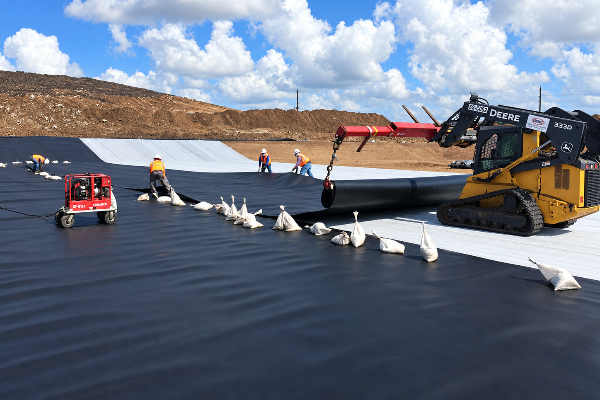
Wrapped modules are drained via a flow control outlet to a stream, river, sewer or storm drain at permitted rates, after being covered in a geomembrane and protection geotextile.
A 95% void ratio means a detention system stores almost its full external module volume, which can reduce the detention basin footprint that a surface pond or pipe gallery would need, depending on the site layout.
Since the modules form a modular system, the tank is able to fit around the site plan, around utilities, foundations, and tree pits, as opposed to a conventional rectangular vault.
03
Storage and Reuse: Rainwater Harvesting Cells
The assembled system, when fitted with a pump sump and connected to the drainage network with an overflow, becomes an underground water storage cell for irrigation, washdown or firefighting reserves. In this case, flood mitigation and reuse can share the same excavation. For more details, see our page on underground stormwater storage systems, and use the module quantity estimator to determine the number of units using the storage volume, prior to submitting your RFQ.
Eight Product Families: Geocellular Tanks to EPDM Pond Liners
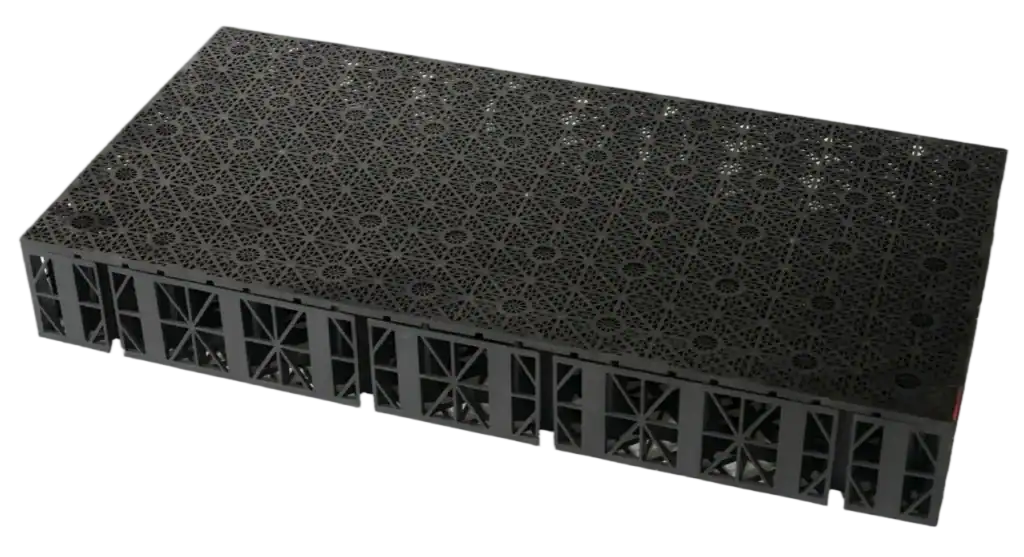
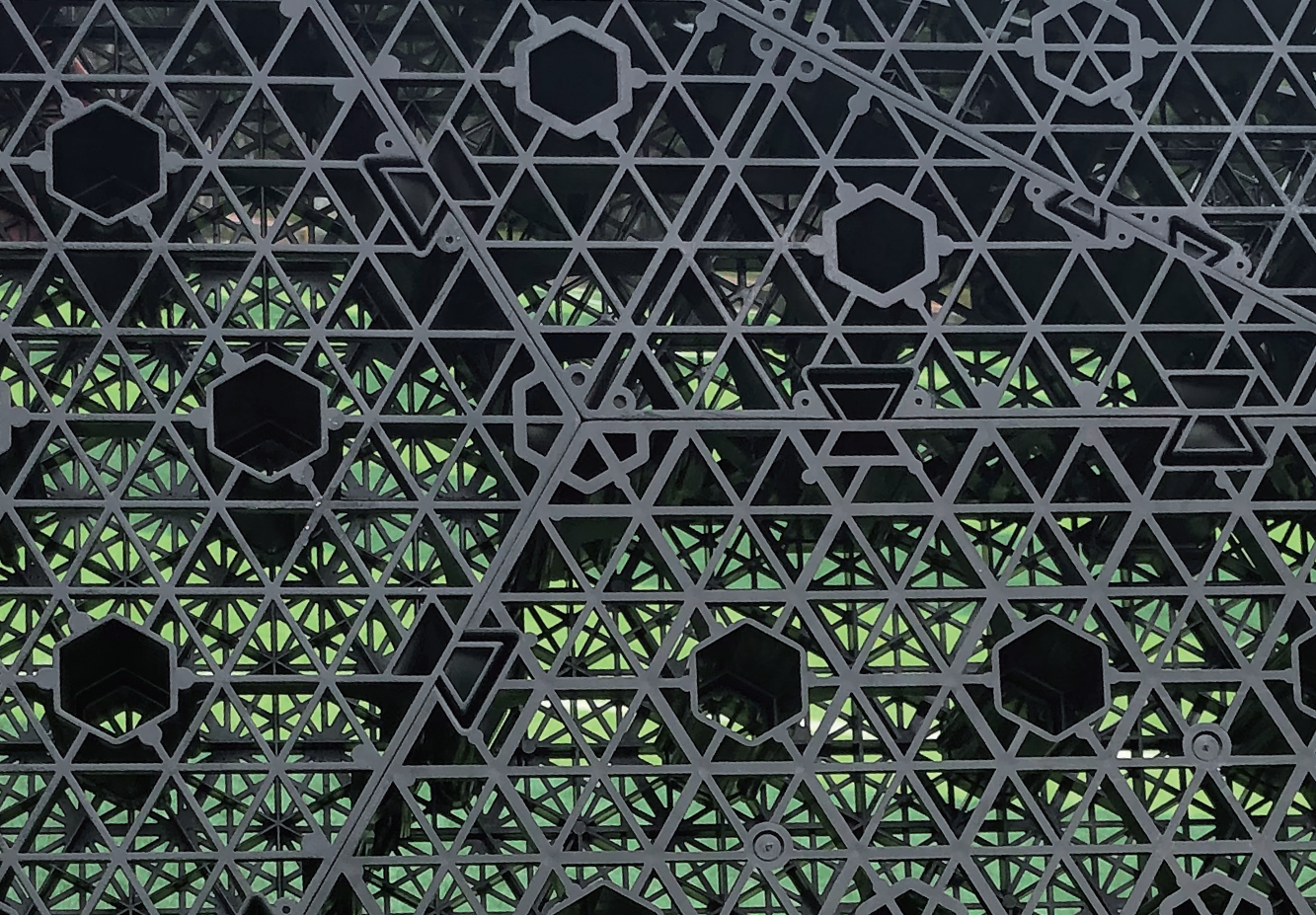
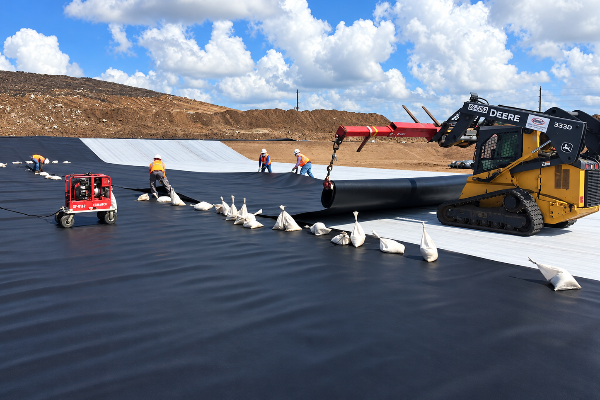
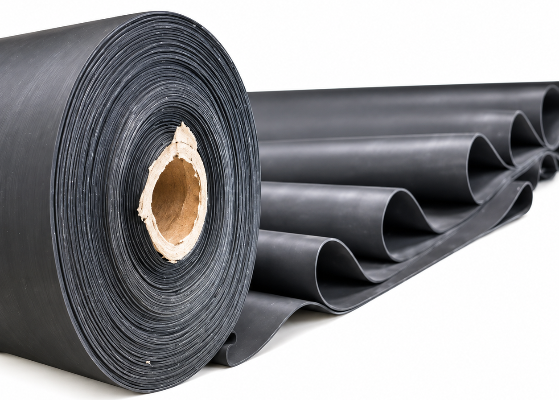
Specifications for each family come from its applicable product record; check the ordered storage litres, weights and load grades against your quotation and packing list. The hidden risk in a mixed order is that tank height, thickness and wrapping material as well as the top covering grid are bought separately, from different suppliers. We can supply the ordered families together, with product configuration and packing checked by us before loading.

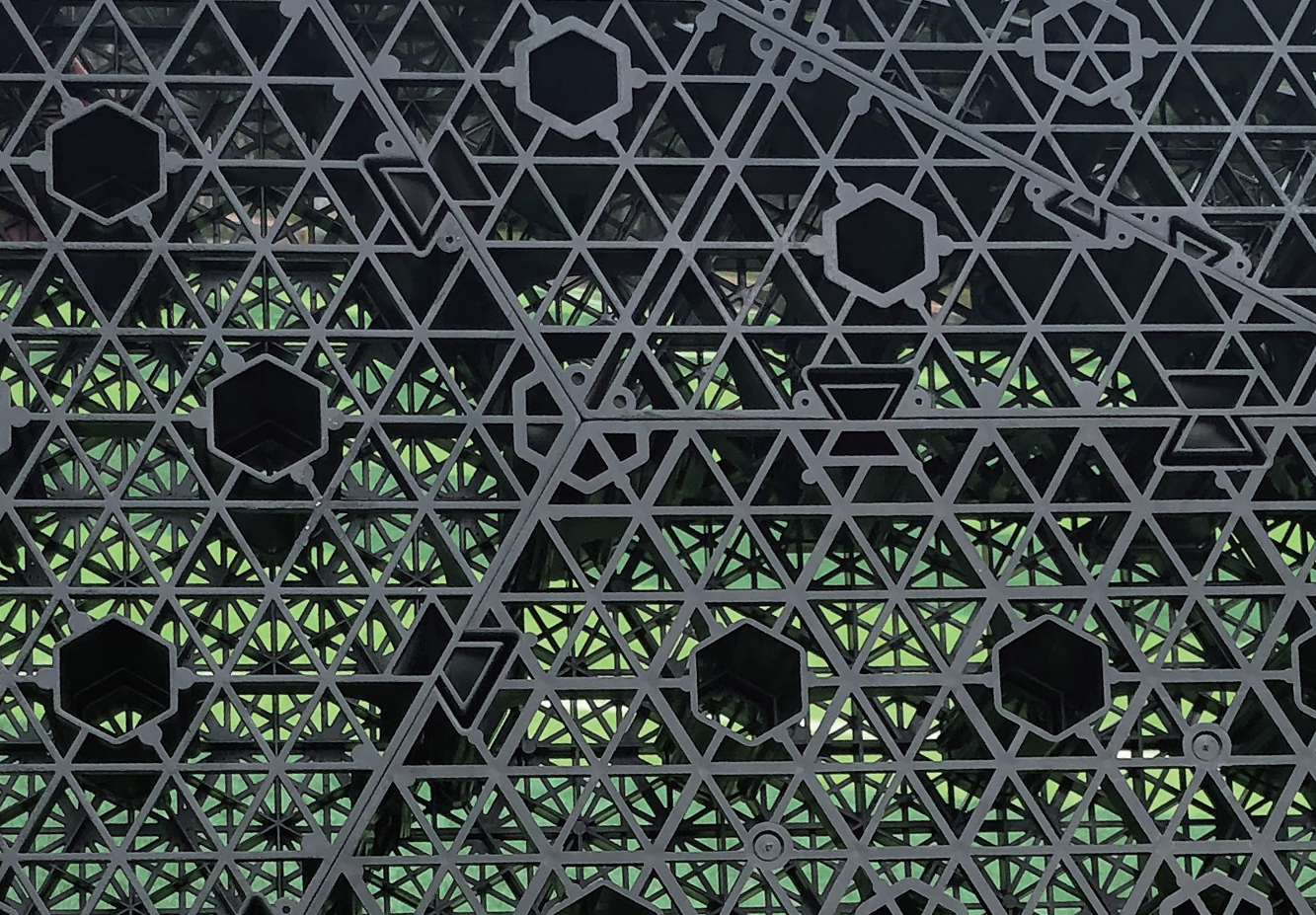
Another Configuration
The availability, lead time and price of a panel will be included in a quote if the model, colour, resin requirement, and required height and width are included in your request. Custom colors, virgin resin runs, and mixed height module layouts are quoted in the same manner.
Load Grades, Configurations
and Accessories
The grade you enter is one input in determining if a module can withstand traffic. The failures reported in trade journals involve more than grades selected from brochure information: cover depth, load, long-term creep and construction tolerances also matter.
Each of the AQUA RainWater Solutions grades given is a short-term minimum vertical ultimate strength from compression testing and is not a design value; the design value for the long-term is set by the engineer of record based on cover, traffic load and groundwater.
We provide the model level test data that the calculation requires along with the quote.
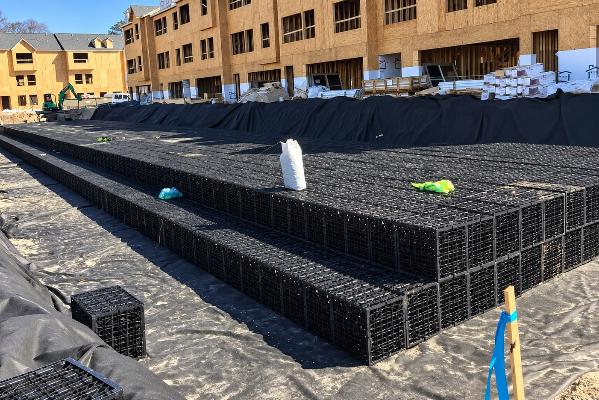
| Model and grade | Unit height | Usable storage per unit | Short-term vertical ultimate | Starting point for the RFQ |
|---|---|---|---|---|
| ARW-8053-22 | 530 mm (20.9 in) | 197 L (52.0 US gal) | 22 t/m² (approx. 216 kN/m², 31 psi) | Landscape and pedestrian areas |
| ARW-6841-22 | 450 mm (17.7 in) | 119.2 L (31.5 US gal) | 22 t/m² (approx. 216 kN/m², 31 psi) | Landscape and pedestrian areas |
| ARW-6841-28 | 450 mm (17.7 in) | 119.2 L (31.5 US gal) | 28 t/m² (approx. 274 kN/m², 40 psi) | Pedestrian areas and light vehicles |
| ARW-8053-30 | 530 mm (20.9 in) | 197 L (52.0 US gal) | 30 t/m² (approx. 294 kN/m², 43 psi); HS-20 tested configuration | Car parks with engineered cover |
| ARW-1050-30 | 500 or 400 mm (19.7 or 15.7 in) | 237.5 or 190 L | 30 t/m² (294 kN/m², 43 psi); lateral working value 115 kN/m² | Landscape, pedestrian areas and light vehicles |
| ARW-8025-38 | 250 mm (9.8 in) | 92 L (24.3 US gal) | 38 t/m² (approx. 372 kN/m², 54 psi) | Car parks with engineered cover |
| ARW-1050-40 | 500 or 400 mm | 237.5 or 190 L | 40 t/m² (392 kN/m², 57 psi); lateral 118 kN/m² | Car parks with engineered cover |
| ARW-1050-45 | 500 or 400 mm | 237.5 or 190 L | 45 t/m² (441 kN/m², 64 psi); lateral approximately 119 kN/m² | Car parks and service roads |
| ARW-8025-50 | 250 mm (9.8 in) | 92 L (24.3 US gal) | 50 t/m² (approx. 490 kN/m², 71 psi) | Service roads with engineered cover |
| ARW-1050-60 | 500 or 400 mm | 237.5 or 190 L | 60 t/m² (588 kN/m², 85 psi); lateral 185 kN/m²; virgin PP | Heavy-vehicle yards after engineering review |
| ARW-SA-250 | 250 mm (9.8 in) | 118.75 L (31.4 US gal) | Model-specific report review | Landscape and podium attenuation |
| ARW-SA-85 | 85 mm (3.3 in) | 40.375 L (10.7 US gal) | Model-specific report review | Shallow-invert landscape and pedestrian areas |
Engineering Note: The last column is NOT a design approval and is the starting point of our discussions because module test results cannot be transferred to other systems and cover under 1 m (3.3 ft) beneath pavement requires its own analysis. Unlike grades found on a brochure, each grade is tied to a specific unit height and a storage figure, enabling the engineer to determine the optimum balance of height and strength in one table. After selecting a grade with the Load Grade Ladder selector, verify the grade based on your cover depth and traffic load at RFQ.
- ARW-1050 Base: ARW-1050 units are supplied at 500 mm or 400 mm height; the 400 mm option keeps the same 9.8 kg unit weight and 95% void ratio at 190 L.
- ARW Series Stacking: ARW-8053 stacks at 530 mm for the first tier and 510 mm for each additional tier; ARW-8025 stacks at 250 mm then 230 mm per tier.
- Combinations: Stacking combinations of 760, 990 and 1270 mm modules from both series are available only with an approved structural layout and a detail of the connectors.
- Fittings: ARW-1050 modules with side inlets from DN200 to DN315, large inlets and outlets from DN600 to DN800, and a DN800 top inspection opening and connection.
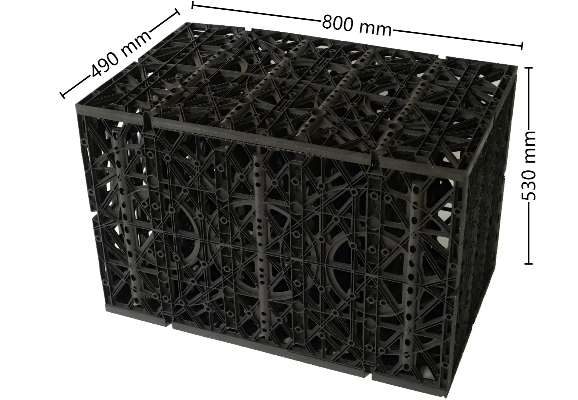
- BOM & Colors: Standard tank BOM: two body components, six side plates, one top cover and interlocking clips; standard colors are black and green, with blue and custom colors to order.
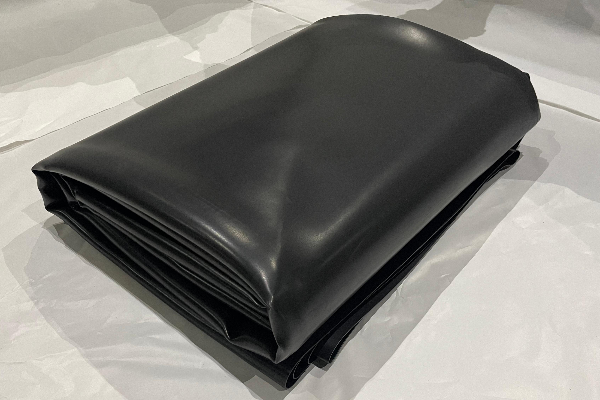
- Geosynthetics: Infiltration wrap: 150–200 g/m² nonwoven geotextile; lined attenuation: 0.5–3.0 mm geomembrane plus 400–600 g/m² protection geotextile, selected to the project specification.
- Delivery: Accessories are delivered to the site in the same containers as the modules. They are packed in wooden cases or bags. Therefore, the site receives clips, covers and inlet fittings together with the tank bodies and not in a separate shipment.
Specification Table: Tanks, Modules and Grids
It is not possible to specify stormwater storage from a category page if the numbers are hidden behind a download form. Therefore, the main table is provided in this posting.
All the numbers are from our factory product records. When a value is not yet published, the field is left blank rather than using an estimation. The container index that follows converts these numbers and provides shipped storage per container. This is the basis for calculation of the landed cost of the cargo.
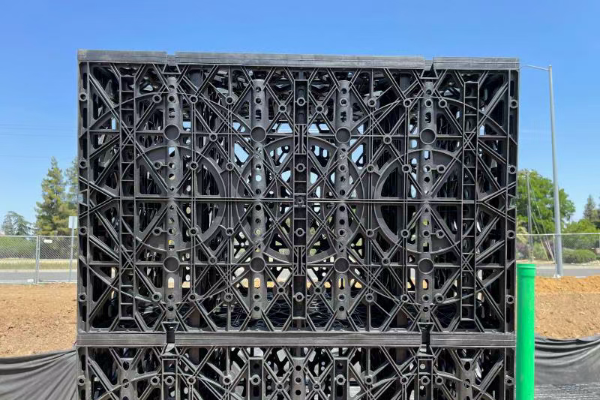
| Model | Dimensions (L × W × H) | Void ratio | Usable storage per unit | Unit weight | Vertical strength options |
|---|---|---|---|---|---|
| ARW-1050 (500) | 1000 × 500 × 500 mm (39.4 × 19.7 × 19.7 in) | 95% | 237.5 L (62.7 US gal) | 9.8 kg (21.6 lb) | 30 / 40 / 45 / 60 t/m² |
| ARW-1050 (400) | 1000 × 500 × 400 mm (39.4 × 19.7 × 15.7 in) | 95% | 190 L (50.2 US gal) | 9.8 kg (21.6 lb) | 30 / 40 / 45 / 60 t/m² |
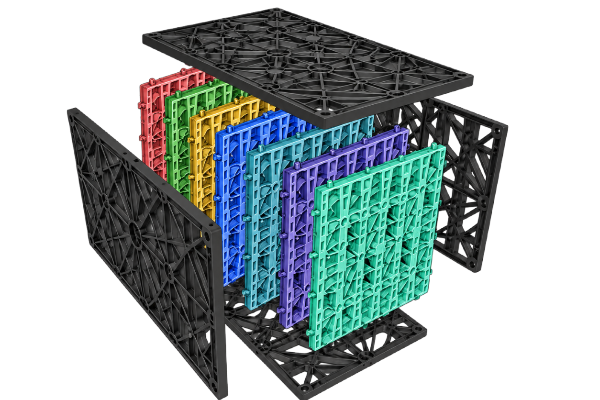
| ARW-8053 | 800 × 490 × 530 mm (31.5 × 19.3 × 20.9 in) | Approx. 95% | Approx. 197 L (52.0 US gal) | 11.932 kg (26.3 lb) excluding connectors | 22 / 30 t/m²; HS-20 tested configuration |
| ARW-8025 | 800 × 490 × 250 mm (31.5 × 19.3 × 9.8 in) | 94% | Approx. 92 L (24.3 US gal) | Approx. 7.9 kg (17.4 lb) | 38 / 50 t/m² |
| ARW-6841 | 680 × 410 × 450 mm (26.8 × 16.1 × 17.7 in) | 95% | Approx. 119.2 L (31.5 US gal) | 8.028 kg (17.7 lb) excluding connectors | 22 / 28 t/m²; HS-20 tested configuration available |
| ARW-SA-85 | 1000 × 500 × 85 mm (39.4 × 19.7 × 3.3 in) | 95% | 40.375 L (10.7 US gal) | Model-specific report review | |
| ARW-SA-150 | 1000 × 500 × 150 mm (39.4 × 19.7 × 5.9 in) | 95% | 71.25 L (18.8 US gal) | Tested to order | |
| ARW-SA-200 | 1000 × 500 × 200 mm (39.4 × 19.7 × 7.9 in) | 95% | 95 L (25.1 US gal) | Tested to order | |
| ARW-SA-250 | 1000 × 500 × 250 mm (39.4 × 19.7 × 9.8 in) | 95% | 118.75 L (31.4 US gal) | Model-specific report review | |
| ARW-GR-38 | 500 × 500 × 38 mm (19.7 × 19.7 × 1.5 in) | Fillable cells | Not applicable | 1.5 kg (3.3 lb); 6.0 kg/m² | 500 kPa unfilled; 200 t/m² filled |
| ARW-GR-50 | 500 × 500 × 50 mm (19.7 × 19.7 × 2.0 in) | Fillable cells | Not applicable | 2.0 kg (4.4 lb); 8.0 kg/m² | 500 kPa unfilled; 500 t/m² filled |
Roll-goods thickness and mass tolerances follow the ordered standard (GB/T 17643, GRI-GM13 and GM17, GB/T 17638, 17639 and 17640), and no public dimensional tolerance is published for moulded modules; the acceptance criteria for your order are written into the quotation.
Storage-per-Container Index
| Model | Container | Sets per container | Shipped storage per container |
|---|---|---|---|
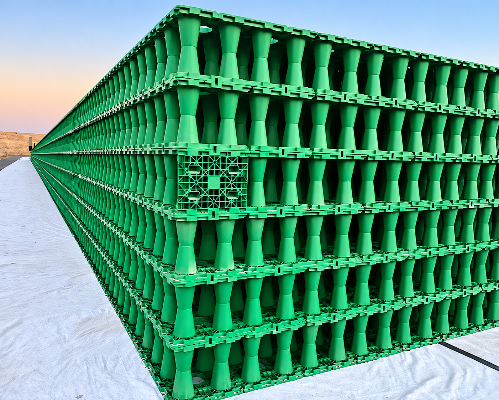
| ARW-1050 (500 mm) | 40HQ | Nested tank bodies | Approx. 335 m³ (11,830 ft³) of assembled tank volume |
| ARW-1050 (400 mm) | 40HQ | Nested tank bodies | Approx. 280 m³ (9,890 ft³) of assembled tank volume |
| ARW-8053 | 20GP | 520 sets | 108.0 m³ module volume; approx. 102 m³ (3,600 ft³) usable |
| ARW-8053 | 40GP | 1,050 sets | 218.0 m³ module volume; approx. 207 m³ (7,310 ft³) usable |
| ARW-8053 | 40HQ | 1,200 sets | 249.0 m³ module volume; approx. 236 m³ (8,350 ft³) usable |
| ARW-8025 | 20GP | 860 sets | 84.3 m³ module volume; approx. 79 m³ (2,790 ft³) usable |
| ARW-8025 | 40GP | 1,800 sets | 176.4 m³ module volume; approx. 166 m³ (5,860 ft³) usable |
| ARW-8025 | 40HQ | 2,050 sets | 201.0 m³ module volume; approx. 189 m³ (6,670 ft³) usable |
| ARW-6841 (estimated) | 20GP | Approx. 730 sets | 91.6 m³ module volume; approx. 87 m³ (3,070 ft³) usable |
| ARW-6841 (estimated) | 40GP | Approx. 1,470 sets | 184.4 m³ module volume; approx. 175 m³ (6,180 ft³) usable |
| ARW-6841 (estimated) | 40HQ | Approx. 1,680 sets | 210.8 m³ module volume; approx. 200 m³ (7,060 ft³) usable |
Container quantities are taken from our packing records of ARW-1050 and ARW-8053; ARW-6841 quantities are estimated from panel volume until a packing plan is confirmed. The total storage available is determined by multiplying the sets by the capacity of each.
The final loading is determined by the order mix. The container loading estimator provides a first approximation for tank orders.
The final loading is determined by the order mix. The container loading estimator provides a first approximation for tank orders.
Modular Units Compared with Vaults, Pipes and Chambers
| Dimension | AQUA RainWater Solutions geocellular units | Precast concrete stormwater detention vault | Corrugated metal pipe gallery | Plastic arch chambers |
|---|---|---|---|---|
| Storage medium | Voided PP units at 94–95% void ratio; published guidance puts geocellular systems at up to 96%6 | Open concrete cell; usable volume set by wall thickness, slab and internal height | Pipe bore only; the stone envelope adds storage only where it is open-graded | Chamber bore plus the open-graded angular aggregate envelope, which ASTM F2787 treats as part of the structural system8 |
| Example component weights on site | 9.8 kg tank unit; 11.9 kg module set | Documented case: modules under 20,000 lb placed by large excavator9 | Pipe sections placed by excavator | Chamber sections placed by hand or small plant |
| Assembly method | Hand assembly with clips; the model-specific instructions specify the tool requirements5 | Placement by large excavator in the cited case; confirm joint details | Banding and coupling of pipe runs | Overlapping chamber rows on a stone bed |
| Shipping density | 1,200 sets of ARW-8053 per 40HQ, flat-packed | Two precast pieces per standard semi-load9 | Nested pipe on flatbeds | Nested chambers on flatbeds |
| Inspection access | DN800 top inspection opening on ARW-1050; inspection chambers designed into the layout | Manholes and risers cast in | Manholes on the manifold | Inspection ports in the end caps |
Cost per cubic foot is not always lower for modules, because total cost includes excavation, stone, and cover work as well as the units; one documented case involved a precast vault installed in two days using native-soil backfill. Handling and freight differ between these examples: the cited precast vault case used a large excavator and a reported loading pattern of two pieces per truck, while our ARW-8053 units are transported in containers with 1,200 sets per 40HQ container. Unlike the presumed case of plastic being the cheapest option, we do advise pricing all applicable options for a site with a crane that is easy to access, and a short haul distance.
Pricing, Lead Time and Export Terms
Buyers researching a stormwater management supplier abroad versus a domestic distributor come across one hidden problem. The price sheet domestically lists prices by the unit, but an export quote includes freight, packing and documentation costs.
In consideration of this, we quote the landed configuration rather than the unit price. The price is based on the model of the unit, load grade, quantity, packing method, and the Incoterm, and there is no fixed price list. Your figure returns in a written quote with the module count and the container plan.
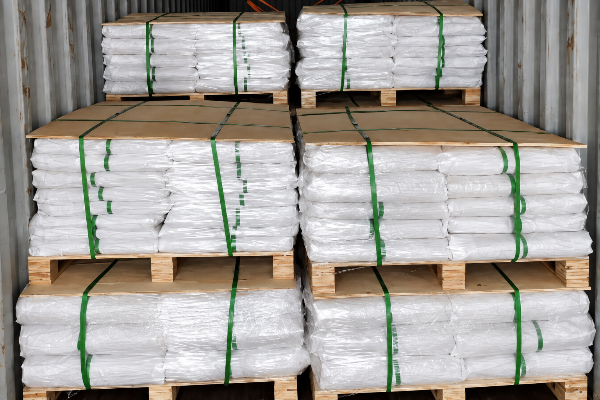
What Moves Your Price
| Driver | Effect on the quotation | How to keep it down |
|---|---|---|
| Load grade & resin | Higher grades use more material; the 60 t/m² tank grade is moulded in virgin PP | Match the grade to cover depth and traffic rather than specifying the top grade everywhere |
| Unit height & stacking | Taller units store more litres per unit and per container | Use 500 mm tanks or 530 mm modules where invert depth allows; keep shallow units for shallow sites |
| Container fill | A full 40HQ carries 1,200 sets of ARW-8053; a part-filled container pays the same box rate | Round the order to full containers and consolidate geotextile and geomembrane in the same box |
| Incoterm & destination | EXW, FOB and CIF change which freight and insurance legs are in the price | Ask for two Incoterms in one quotation and compare against your forwarder’s rate |
How Your Quote Is Produced
Send the storage volume, the cover depth, the surface use and the destination port, and our project supply team returns a written quotation within 24 hours on business days with module counts, a container loading plan and design notes at no charge. A cost-effective layout is decided at this stage, because we can review alternative unit heights and grades before anything is moulded.
Payment, Incoterms & Order Size
- Payment is by T/T with 30% deposit and balance before shipment; L/C accepted.
- We ship EXW, FOB and CIF as standard; DAP and DDP quoted on request, with the term fixed in your quotation.
- Full-container orders are preferred; consolidated LCL and smaller-container orders reviewed case by case; no fixed minimum on ground grid and geotextile; geomembrane from one small container.
- Free A4 material samples for geotextile and one geomembrane sample ship with freight prepaid by the customer; freight charges may be deducted from a bulk order by agreement.
Lead Times by Product
| Product | Lead time | What it covers |
|---|---|---|
| Core modules & tanks | One 40HQ in approximately 2–3 days, up to about 7 days excluding raw-material preparation | Moulding, assembly of the ordered configuration, batch sampling and palletising |
| Production runs | Confirmed with your quotation; core module capacity is approximately 1,000 m³ per day on two-shift production | Multi-container programmes scheduled around raw-material preparation and season |
| Shallow attenuation tank | Approximately 15 days | Moulding and packing of the ordered height |
| Geomembrane | Approximately 7 days | Supply coordination for the ordered thickness and width |
| Ready / customised samples | Ready samples ship in 3–5 days; customised samples in 7–15 days | Sample preparation and courier hand-over |
Batch Inspection, Compression Testing and Shipping Documents
An ASCE claims-reduction review of a failed plastic detention system found gaps in the manufacturer’s information on long-term creep, construction tolerances, and irregular loading. A 2024 Florida Concrete Pipe Association blog reported that no single published US design standard for buried plastic crate modules existed at that time and that an ASTM work item was under way; this historical trade-association report frames engineering questions rather than a statement of the current standard landscape.
AQUA RainWater Solutions responds with documents rather than adjectives: batch inspection and compression-test records for every moulded order, model-level test reports on request, and EN 17150 for short-term and EN 17151 for long-term compression as the reference test route; water quality treatment stays outside our scope, and the same document set states what the tank is and is not asked to do.
INSPECTION CAM_01
LIVE RECORDING
“We sample about 2% of every moulded batch on our own compression tester because a grade printed on a brochure means nothing to an engineer without the batch behind it. The record ships with the container, and if a customer wants to watch the test we run it on video.”
QC VERIFIED // DOCS READY
- The order configuration is confirmed before moulding starts: model selection, load grade, height, colour and accessory selection.
- Approximately 2% of each batch is sampled for dimension, color, appearance, and vertical compression tests on our in-house compression testing machine.
- Video recordings or in-person factory witness tests are scheduled when agreed as part of the order. That way, your inspector or engineer witnesses the compression run of the batch that is shipped.
- Configuration, inspection status and packaging are verified before loading and photographs of the review are taken when loading supervision is arranged.
- The 2% sampling and compression workflow applies to moulded tanks, modules and grid; geotextile, geomembrane and EPDM are procured through selected suppliers and inspected to the ordered standard instead.
- Batch inspection and compression-test records provided for each moulded order.
- Selected third-party sample test reports for the ordered model, supplied as test evidence for the sample submitted rather than as a blanket certification.
- ARW-8053 in its AASHTO HS-20 tested configuration, using the report language as written (i.e. not extended to other configurations).
- Long-term design values are project specific; model-level long-term test reports are confirmed at the RFQ stage, allowing the engineer of record to perform the creep check rather than assuming it is acceptable.
Customer or third-party factory audits are accepted by prior appointment, normally completed in 1–2 days; remote video factory inspection can be arranged when travel is not practical. Loading supervision is available and normally takes 1–2 days, covering appearance, dimension checks, production and QC review, packing, container securing, sealing and photographic reporting. In practice a buyer who books both receives a photo record from the press line to the sealed container door.
- Commercial invoice, packing list and certificate of origin; batch inspection and compression-test records; selected third-party test reports and company certificates according to the product and order; photographic loading report when loading supervision is booked.
- Five-year product warranty for the geocellular stormwater tank, subject to contract; warranty for other products will follow the order specification and sales contract.
- In the event a delivered unit fails the agreed acceptance criteria, we replace it based on the same written specification as used at the batch inspection.
How to Order: RFQ Inputs to Container Loading
Most delays on an export order occur when the RFQ arrives without the site inputs that the engineer requires, and the risk is a tank quoted for the wrong cover depth or groundwater condition. The six steps below start with those inputs.
Order to Loading Process
STEP 01
The quotation, drawing approval, and loading plan are constructed only once.
STEP 02
AQUA RainWater Solutions is the product supplier; installation contracting is not included with the order.
STEP 03
Include the destination port and the Incoterm you request with site inputs according to the checklist below.
STEP 04
Receive the quotation within 24 hours on business days, with module counts, grade recommendation, container loading plan and engineering notes.
STEP 05
Confirm the pro forma invoice and drawings and pay the 30% deposit by T/T; production is scheduled on two-shift capacity.
STEP 06
Our injection-moulding lines perform production and batch inspections at a 2% sample rate with compression testing on the batch.
STEP 07
Factory audit, video inspection or loading supervision are done when scheduled. We review the product configuration, inspection status, and packing prior to loading and stand behind that review.
STEP 08
Shipment EXW, FOB or CIF with commercial invoice, packing list, certificate of origin and the agreed inspection records; remote guidance is available during installation.
RFQ Input Checklist for Stormwater Management Design
Storage volume and drain-down
What to sendRequired detention or retention volume in m³ and the allowed drain-down time.
Why the quotation needs itSets the unit count and the outlet control the engineer designs.
Base depth and cover depth
What to sendMinimum and maximum invert depth; cover thickness and pavement build-up.
Why the quotation needs itDecides unit height, stack height and load grade; cover under 1 m beneath traffic is flagged for analysis.
Soil and groundwater
What to sendMeasured infiltration rate, soil type and depth to seasonal high water table.
Why the quotation needs itChooses infiltration wrap or lined attenuation; 2 ft separation to the water table is the EPA siting reference.
Pretreatment and silt interception
What to sendUpstream sediment capture, catch basin inserts or separator specified by the engineer.
Why the quotation needs itModules provide no water quality treatment; sediment and debris must be stopped before the inlet.
DATA.SYNC // ACTIVE
Overflow route and outlet
What to sendDischarge point to stream, river, sewer or storm drain and the permitted release rate.
Why the quotation needs itFixes the outlet chamber and the geomembrane or geotextile specification.
Inspection and maintenance access
What to sendPositions of inspection chambers, inlet and outlet manholes and any DN800 inspection opening.
Why the quotation needs itMany plastic crate systems are hard to inspect once buried; access is designed in, not added later.
Regulatory screening
What to sendFunding source of the project; whether the infiltration layout injects runoff below ground.
Why the quotation needs itUS federally assisted projects can be subject to Buy America rules for construction materials where applicable; contact the permitting authority before construction and confirm inventory requirements for Class V stormwater drainage wells.
Destination and Incoterm
What to sendPort, inland delivery point if DAP or DDP, and consolidated materials.
Why the quotation needs itPrices the freight legs and the container mix in one quotation.
The RFQ input checklist builder turns these rows into a summary for enquiry forms. Meanwhile, the underground storage RFQ checklist on our solutions page has the same list with design notes. We will not finalize a quote until we have the cover, groundwater and access inputs, as a specific grade recommendation carries more value than a lower unit price.
Our Factory and Supply References
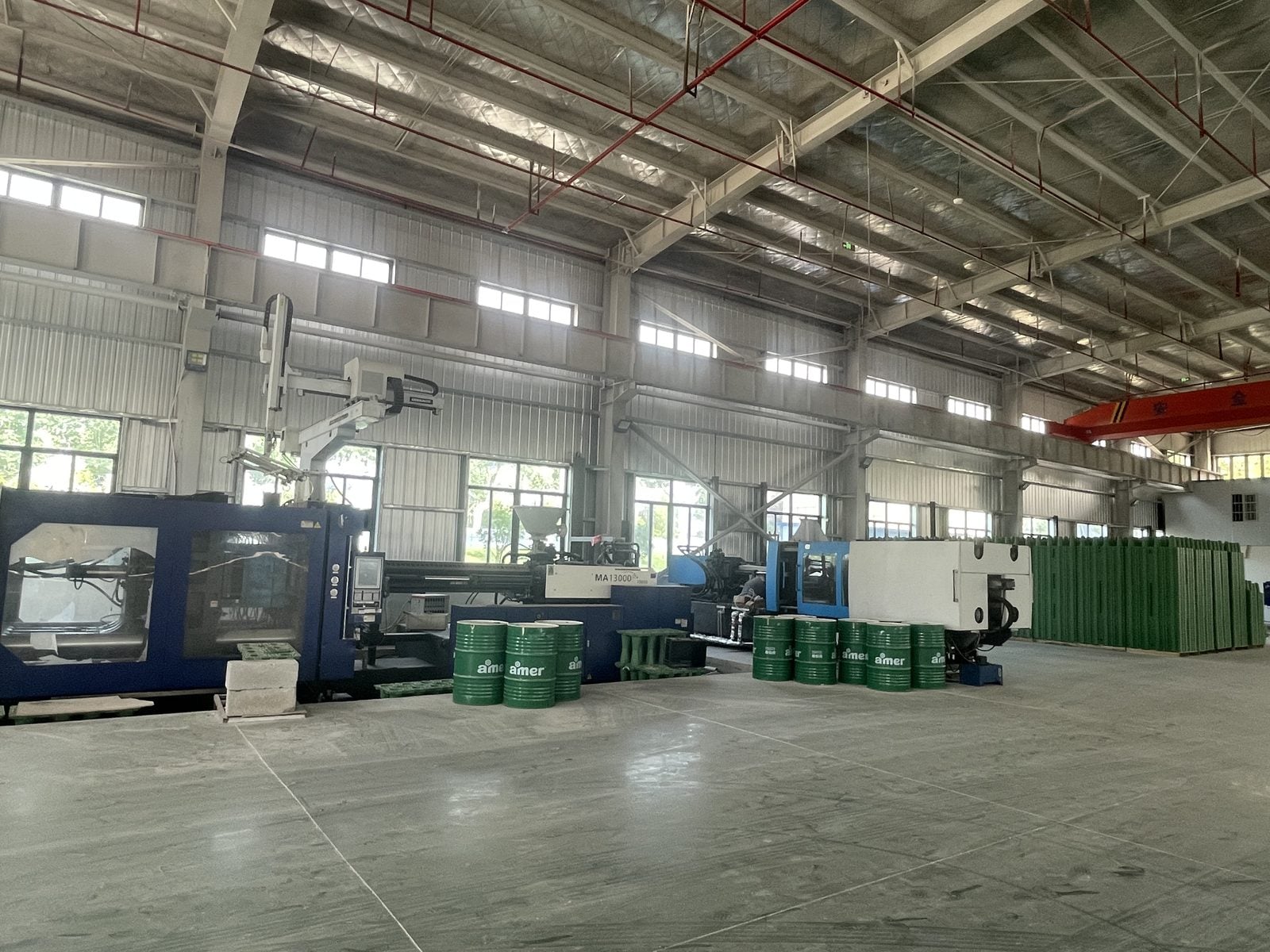
AQUA RainWater Solutions’ moulded-product operations date to 2009 and use 30 injection-moulding machines on two shifts with in-house compression testing, moulding core stormwater modules at approximately 1,000 m³ per day with annual export volume around 300,000 m³. For buyers comparing stormwater management companies, the factory facts below help assess manufacturing access, documentation and supply capacity alongside other project criteria. Main export regions are the Middle East, Europe and the Americas, and the reference volumes reflect that infrastructure mix.
FAC-RECORD-01
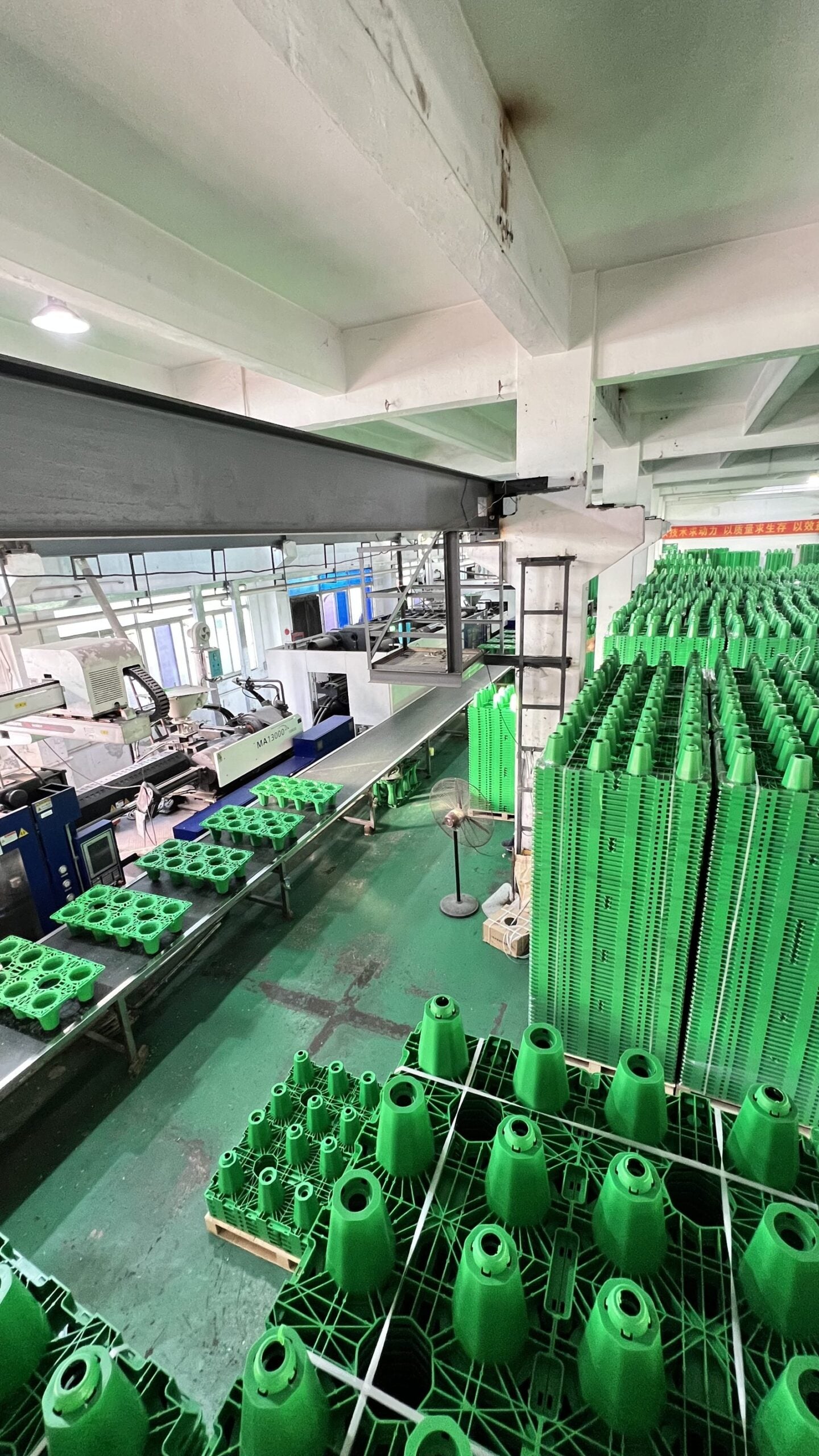
Injection-moulding hall at the AQUA RainWater Solutions factory with moulded green geocellular module panels staged beside the press.
Injection-moulding hall at the AQUA RainWater Solutions factory with moulded green geocellular module panels staged beside the press.
FAC-RECORD-02
Green geocellular module panels leaving the press conveyor and stacked for batch inspection at AQUA RainWater Solutions.
Green geocellular module panels leaving the press conveyor and stacked for batch inspection at AQUA RainWater Solutions.
FAC-RECORD-03
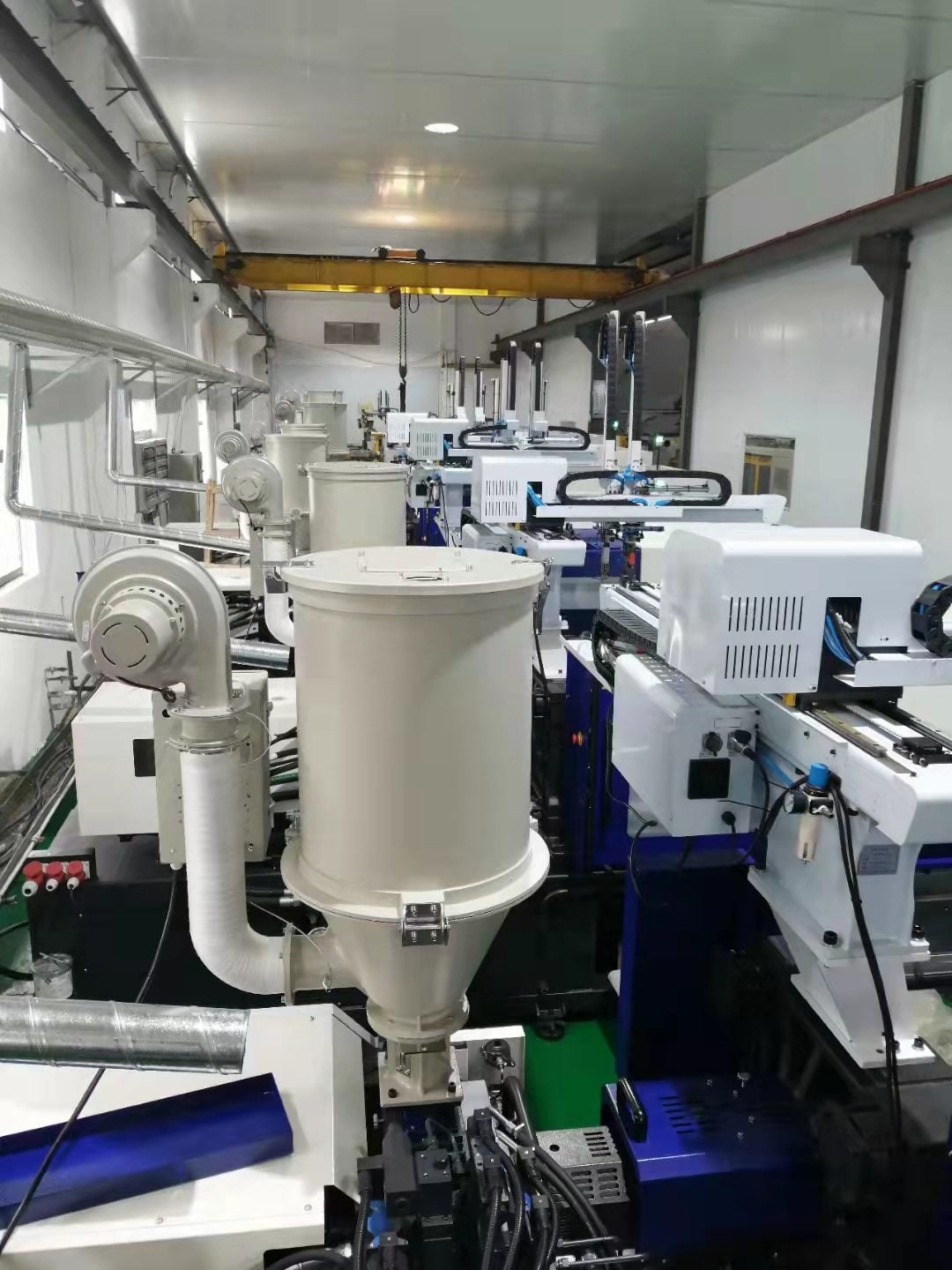
Row of injection-moulding machines with material dryers and take-off robots in the AQUA RainWater Solutions workshop.
Row of injection-moulding machines with material dryers and take-off robots in the AQUA RainWater Solutions workshop.
Factory Facts
- Established 2009
- Moulded stormwater manufacturing and coordinated supporting-material supply.
- 30 injection-moulding machines
- Two shifts and 24-hour operation, with one 40HQ of core modules produced in approximately 2–3 days.
- 1,000 m³ per day
- Core module capacity on two-shift production, around 300,000 m³ exported per year.
- In-house compression testing
- A compression testing machine for batch and witness tests, with test video on request.
Supply References
1,100 m³ modular infiltration tank supply, western United States
Five 40HQ containers of modular infiltration tank units shipped under a 2022 supply programme; installation and project management were carried out by the project’s own contractor.
8,500 m³ residential-community infiltration system, Georgia, United States
Modular infiltration storage supplied for a residential community in the Athens area of Georgia, designed and built by the local project team.
17,500 m³ rainwater storage and reuse system, South China
A rainwater module tank for storage and reuse under a residential development, with project start recorded in September 2013.
20,000 m³ infiltration tank installed at night, Gulf region
A 20,000 m³ infiltration tank in the United Arab Emirates, built at night by the local contractor, with installation progress documented in August 2026 and the project shown as ongoing. See our stormwater attenuation tanks for UAE projects page for the Gulf design route.
Engineering Tools & Selectors
Access our online calculators and checklists to configure your stormwater management system efficiently.
Storage per Container Estimator
Calculate the precise module count and total storage volume per 40HQ container to optimize shipping density and logistical planning.
Load Grade Ladder Selector
Determine the optimum balance of unit height and ultimate vertical strength based on your specific cover depth and traffic load requirements.
RFQ Input Checklist
Verify all essential site data, engineering drawings, and load specifications before initiating a formal request for quotation.
Stormwater Management Products FAQ
Stormwater management strategies group into surface systems such as ponds, swales and permeable pavement, and subsurface systems such as underground detention, infiltration and retention tanks. The best stormwater management products for a paved site are typically the subsurface class, because they store water under parking lots and roads that generate runoff. Our offering includes that subsurface class and the grid, geotextile and liners surrounding it.
Where infiltration is good and the water table is low, an infiltration tank under the pavement returns runoff to groundwater and removes the pond from the plan. Where soil or groundwater precludes this option, a lined detention tank with a controlled outlet retains the same footprint. The units on this page provide the volume; pretreatment upstream ensures the volume remains clean.
An underground retention system consists of a series of modules designed to hold the design storm. Water is released from the system through a controlled outlet or through the base to soil when the design is for infiltration. The drain-down time is an important parameter since it sets the outlet and the volume of storage. Water from a rainwater harvesting cell may require pumping for reuse.
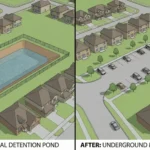
An above-ground detention pond uses land and requires fencing and mowing and loses water to evaporation. In contrast, an underground stormwater storage system can free surface land elsewhere on the site for buildings or parking, subject to the site layout and structural design. When considering cost of storage, underground systems may not be the least expensive option considering the cost of digging and of covering the underground systems. The comparison is made based on the value of the land and on the unit cost. On a residential stormwater detention system, the footprint is usually the deciding factor.
This is a question buyers often ask after their clay-based soil soakaway has flooded. The best answer is that infiltration crates need a measured infiltration rate and a base above the highest seasonal water table. Where the site design calls for lined attenuation, geocellular crates can be used as a lined attenuation tank with a geomembrane and controlled outlet, or shallow units with a liner. How soakaway crates function is more dependent on the decision of the wrap than the crate.
The choice depends on site access for cranes, the amount of storage per cubic meter of excavation, and the long-term load case. For shipping, plastic stormwater modules such as ARW-8053 offer 1,200 flat-packed sets per 40HQ container. Precast concrete stormwater detention vaults may be a choice if the site has suitable lifting access and the layout fits the design. Metal pipe can be configured for the site layout, including narrow corridors. We ask for the load and cover depth first, because that helps determine whether a plastic module should be considered.
Inspection and maintenance are designed into the layout: a DN800 top inspection opening on ARW-1050 tanks, inspection chambers at the inlet and outlet, and a silt trap or separator upstream to reduce sediment entering the modules. The maintenance includes camera inspection of the chambers and the removal of accumulated solids by either jetting or vacuuming at the silt trap.
Divide the required storage capacity by each unit’s usable volume and round up: 1 m³ requires 5 ARW-1050 tanks at 500 mm (237.5 L each), 6 ARW-8053 modules (approximately 197 L each), or 11 ARW-8025 modules (approximately 92 L each). Soakaway crates run from 85 mm shallow units to 530 mm deep units, so the count depends on the selected unit height. The estimator does the math and calculates the number of units.
Underground detention system cost is set by the unit count, the load grade and resin, the container fill and the Incoterm, plus excavation, stone and cover work priced locally by your contractor. We do not publish a per-unit price because the same tank grade ships at a different landed cost to each port. Send the storage volume and destination and the quotation comes back within 24 hours with the container plan that drives the landed quotation.
One 40HQ of core moulded modules leaves the factory in approximately 2–3 days, up to about 7 days excluding raw-material preparation, and multi-container programmes are scheduled at approximately 1,000 m³ per day. Ocean transit and customs clearance are added by your forwarder for the route, and we quote CIF when you want the freight leg in our price. Expedited scheduling is available on two-shift production.
When the Buy America preference applies to federally assisted projects, determine the product origin and any applicable waiver. Do not assume an imported module complies. Before the construction of a Class V stormwater drainage well, contact the permitting authority and satisfy the applicable inventory submittal and protection of underground sources of drinking water requirements. Apply our RFQ checklist to both questions prior to the issuance of drawings.
We supply the products, the documents and remote technical guidance; installation is carried out by your contractor, with loading supervision and a technician on video available from our side. We ship EXW, FOB and CIF as standard, with DAP and DDP quoted on request. Stormwater management products for sale on this page are quoted per configuration, with payment by T/T with 30% deposit and balance before shipment or by L/C.
![Aquavoid System Shallow Surface Drainage [Guide]](https://aquarainwater.com/wp-content/uploads/2026/10/aquavoid-system-shallow-surface-drainage-blog-featured-150x150.png)


