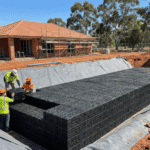
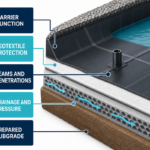
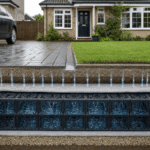
تواصل مع شركة AQUA
كيف يعمل خزان تخفيف ذروة تصريف مياه الأمطار؟ الآلية والتحكم في التدفق والتصميم وفق المعايير البريطانية
تعرّف على آلية عمل خزانات تخفيف ذروة تصريف مياه الأمطار، ومراحلها الثلاث، والتحكم في التدفق بالدوامة مقارنة بفتحة التصريف، والتصميم وفق المعايير البريطانية باستخدام FEH، والتكاليف ومشكلات التركيب الشائعة.
بقلم Grayden Du | 17 فبراير 2026 | 13 دقيقة قراءة
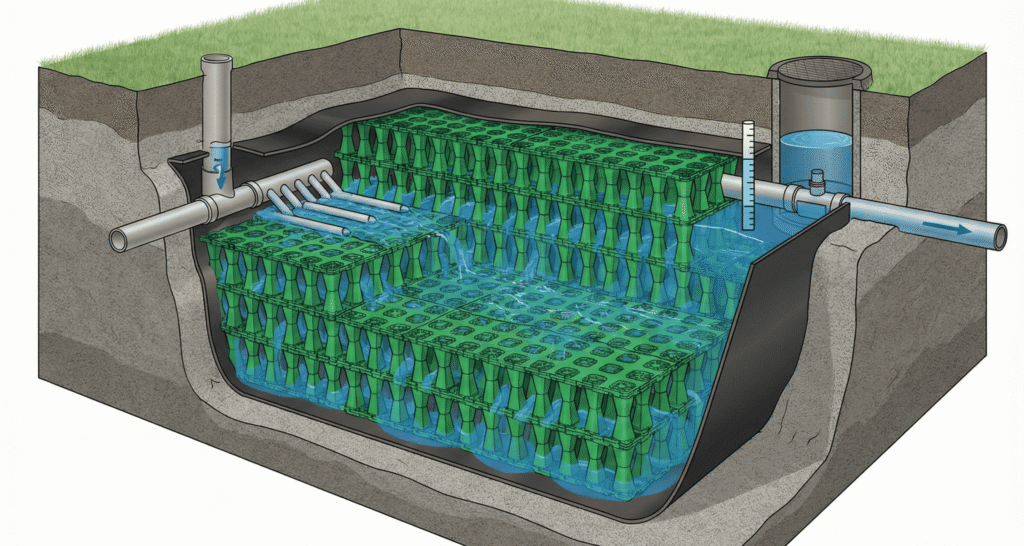
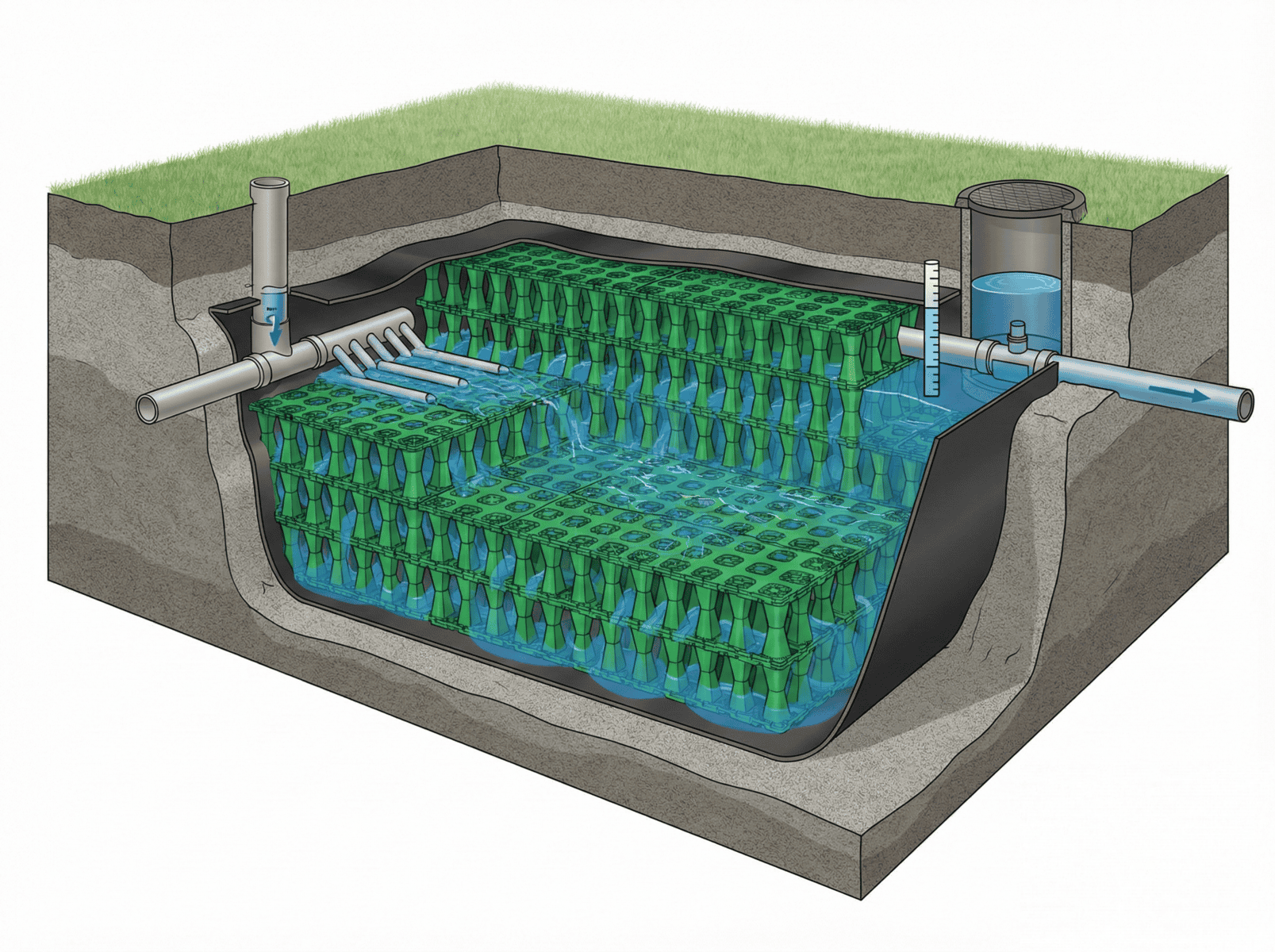
بعد 3 أشهر، غمرت المياه موقف السيارات. كانت شبكة تصريف المياه قد حصلت على الاعتماد، وغادر المقاول الموقع، ثم تلقى المطوّر اتصالًا من LLFA يسأله عن سبب ارتداد المياه السطحية إلى مصرف الطريق السريع. وغالبًا ما تكون المشكلة في تصميم خزان تخفيف ذروة تصريف مياه الأمطار على نحو سيئ أو في صغر سعته.
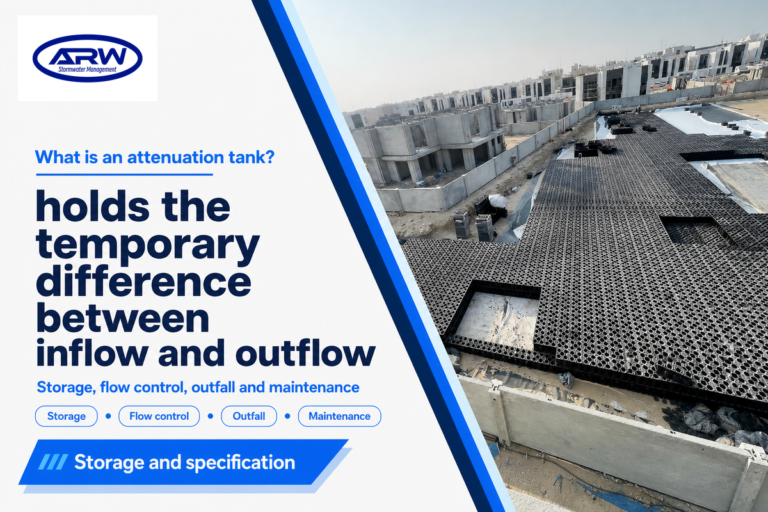
يخزّن خزان تخفيف ذروة تصريف مياه الأمطار المياه السطحية مؤقتًا تحت الأرض أثناء العواصف الشديدة، ثم يصرفها ببطء وبمعدل مضبوط، ما يتيح لمصارف المياه ومجاريها في اتجاه المصب استيعاب التدفق. وتقضي المتطلبات البريطانية للتطويرات الجديدة، المحددة في CIRIA C753 (2015) والوثيقة المعتمدة H من لوائح البناء (2010)، بالحد من التصريف ليعادل معدل الجريان السطحي في الأراضي غير المطورة، والذي يتراوح عادةً بين 2 و8 لترات في الثانية لكل هكتار. وهذا الشرط وحده يفسر وجود خزانات تخفيف ذروة تصريف مياه الأمطار في أنظمة تصريف المياه الجديدة بالمملكة المتحدة، كما يوضح أهمية صحة التصميم مقارنة بخفض التكلفة.
يشرح هذا الدليل آلية عمل خزان تخفيف ذروة تصريف مياه الأمطار: بدءًا من آلية التخزين ذات المراحل الثلاث، وصولًا إلى خيارات التحكم في التدفق والتصميم وفق المعايير البريطانية واختيار المواد، إضافةً إلى الأعطال الشائعة التي قد تسبب مشكلات.
إذا كان هذا الموضوع جديدًا عليك، فمن المفيد أن تفهم أولًا ما هو خزان تخفيف ذروة تصريف مياه الأمطار فعليًا قبل التعمق في شرح آلية عمله.
كيف تتدفق المياه عبر خزان تخفيف ذروة تصريف مياه الأمطار
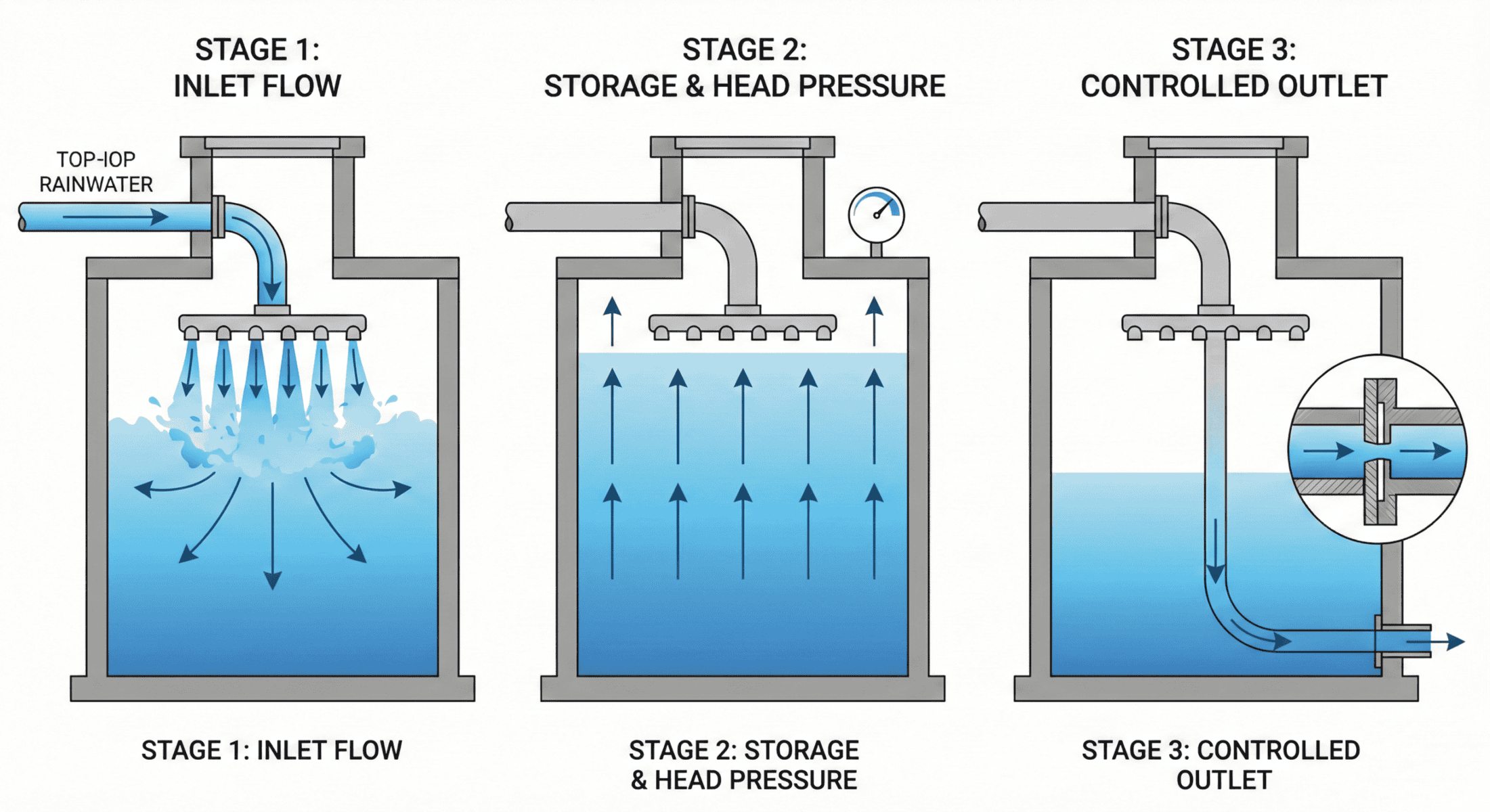
لنتصور الأمر كحوض الاستحمام: الصنبور هو مياه الأمطار، ويتحدد تدفقها بمعدل هطولها. أما المصرف فهو جهاز التحكم في التدفق عند المخرج، وهو ما يحدد سرعة خروج المياه. إذا زاد التدفق الداخل على الخارج، امتلأ الحوض. وهذه خلاصة تخفيف ذروة التدفق.
تتكون العملية فعليًا من 3 مراحل.
المرحلة 1: التدفق الداخل وتبديد الطاقة. تتدفق المياه السطحية الناتجة عن الجريان من الأسطح ومواقف السيارات والممرات إلى الخزان عبر شبكة الأنابيب. ويبطئ جهاز تبديد الطاقة (أو مجمّع المدخل) التدفق عند المدخل. وإذا لم يُركّب هذا الجهاز، فقد تؤدي قوة المياه الداخلة إلى تآكل الوحدات الخلوية لتخزين مياه الأمطار من الداخل، وإزاحة الوصلات، وتكوين رواسب تسد النظام.
المرحلة 2: التخزين وارتفاع الضغط الهيدروليكي. يحد جهاز التحكم في التدفق عند المخرج من التصريف إلى معدل مثل 5 l/s. وتتجمع المياه في الفراغات بين الوحدات الخلوية، فيرتفع منسوب المياه (الضغط الهيدروليكي). ويؤثر الضغط الهيدروستاتيكي على جهاز التحكم في التدفق، ما يحدد سرعة التصريف. ومع نسبة فراغات تبلغ 95%، يوفر الحفر بحجم 100 m³ نحو 95 m³ من سعة التخزين الإجمالية؛ لكن يجب عمليًا خصم ما يلزم للرواسب والحيز الحر.
المرحلة 3: التصريف المضبوط. تنتهي العاصفة ويتوقف التدفق الداخل. وتخرج المياه المخزنة في الفراغات عبر جهاز التحكم في التدفق، ويستغرق ذلك وقتًا أطول مع انخفاض الضغط الهيدروليكي. ويفرغ الخزان خلال ساعات، وأحيانًا أيام، ليصبح جاهزًا لاستقبال مياه الأمطار مجددًا.
يوضح مخطط التصريف الهيدروغرافي الصورة كاملة. ينتج عن حوض تجميع غير مضبوط ارتفاع حاد في ذروة التدفق. ويوزع خزان تخفيف ذروة تصريف مياه الأمطار الحجم نفسه على فترة أطول، فيخفض ذروة التدفق. وهذا هو الهدف.
نصيحة فنية: عند إجراء النمذجة باستخدام MicroDrainage أو برامج مشابهة، لا تكتفِ بنمذجة عاصفة تحدث مرة كل 1 من 100 عام. نمذج عواصف تتراوح مدتها بين 15 دقيقة و48 ساعة. وحدد العاصفة الحرجة، أي المدة التي ينتج عنها أكبر طلب على سعة التخزين. وعادةً ما تكون العاصفة التي تستمر 6 ساعات هي العامل المحدد لحجم الخزان، لا الهطول الشديد القصير الذي يفترضه معظم الناس.
التحكم في التدفق بالدوامة مقارنة بفتحة التصريف في خزانات تخفيف ذروة تصريف مياه الأمطار
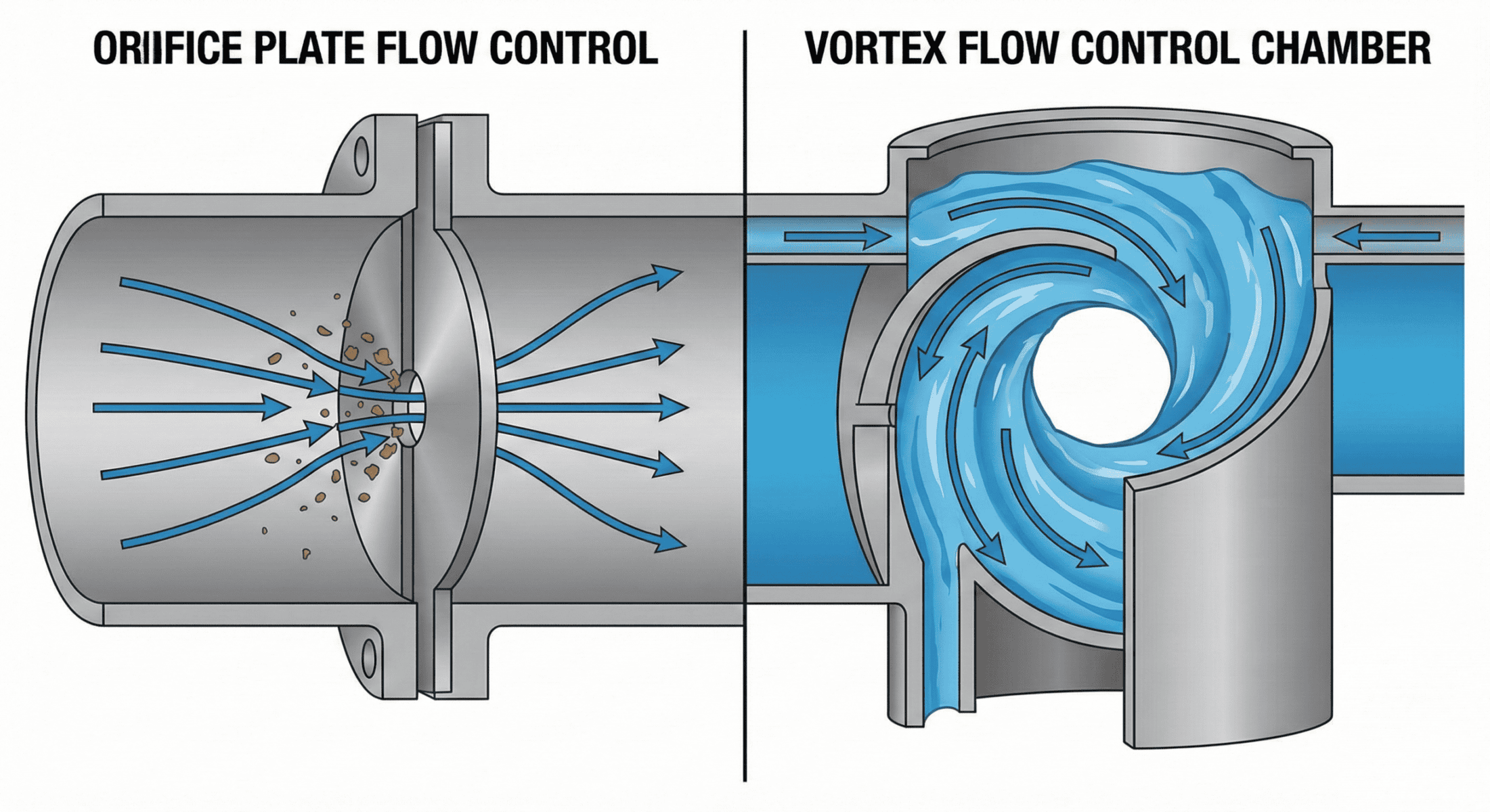
تحتاج جميع خزانات تخفيف ذروة تصريف مياه الأمطار إلى جهاز للتحكم في التدفق لضبط التدفق الخارج. وتسود تقنيتان متنافستان في السوق البريطانية، ويؤثر الاختيار بينهما في حجم الخزان وصيانته وتكلفة امتلاكه.
تُعدّ لوحة الفتحة خيارًا تقليديًا. وهي لوحة معدنية بها ثقب. يتناسب معدل التدفق مع الجذر التربيعي لارتفاع الماء؛ إذ يزداد مع امتلاء الخزان، ثم ينخفض بسرعة عند تصريفه. الأمر بسيط. لكن تكمن المشكلة هنا. فعندما يقل معدل التصريف عن 5 l/s ويكون عمق الدفن أقل من 0.6 m، يقل قطر الفتحة عن 50 mm. وسرعان ما تنسد هذه الفتحات الصغيرة بالأوراق والحصى ومخلفات الطين الناتجة عن أعمال البناء.
يعمل جهاز التحكم في التدفق بالدوامة (VFC)، الذي تقدمه علامات تجارية مثل Hydro-Brake، وفق مبدأ مختلف. فتمر المياه دون عائق عند انخفاض التدفق. أما عند ارتفاع الضغط الهيدروليكي، فيدفعها الدخول المماسي إلى الدوران، ما يُنشئ نواة هوائية في المركز. وتولد مكابح المائع مقاومة، لكن فتحة المخرج أكبر بنحو 6x من فتحة التصريف المكافئة عند معدل التدفق التصميمي نفسه.
يمكن لخزانات VFC خفض حجم التخزين المطلوب بنسبة 15 إلى 30 في المئة. وينتج التوفير من تقليل أعمال الحفر وعدد الوحدات الخلوية لتخزين المياه.
| البُعد | لوح فتحة التصريف | التحكم في التدفق بالدوامة |
|---|---|---|
| خطر الانسداد | مرتفع جدًا (فتحة صغيرة عند معدلات التدفق المنخفضة) | منخفض (فتحة كبيرة وتأثير التنظيف الذاتي) |
| الأداء الهيدروليكي | قياسي؛ ينخفض التدفق مع انخفاض الضغط الهيدروليكي | منحنى S محسّن، وتصريف متوسط أعلى |
| التكلفة الأولية | منخفضة (£80 إلى £200) | متوسطة إلى مرتفعة (£800 إلى £2,500) |
| الصيانة | يتطلب تنظيفًا يدويًا متكررًا | سلبي، ويعتمد أساسًا على الفحص |
| تأثيره في حجم التخزين | القيمة الأساسية | يخفض الحجم المطلوب بنسبة 15 إلى 30% |
نصيحة فنية: عادةً ما يكون لوح فتحة تصريف بسيط بسعر £80 إلى £200 كافيًا للمشروعات السكنية التي تقل عن 5 m³. أما في المشروعات التجارية التي تزيد مساحتها على 0.5 ha، فيستحق جهاز VFC تكلفته الإضافية دائمًا تقريبًا، لأن التوفير الناتج عن خفض حجم التخزين يغطيها وحده. راجع الدليل الكامل لخزانات تخفيف ذروة تصريف مياه الأمطار في المملكة المتحدة للاطلاع على تفاصيل المواصفات.
كيف يؤثر خزان تخفيف ذروة تصريف مياه الأمطار في تصميم شبكة تصريف المياه؟
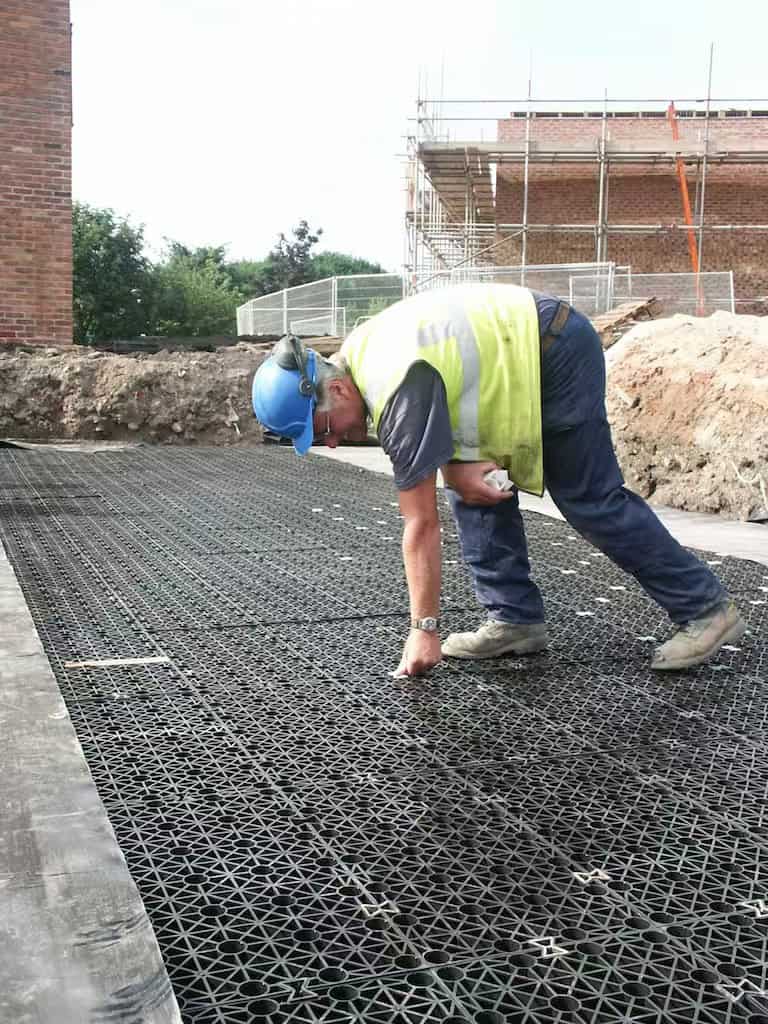
الخطوة 1: اختبار النفاذية BRE 365. وفقًا للجزء H (2010) من لوائح البناء، يتبع تصريف المياه تسلسلًا هرميًا: تسرّب المياه إلى التربة أولًا، ثم التصريف إلى مجرى مائي، وأخيرًا إلى شبكة الصرف الصحي كحل أخير. ولا يمكن استبعاد تسرّب المياه إلى التربة دون إثبات عدم جدواه. ويحدد BRE 365 (BRE Digest 365) برنامجًا للاختبار: حفر حفرة تجريبية وملؤها ثم تسجيل انخفاض منسوب المياه. ومن دون نتيجة هذا الاختبار، ستعيد LLFA طلبك.
الخطوة 2: معدل الجريان السطحي في الأراضي غير المطورة. يجب ألا يصرف مرفق تخفيف ذروة التدفق المياه بمعدل أسرع من معدل الجريان السطحي في الأراضي غير المطورة بالموقع. ويتبع الممارسون في المملكة المتحدة طريقتين. تستخدم IH124 خرائط WRAP الأقدم للتربة لحساب Qbar. أما دليل تقدير الفيضانات (FEH)، فيستخدم بيانات رقمية أدق للتربة (BFIHOST) لحساب Qmed. ويتزايد تفضيل LLFA لطريقة FEH. وعمليًا، يُطبّق حد أدنى لمعدل التصريف يتراوح بين 2 و3 l/s لكل هكتار، لضمان أن تكون فتحة جهاز التحكم في التدفق كبيرة بما يكفي للعمل بموثوقية.
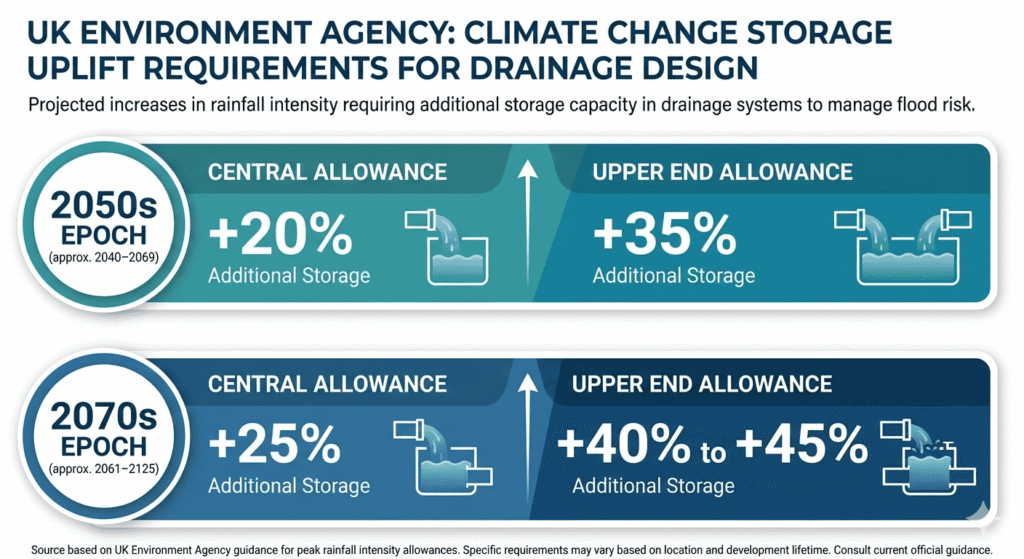
الخطوة 3: مخصصات التغير المناخي. وفقًا لإرشادات وكالة البيئة بشأن مخصصات التغير المناخي (المحدّثة في 2022)، يجب ألا يعتمد التصميم على معدلات هطول الأمطار الحالية. بل يجب أن يراعي التخزين عوامل زيادة تختلف حسب الفترة الزمنية ومدى الحساسية.
| الفترة الزمنية | المخصص المتوسط | الحد الأعلى للمخصص | التطبيق المعتاد |
|---|---|---|---|
| عقد 2050 (2022 إلى 2060) | +20% | +35% | مشروعات تجارية، وعمر تصميمي من 30 إلى 50 عامًا |
| عقد 2070 (2061 إلى 2125) | +25% | +40 إلى 45% | مشروعات سكنية، وعمر تصميمي يبلغ 100 عام |
يرد التسلسل الهرمي لتصريف المياه كاملًا في الوثيقة المعتمدة H من لوائح البناء، وهي مرجع ينبغي أن يكون في متناول كل مهندس لتصريف المياه يعمل في مواقع الإنشاءات الجديدة بالمملكة المتحدة.
مقارنة بين خزانات تخفيف ذروة تصريف مياه الأمطار الخلوية والخرسانية
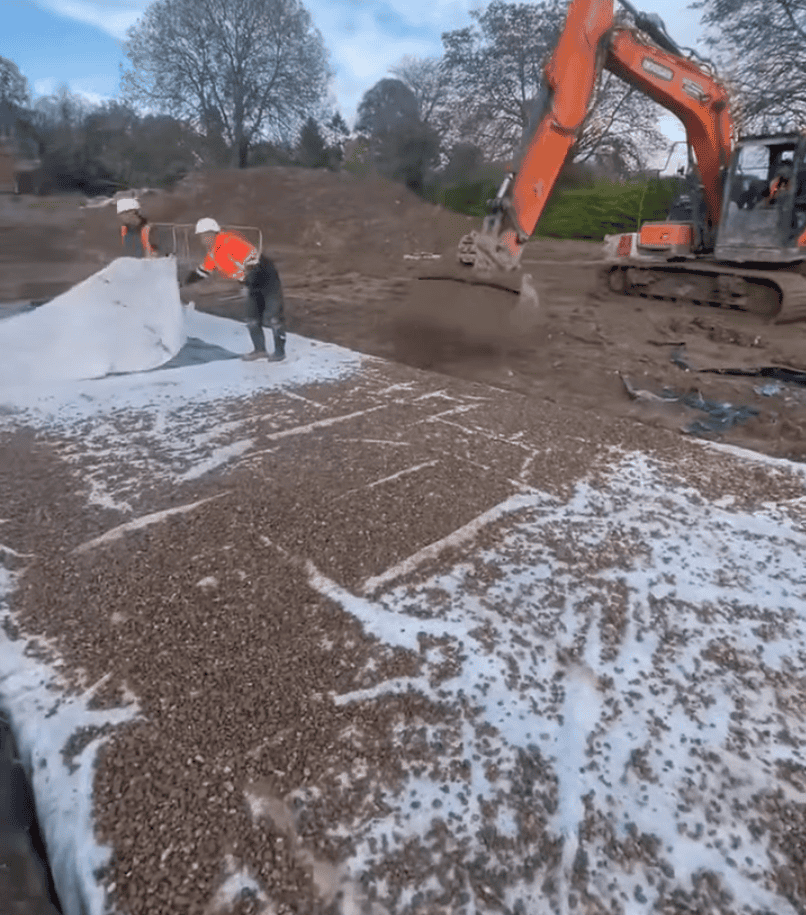
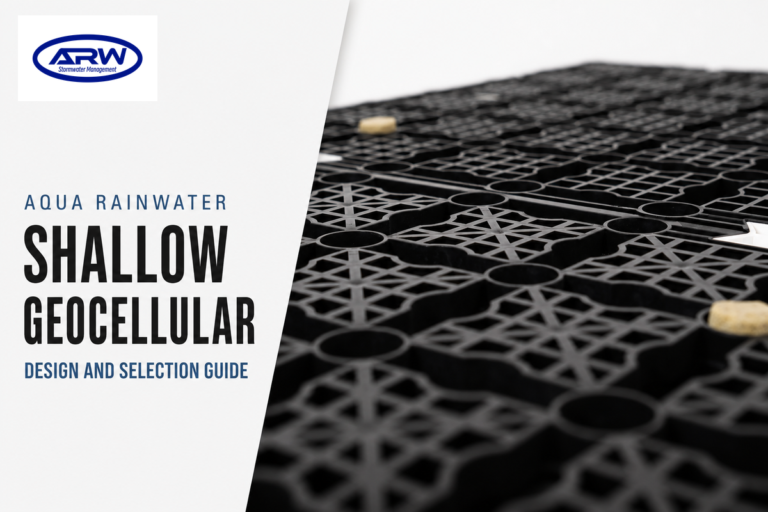
وحدات تخزين مياه الأمطار ذات البنية الخلوية (PP أو PVC) هي الخيار المستخدم في نحو 90% من خزانات تخفيف ذروة تصريف مياه الأمطار السكنية والتجارية في المملكة المتحدة. وتبلغ نسبة الفراغات 95 إلى 97%، ويتراوح وزن الوحدة الخفيفة بين 7 و12.5 kg، ويمكن تركيب الوحدات يدويًا بأي شكل هندسي للمخطط.
لكن هل نسبة الفراغات البالغة 95% فعلية؟ إنها قيمة إجمالية. فالأعمدة والعوارض البلاستيكية التي يوفرها النظام إنشائيًا تشغل 3 إلى 5% من الحجم. وتوصي CIRIA C753 (2015) باحتساب 10% لتراكم الرواسب مستقبلًا. وبعد احتساب الحيز الحر، تصبح نسبة الفراغات الصافية الفعلية 82 إلى 87%. وتظل هذه نسبة جيدة مقارنة بالخرسانة، لكنها ليست 95%.
الخرسانة مسبقة الصب هي الخيار الأفضل بوضوح لمواقع البنية التحتية الثقيلة وساحات مركبات البضائع الثقيلة أو المواقع التي يقل فيها عمق التغطية عن 500 mm. وتتحمل الخزانات الخرسانية الدفن العميق والأحمال النقطية العالية دون ردم هندسي، لكن ذلك يرفع التكلفة والوزن ويتطلب إحكام إغلاق الوصلات بعناية.
للاطلاع على مقارنة هندسية تفصيلية جنبًا إلى جنب، راجع مقارنة خزانات تخفيف ذروة تصريف مياه الأمطار الخرسانية والبلاستيكية، التي تشمل الأداء الإنشائي وتصنيفات الأحمال وتكلفة دورة الحياة.
| نوع النظام | تكلفة المواد (لكل m³) | التكلفة بعد التركيب (لكل m³) | نسبة الفراغات | أفضل استخدام |
|---|---|---|---|---|
| خلايا (PP) | £80 إلى £150 | £200 إلى £350 | 95% إجمالية، ونحو 85% صافية | المشروعات السكنية والتجارية المعتادة |
| خرسانة مسبقة الصب | £450 إلى £520 | £400 إلى £600 | 50 إلى 65% | مناطق مركبات البضائع الثقيلة، والتغطية الضحلة، والدفن العميق |
| أنابيب كبيرة القطر | متغيرة | £300 إلى £500 | 75 إلى 85% | المشروعات الخطية والطرق السريعة |
| خزانات GRP | £200 إلى £350 | £300 إلى £500 | 85 إلى 90% | الأراضي الملوثة ومقاومة المواد الكيميائية |
ما الفرق بين خزان تخفيف ذروة تصريف مياه الأمطار وحفرة امتصاص المياه؟
هذا أكثر سؤال يرد إلينا. فكلاهما يُركّب في التربة، ويتعامل مع المياه السطحية، ويمكن أن يستخدم وحدات خلوية لتخزين المياه، لكن لكل منهما وظيفة مختلفة تمامًا.
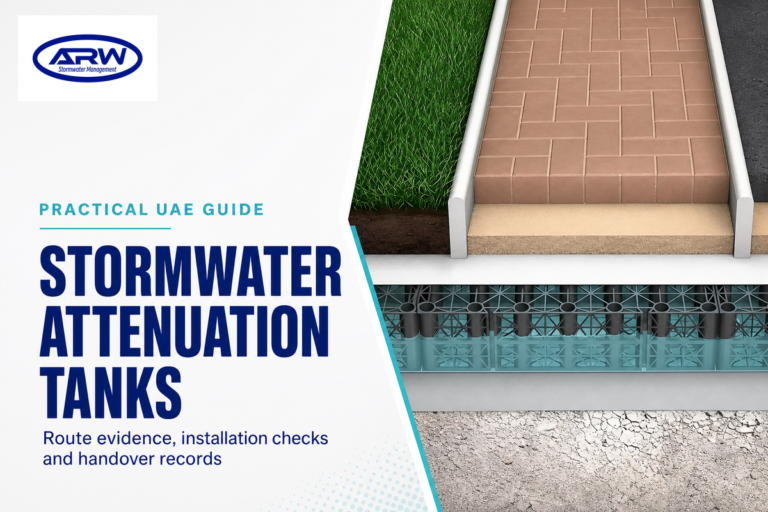
خزان تخفيف ذروة تصريف مياه الأمطار نظام محكم الإغلاق: تُجمع المياه السطحية الناتجة عن الجريان وتُخزّن ثم تُصرّف تدريجيًا عبر جهاز للتحكم في التدفق إلى مجرى مائي أو شبكة الصرف الصحي. ويُغلّف الخزان بجيوممبرين (عادةً من HDPE بسماكة 0.5 إلى 1.0 mm) لإحكام إغلاقه، باستثناء موضع خروج أنبوب المخرج.
أما حفرة امتصاص المياه فهي نظام نافذ: تُجمع المياه السطحية وتُترك لتتسرب إلى التربة المحيطة. وتُغلّف الوحدات الخلوية بالجيوتكستايل لا بالجيوممبرين، ولا يوجد جهاز للتحكم في التدفق لأن التربة نفسها تؤدي وظيفة المصرف.
ما يحدد الخيار هو نتيجة BRE 365. فإذا أظهر اختبار النفاذية كفاية تسرّب المياه إلى التربة وانخفاض منسوب المياه الجوفية، فاستخدم حفرة امتصاص المياه. وإذا لم تمتص التربة كمية كافية من المياه أو كان منسوب المياه الجوفية مرتفعًا، فاستخدم خزان تخفيف ذروة تصريف مياه الأمطار مع تصريف مضبوط وفق قانون إدارة الفيضانات والمياه 2010.
للاطلاع على مقارنة تفصيلية خاصة بالموقع، تشمل الحالات التي يستوفي فيها كل نظام متطلبات LLFA، اقرأ المقارنة الكاملة بين خزان تخفيف ذروة تصريف مياه الأمطار وحفرة امتصاص المياه.
تحذير: انتبه إلى أنابيب التهوية. فعندما تتدفق المياه بسرعة إلى خزان تخفيف ذروة تصريف مياه الأمطار، يجب أن يخرج الهواء منه. وإذا لم يمتد أنبوب تهوية إلى حجرة المدخل أو أعلى الخزان، فسيُحتجز الهواء ويرتفع ضغطه، وقد يؤدي ذلك إلى قذف أغطية غرف التفتيش. تركيب الأنبوب إجراء وقائي منخفض التكلفة يمنع نمطًا خطيرًا من الأعطال.
المشكلات الشائعة في خزانات تخفيف ذروة تصريف مياه الأمطار وكيفية تجنبها
تعود نسبة كبيرة من أعطال خزانات تخفيف ذروة تصريف مياه الأمطار إلى مشكلات التركيب لا إلى عيوب المنتج. وقد زوّدنا مشروعات بريطانية كثيرة بـوحدات خلايا تخزين مياه الأمطار، وتعود الأعطال التي نراها دائمًا تقريبًا إلى ما حدث في الموقع، لا إلى ما خرج من المصنع.
انهيار الردم الطيني، منطقة ويست ميدلاندز
تطلب مشروع لموقف سيارات تجاري في منطقة ويست ميدلاندز تركيب وحدات خلوية لتخفيف ذروة تصريف مياه الأمطار بسعة تخزين إجمالية تبلغ 85 m³. وبعد 3 أشهر من اكتمال المشروع، هبط السطح فوق الخزان بمقدار 40 mm. وتبين أن المقاول استخدم طين الحفر نفسه لردم الجوانب بدلًا من المواد الحبيبية المناسبة. فتمدد الطين عند امتصاص المياه، وفقد قدرته على مقاومة القص، ولم يوفر ضغط التربة الجانبي السلبي الذي تحتاج إليه الوحدات الخلوية لتخزين مياه الأمطار. فانبعجت الوحدات إلى الداخل.
تكلفة المعالجة: حفر كامل الموقع واستبدال الردم. بلغت الأعمال الإضافية نحو £18,000، فوق تكلفة التركيب الأصلية البالغة £12,000. التوصية: لا تستخدم الطين أبدًا لردم خزانات خلايا تخزين مياه الأمطار. استخدم طبقة أساس فرعية من النوع Type 1 MOT أو حصى مصنفًا من الفئة 6N، مع دمكه على طبقات بسماكة 300 mm.
فشل بسبب قوة الطفو، جنوب شرق إنجلترا
كلّف مشروع سكني في منطقة ميدستون بإنشاء خزان تخفيف ذروة تصريف مياه الأمطار بسعة تخزين 40 m³، مغلف بجيوممبرين من HDPE. وأدى هطول أمطار غزيرة ليلًا إلى ارتفاع منسوب المياه الجوفية وغمر التربة المحيطة. وبحلول الصباح، كان الخزان قد طفا خارج الحفر، ما أدى إلى كسر جميع وصلات الأنابيب.
السبب: لم يُجرَ أي حساب لقوة الطفو. فحجرة خلوية بلاستيكية مغلفة بغشاء غير منفذ هي، بحكم تعريفها، وعاء محكم الإغلاق يطفو في التربة المشبعة بالمياه. ويتطلب الحل توفير وزن طبقة تربة فوقية بسماكة 0.5 إلى 1 m أو استخدام مثبتات أرضية ميكانيكية مناسبة.
نصيحة فنية: أجرِ فحصًا لقوة الطفو قبل اعتماد عمق التغطية. فإذا كان من الممكن أن تصل المياه الجوفية إلى الخزان في أي وقت من السنة، فستحتاج إلى تدابير لمنع الطفو. وهذا أحد متطلبات تصميم SuDS وفق CIRIA C753 (2015)، القسم 26.
تشرح خطوات التركيب بالتفصيل حسابات قوة الطفو وقواعد عمق التغطية ومواصفات الردم؛ لذا يجدر الاطلاع عليها قبل تنفيذ أي نظام خلايا لتخزين مياه الأمطار تحت الأرض.
ما العمر الفعلي لخزانات تخفيف ذروة تصريف مياه الأمطار؟
تذكر الشركات المصنّعة أعمارًا تصميمية تتراوح بين 50 و100 عام. ويستند هذا الرقم إلى اختبارات الزحف المعجّلة لمادة البولي بروبيلين، وهو مبرر في ظروف المختبر. أما عمليًا، فالأمر مختلف.
يؤدي تراكم الرواسب إلى تراجع السعة في وقت أقصر وبسرعة أكبر من الأعطال الإنشائية. فقد غُمرت بالمياه منطقة سكنية في إسيكس بعد عامين من اكتمالها. وكان ما سُمّي «مصيدة الرواسب» مجرد حوض تجميع لم يُنظف. وعند فحص خزان تخفيف ذروة تصريف مياه الأمطار، تبيّن أن الرواسب ملأت نحو 60% من الفراغات، أي إن نصف سعة التخزين قد فُقد. وكان الهيكل سليمًا، لكن برنامج الصيانة لم يكن موجودًا.
من دون برنامج للصيانة، يعمل خزان خلايا لتخفيف ذروة تصريف مياه الأمطار مدة تتراوح بين 20 و25 عامًا قبل أن يخفض تراكم الرواسب سعة التخزين إلى ما دون الحجم التصميمي. وهذا إخفاق في الإدارة، لا في المنتج. ويمكن تجنبه بسهولة بالفحص المنتظم والتنظيف بنفث المياه.
إمكانية الفحص أمر حيوي. وتشمل الأنظمة الحالية من GRAF (EcoBloc Inspect) وPolypipe (Polystorm Inspect) أنفاق فحص مخصصة متصلة بغرف التفتيش، لإجراء التنظيف بنفث المياه وفحوص الدوائر التلفزيونية المغلقة. أما الأنظمة الخلوية لتخزين مياه الأمطار الأقدم فلم تكن تتيح إمكانية الوصول إلى داخلها لتنظيفها. وإذا امتلأت بالرواسب، كانت الطريقة الوحيدة لإصلاحها هي حفر الخزان بالكامل وإعادة بنائه.
والزحف في اللدائن الحرارية مشكلة أخرى تظهر على المدى الطويل. فجميع منتجات البولي بروبيلين تتشوه ببطء تحت تأثير الأحمال المستمرة والثابتة. ويجري المصنّعون ذوو السمعة الطيبة اختبارات وفق BS EN ISO 899-1 وينشرون بيانات الزحف لمدة 50 عامًا. وإذا لم يستطع المورد تقديم هذه البيانات، فينبغي التشكيك في العمر التصميمي.
نصيحة فنية: اشترِ نظام معالجة أولية قبل الخزان. فالفواصل الهيدروديناميكية التي تسبق خزان تخفيف ذروة تصريف مياه الأمطار تحتجز الرواسب والمواد الهيدروكربونية والمخلفات قبل دخولها إلى حجم التخزين. وهو أفضل استثمار منفرد لإطالة العمر التشغيلي لخزان تخفيف ذروة تصريف مياه الأمطار.
تسرد صفحة خزانات خلايا تخفيف ذروة تصريف مياه الأمطار لدينا الطرازات التي نوفرها والمزودة بإمكانية الوصول للفحص، إلى جانب إرشادات فترات الصيانة لمشروعات SuDS القابلة للاعتماد.
الأسئلة الشائعة
فيمَ يُستخدم خزان تخفيف ذروة تصريف مياه الأمطار؟
يخزن خزان تخفيف ذروة تصريف مياه الأمطار المياه السطحية الناتجة عن الجريان من المواقع المطورة، ثم يصرفها بمعدل مضبوط، يعادل عادةً معدلات الجريان السطحي في الأراضي غير المطورة التي تتراوح بين 2 و8 l/s لكل هكتار. ويمنع الفيضانات في اتجاه المصب وارتفاع منسوب المياه في شبكة الصرف الصحي، عبر خفض ذروة التدفق من الأسطح غير المنفذة كالمباني ومواقف السيارات. وبموجب قانون إدارة الفيضانات والمياه 2010، تتطلب معظم مشروعات التطوير الجديدة في المملكة المتحدة إدراج تخفيف ذروة التدفق ضمن استراتيجية SuDS.
كم تبلغ تكلفة خزان تخفيف ذروة تصريف مياه الأمطار؟
تتراوح تكلفة خزانات الخلايا لتخفيف ذروة تصريف مياه الأمطار بين £200 و£350 لكل متر مكعب بعد التركيب، شاملةً الحفر والجيوممبرين والجيوتكستايل والردم وجهاز التحكم في التدفق. أما الأنظمة الخرسانية مسبقة الصب، فتتراوح تكلفتها بين £400 و£600 لكل m³ بعد التركيب. وتبلغ تكلفة نظام سكني نموذجي يحتاج إلى 30 m³ من التخزين نحو £6,000 إلى £10,500 للنظام الخلوي، أو £12,000 إلى £18,000 للنظام الخرساني. وتُضاف تكلفة جهاز التحكم في التدفق، وتتراوح بين £80 و£2,500 بحسب نوعه.
ما سعة التخزين اللازمة لتخفيف ذروة تصريف مياه الأمطار؟
يعتمد حجم التخزين على مساحة حوض التجميع، ونسبة الأسطح غير المنفذة، ومعدل الجريان السطحي في الأراضي غير المطورة، ومخصصات التغير المناخي. ويحتاج موقع سكني مساحته 0.25 ha، وتبلغ نسبة الأسطح غير المنفذة فيه 70%، مع تطبيق الحد الأعلى لمخصص التغير المناخي لعقد 2070 (+40%)، عادةً إلى سعة تخزين لتخفيف ذروة التدفق تتراوح بين 40 و65 m³. ولا يمكن حساب هذه السعة يدويًا؛ لذا استخدم برامج نمذجة تصريف المياه مثل MicroDrainage، ونمذج عواصف تتراوح مدتها بين 15 دقيقة و48 ساعة لتحديد مدة العاصفة الحرجة.
كيف يُركّب خزان تخفيف ذروة تصريف مياه الأمطار؟
يتضمن التركيب 6 مراحل: الحفر حتى سطح التأسيس أو منسوب التأسيس، وفرش طبقة أساس فرعية من النوع Type 1 ودمكها (بحد أدنى 150 mm)، ووضع طبقة فصل من الجيوتكستايل، وتجميع الوحدات الخلوية، والتغليف بجيوممبرين من HDPE مع لحام الوصلات حراريًا، ثم الردم بمواد حبيبية ودمكها على طبقات بسماكة 300 mm. بعد ذلك، تُوصَل أنابيب المدخل والمخرج، ويُركّب جهاز التحكم في التدفق وأنابيب التهوية. وتستغرق العملية كاملةً من 2 إلى 5 أيام لنظام سكني اعتيادي.
من يعتمد تصميم خزانات تخفيف ذروة تصريف مياه الأمطار في المملكة المتحدة؟
تعتمد الجهة المحلية الرئيسية المختصة بمخاطر الفيضانات (LLFA) تصميمات تصريف المياه السطحية للتطويرات الجديدة بموجب الجدول 3 من قانون إدارة الفيضانات والمياه 2010. وتتحقق الجهة من الامتثال لسياسة SuDS المحلية، والمعيار BS EN 752 (2017) لتصميم المصارف وشبكات الصرف الصحي، والمعايير الفنية لـSuDS الواردة في CIRIA C753 (2015). ويتطلب توصيل النظام بشبكات الصرف الصحي العامة أيضًا اتفاقًا بموجب القسم 106 أو القسم 104 مع شركة المياه المعنية.
الخطوات التالية
يتطلب إعداد التصميم على نحو صحيح تحديد سعة الخزان المناسبة، واختيار جهاز التحكم في التدفق الملائم، واستخدام مواد الردم المناسبة، ووضع خطة للصيانة منذ اليوم الأول. ويمكن لـخزان لتخفيف ذروة تصريف مياه الأمطار محدد السعة المناسبة، ومزوّد بجهاز للتحكم في التدفق الدوامي، ووحدات لتخزين مياه الأمطار ذات البنية الخلوية قابلة للفحص، ومعالجة أولية في المراحل السابقة، وخطة للصيانة، أن يؤدي وظيفته طوال العمر التصميمي.
إذا كنتم بحاجة إلى تحديد سعة خزان لتخفيف ذروة تصريف مياه الأمطار لمشروع جديد، فأرسلوا إلينا مساحة الموقع ونسبة الأسطح غير المنفذة ومتطلبات التصريف الصادرة عن LLFA. سنتحقق من مواصفات وحدات تخزين مياه الأمطار ذات البنية الخلوية، ونقترح جهازًا لـالتحكم في التدفق، ونزوّد استشاري تصريف المياه لديكم بأوراق البيانات الفنية اللازمة للتقديم.
تصفّحوا مجموعتنا من وحدات تخزين مياه الأمطار ذات البنية الخلوية، أو اطّلعوا على صفحة حلولنا الخاصة بـأنظمة إدارة مياه الأمطار تحت سطح الأرض للاطلاع على المواصفات الفنية وبيانات تطبيقات المشاريع.
إخلاء مسؤولية: دراسات الحالة أمثلة توضيحية تستند إلى سيناريوهات مشاريع نموذجية. يُرجى دائمًا استشارة مهندس مؤهل لتصريف المياه والجهة المختصة المحلية LLFA قبل اعتماد تصاميم التصريف النهائية. وتعكس بيانات التكلفة نطاقات مرجعية معتمدة في القطاع، ولا ينبغي استخدامها لتقدير تكاليف المشروع من دون فحص الموقع.
نبذة عن الكاتب

Grayden Du
مدير التصدير · AQUA RainWater Solutions
Grayden Du هو مدير التصدير لدى AQUA RainWater Solutions. يشمل عمله أنظمة احتجاز مياه الأمطار ذات الخلايا المعيارية، وتخزين مياه الأمطار تحت الأرض، وإدارة المياه تحت السطح. واستناداً إلى خبرة عملية تزيد على 16 عاماً تمتد إلى أسواق أكثر من 30 دولة، يشرح المبادئ التقنية وخيارات الأنظمة ومتطلبات المشاريع العملية.
نبذة عن AQUA RainWater Solutions
تصنّع AQUA RainWater Solutions وحدات مياه الأمطار ذات الخلايا المعيارية، وأنظمة تخفيف ذروة الجريان الضحلة، وشبكات تدعيم التربة. وندعم اختيار تكوين المنتجات، وفحص الدفعات، والتعبئة للتصدير، والإشراف على التحميل، وتوفير وثائق المنتجات.