Get in touch with AQUA Company
Ground Grid Applications & Ground Reinforcement
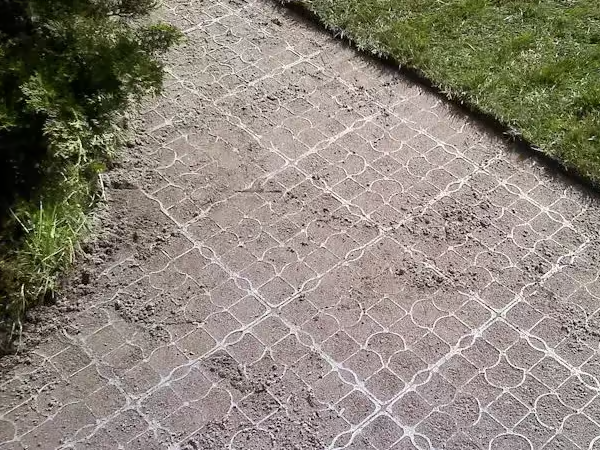
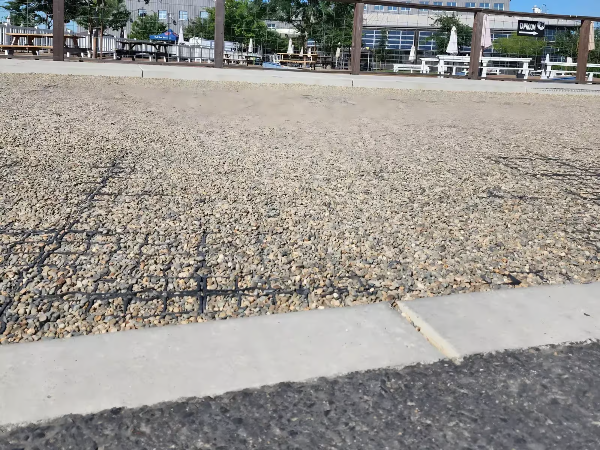
A ground reinforcement grid works as part of a prepared base, cell fill, drainage and finished-surface system. AQUA Rain Water supplies interlocking Ground Grid panels for gravel access, grass parking, paddock mud control and landscaped routes; project inputs define the product and document path.
38 / 50 mm
Two current panel depths
500 × 500 mm
Panel plan size
4 panels/m²
Nominal quantity basis
Four-sided
Interlocking connection
Summary: Ground Grid Project Fit at a Glance
The existing range offers two PP panel models for projects defining the supporting ground and finished surfaces. Black is standard. Other colours can be reviewed for a custom order.
Model Spec
ARW-GR-38
500 × 500 × 38 mm
Model Spec
ARW-GR-50
500 × 500 × 50 mm
Material
PP
Virgin PP optional
Structure
Fillable cells
Not an exposed finished surface
Colour
Black standard
Custom colours reviewed
MOQ Order
No fixed minimum
Individual and custom orders reviewed
Specs
The risk is false confidence from a 38 mm or 50 mm depth because no project condition appears in those dimensions. AQUA Rain Water provides the comparison as procurement evidence, unlike a retail depth selector; the trade-off belongs in the traffic, ground, water and surface review.
Ground Grid Application Fit
The risk is an incorrect choice based on the grid name because the application label does not verify site conditions. A 38 mm or 50 mm AQUA Rain Water panel may still not be correct for the site’s ground and water conditions. The trade-off depends on site-specific traffic, fill and maintenance, unlike a selection based on the application label alone.[2]
Gravel Driveways & Access
Record vehicle type, frequency, turning and braking, then review subgrade, base, edge control and drainage. Fill the cells and keep the completed surface condition in the maintenance plan.
Grass Parking & Overflow Areas
Coordinate structural support with growing medium, species, irrigation, establishment and recovery periods. A grass finish does not remove the need for a checked base and drainage route.
Paddocks & Mud-Control Areas
Correct water entry and weak ground, fill the grid cells, and provide a suitable equestrian surface above. Exposed plastic ribs are not the recommended hoof-contact condition.
Paths & Landscaped Access
Define the finished material, foot or service traffic, gradients, edges and surface runoff. Accessibility and transition details remain project-design decisions.
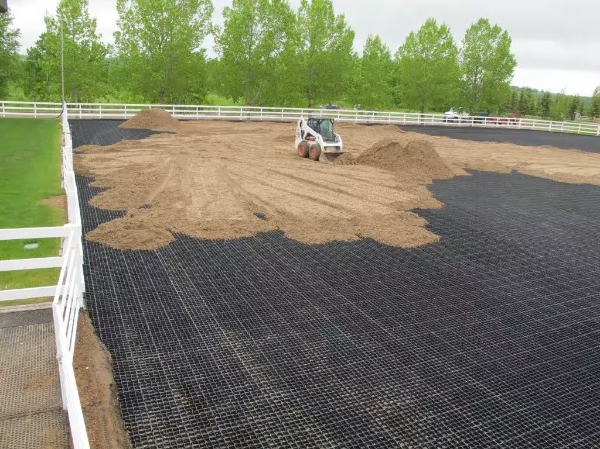
A paver grid may be requested to stabilize gravel in parking lots, a walkway, a muddy livestock access lane or a driveway, but a durable result is not implied by the name. The project route must decide whether to pave or retain a permeable finish, compact the specified base, anchor the edges, control each rut mechanism and verify the required permeability. Those are soil stabilization and surface-design inputs, not hidden product promises.
Application SpecificationsGrid, Base and Fill System
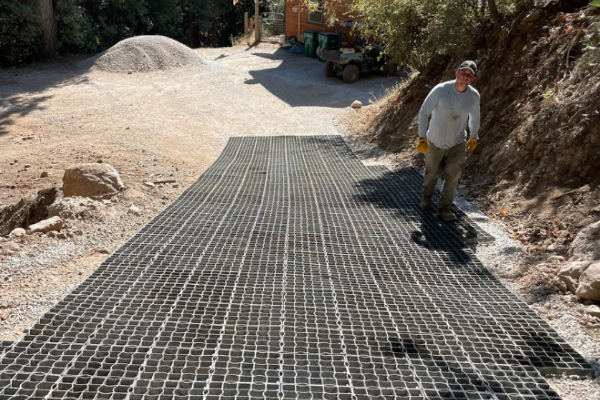
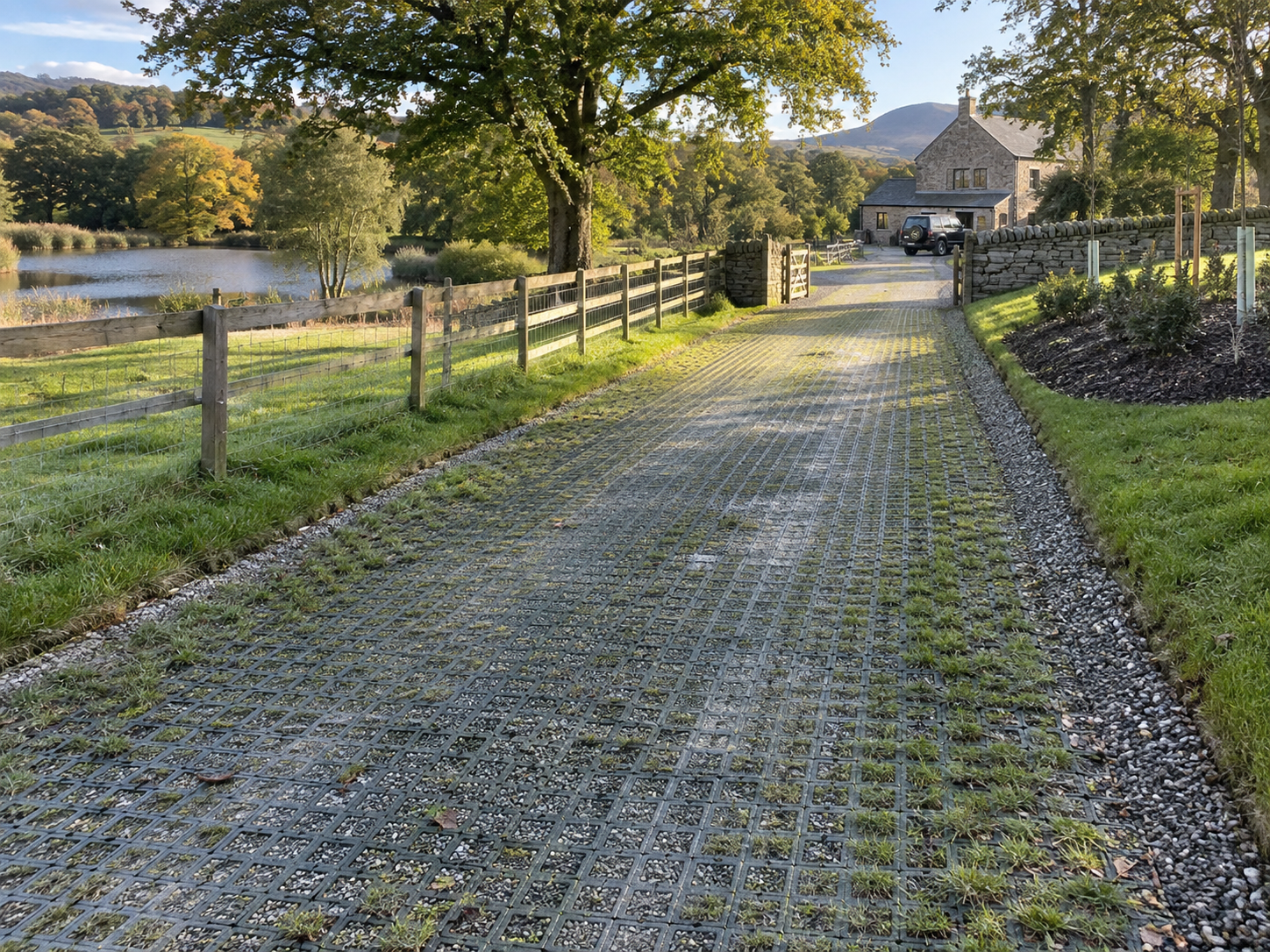
AQUA Ground Grid is an interlocking cellular panel and is a rigid structure. It should not be confused with an expandable geocell, a planar tensile geogrid or a geotextile. These product classes are not substitutes for one another.
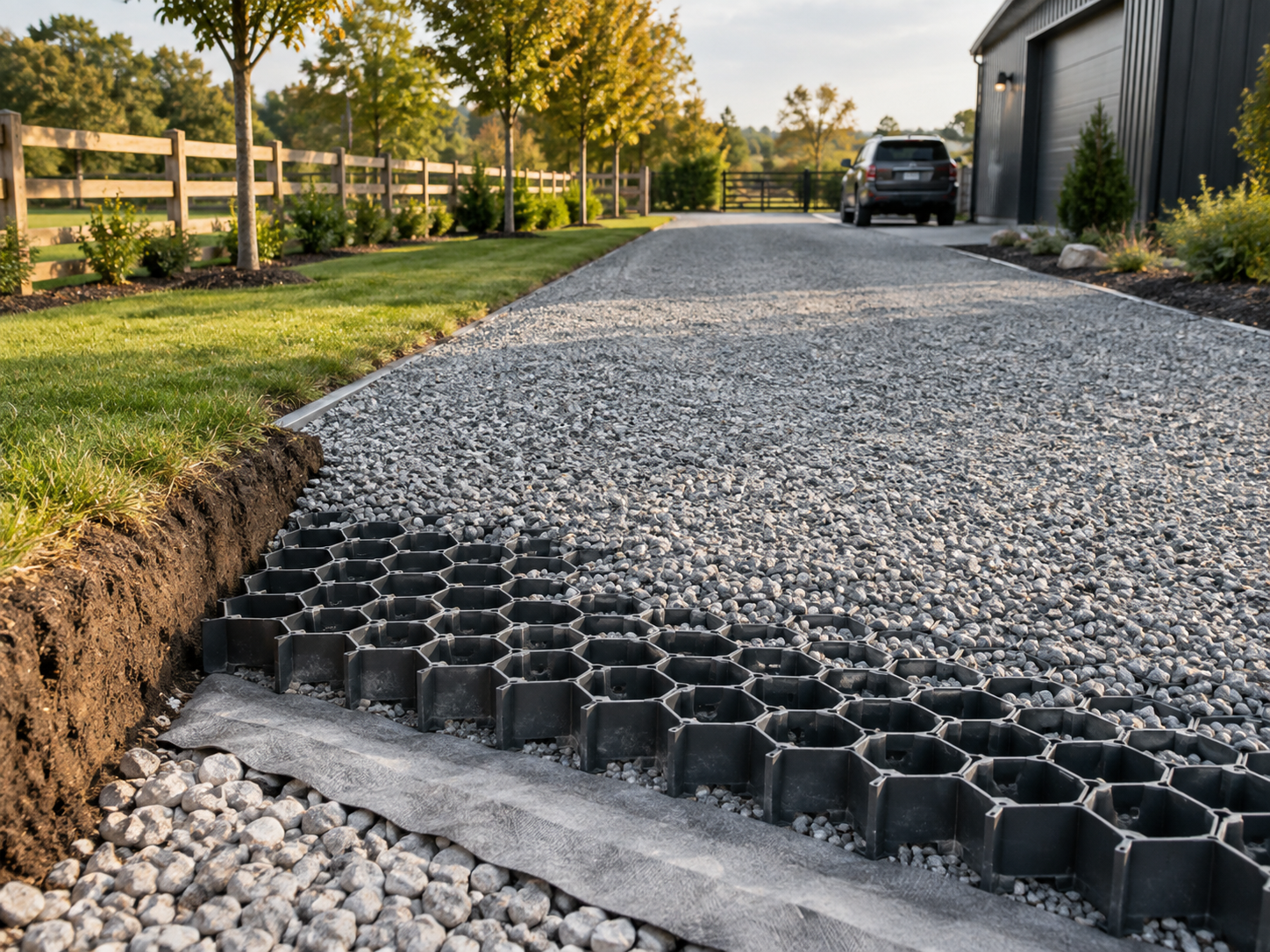
Subgrade
Record soil condition, moisture sensitivity, levels and the effect of expected traffic.
1
2
Separation or filtration, where specified
A geotextile is not always required; select it by function and soil/base compatibility.
Designed aggregate base
Set material and depth through the project’s structural, drainage, frost and construction requirements.
3
4
Level or bedding layer, where specified
Prepare a uniform platform and coordinate the level with edges and adjacent surfaces.
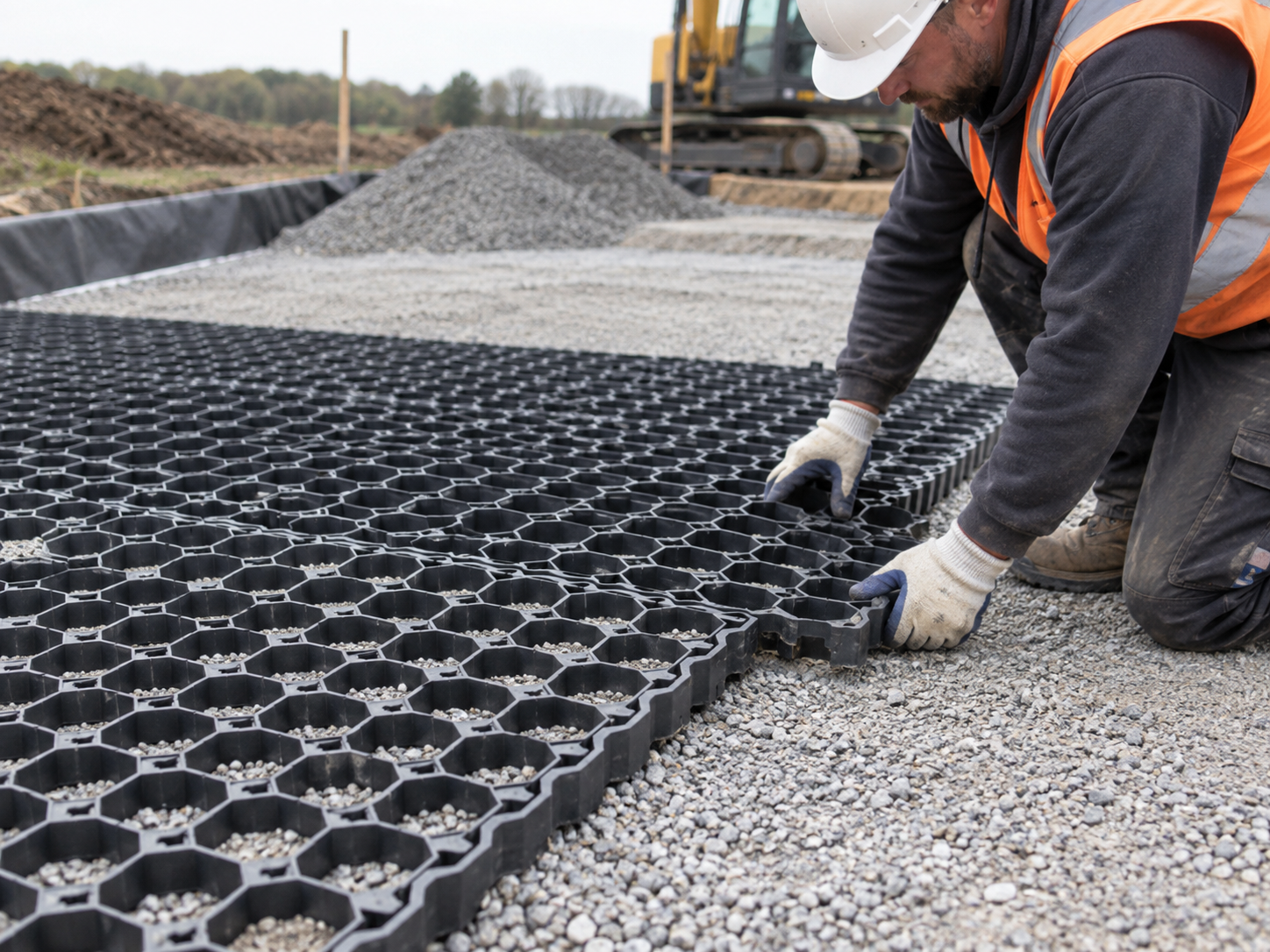
Interlocked Ground Grid
Lay the selected panel model and connect all four sides in the agreed layout.
5
6
Cell fill and finished surface
Use the project-specified fill, complete the surface and preserve drainage and edge conditions.
FHWA describes separation, filtration and reinforcement as different functions within ground-stabilisation design. That system context supports the review route; it does not assign an AQUA product load rating.[1]
“The separation function prevents the subgrade and the subbase from intermixing.”Federal Highway Administration, Geotechnical Aspects of Pavements Reference Manual
Application Assemblies
The comparison below is a scoping framework, not a universal construction detail. Fill grading, base depth, compaction, slope and cover thickness must come from the actual site and design route.[2]
| Application | Surface objective | Fill or cover direction | Base and drainage inputs | Risk to resolve |
|---|---|---|---|---|
| Gravel driveway or access | A contained aggregate surface for defined vehicle use. | Fill cells with the specified aggregate and maintain the completed surface. | Subgrade, design traffic, frost, gradients, edge restraint and outlet path. | Rutting, lateral fill movement and sediment entry under turning or braking. |
| Grass parking or overflow area | A vegetated surface for planned traffic frequency. | Use the specified growing medium and vegetation system. | Structural profile, infiltration or underdrain, irrigation and establishment plan. | Compaction, poor growth, loss of cover and traffic before establishment. |
| Paddock or mud-control area | A drained, covered equestrian surface. | Fill cells and provide a suitable equestrian surface above. | Water source, grades, outlet, weak subgrade and maintenance access. | Exposed ribs, fill loss, standing water and an unsuitable hoof-contact layer. |
| Path or landscaped access | A stable transition compatible with the surrounding landscape. | Choose the finished aggregate or planted surface for the use. | Pedestrian/service traffic, levels, edges and surface-water routing. | Trip transitions, washout, accessibility conflict and blocked drainage. |
Summary: Ground Grid Models and Selection Inputs
General model data provides procurement teams with a clean starting quantity and material. Structural adequacy still requires the project conditions and applicable product evidence to be assessed.
Selection boundary: the trade-off between the two panel depths cannot be settled by area or panel mass because those values do not establish allowable traffic or structural performance. Include the traffic action, soil, base, drainage, fill, geometry and required verification in the review.
Field
ARW-GR-38
ARW-GR-50
Live Specs
Panel size
500 × 500 × 38 mm
500 × 500 × 50 mm
Weight per panel
1.5 kg
2.0 kg
Nominal panel area
0.25 m²
0.25 m²
Panel count
4 panels/m²
4 panels/m²
Theoretical panel mass per m²
6.0 kg/m²
8.0 kg/m²
Material
PP; virgin PP optional
PP; virgin PP optional
Connection
Four-sided interlock
Four-sided interlock
Colour direction
Black standard; custom colours reviewed
Black standard; custom colours reviewed
Quotation and Supply Planning
The risk involved is delay, hidden costs, and rework at the site because a usable quote is beyond just a model name, 38 mm or 50 mm. AQUA ties total panel quantity to supporting products, colour, destination, documents and timing before confirming the offer.
Quotation input
Why it changes the offer
What to send
Quotation input
Model and area
Why it changes the offer
Sets the panel quantity and theoretical unfilled panel mass.
What to send
ARW-GR-38 or ARW-GR-50, net area and allowance.
Quotation input
Use and site profile
Why it changes the offer
Determines which questions must be resolved before selection.
What to send
Traffic, subgrade, base, slope, drainage and finished surface.
Quotation input
Material and colour request
Why it changes the offer
Standard and custom configurations can affect review and scheduling.
What to send
PP configuration, colour and any sample requirement.
Quotation input
Supporting materials
Why it changes the offer
Geotextile or geomembrane may be coordinated with the order where suitable.
What to send
Function, dimensions, specification and quantities.
Quotation input
Packing and consolidation
Why it changes the offer
The order mix and shipment mode affect the packing route.
What to send
Other AQUA products, destination and preferred shipment plan.
Quotation input
Documents and required date
Why it changes the offer
Inspection, test and schedule expectations must be aligned before confirmation.
What to send
Required records, destination, site date and approval milestones.
Batch Inspection and Documentation
The risk is conformity misrepresentation because a label or packing record cannot prove technical performance. Unlike a document-only transfer, AQUA’s moulded-product workflow links the ordered configuration to approximately a 2% factory-check activity, packing, and loading review.
1
Configuration review
Check model, material direction, colour and order details against the quotation.
2
Batch selection
Select approximately 2% of the moulded-product batch for the stated internal checks.
3
Factory checks
Review dimensions, colour, appearance and compression with in-house capability.
4
Packing and loading
Review packing status, container securing, sealing and photographic records where agreed. Product configuration, inspection status and packing are reviewed before loading.
Witness options
Factory-witnessed tests or test video can be arranged when agreed for the order.
Document scope
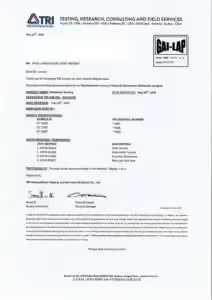
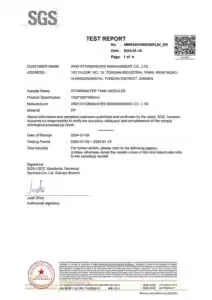
The applicable product configuration, inspection record, packing record, and selected test reports or company certificates can be supplied according to the product and order.
Third-party boundary
Selected product test reports or company certificates may be provided where applicable; internal testing is not described as third-party certification.
How We Work: Project Review and Supply Process
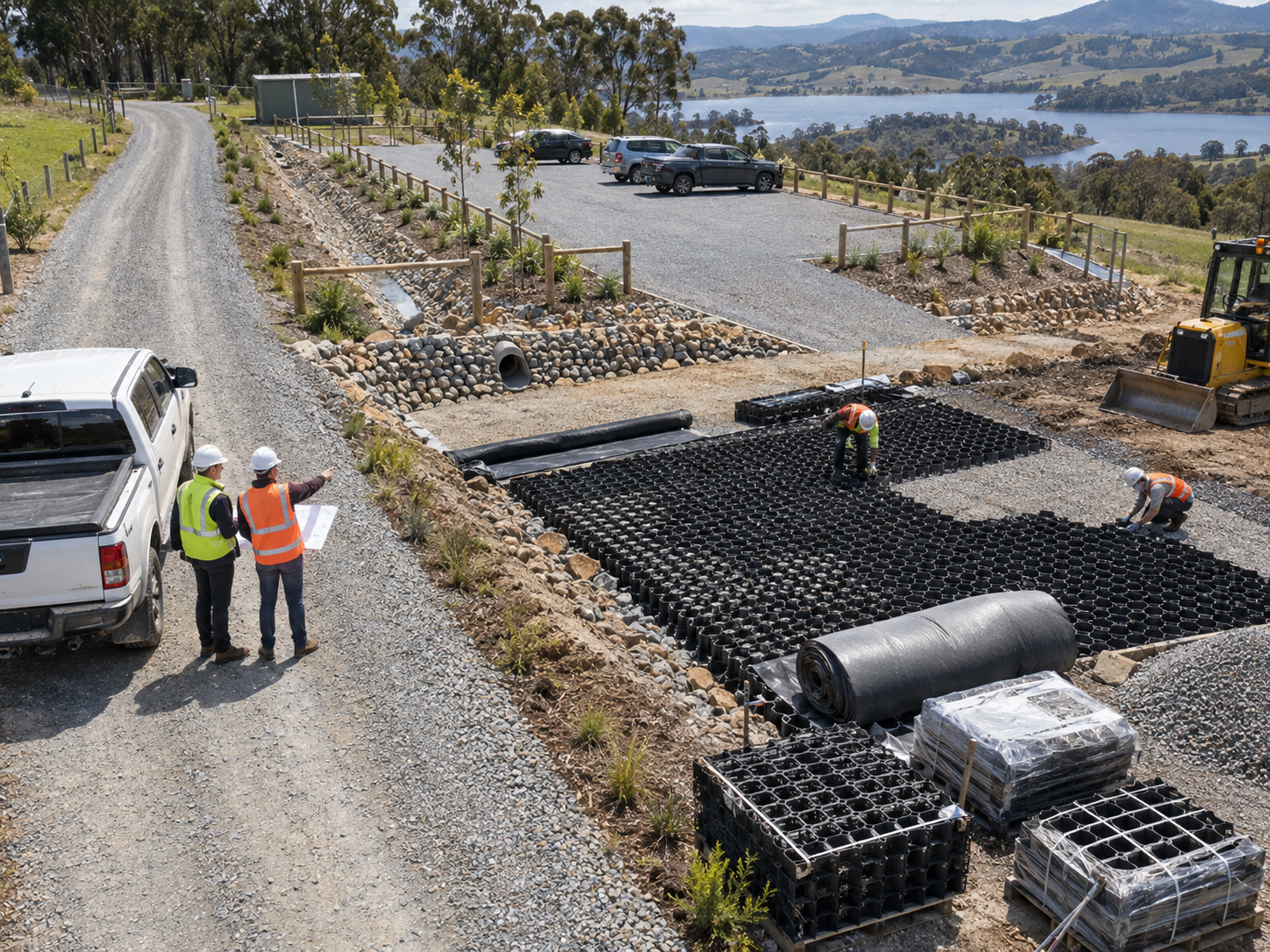
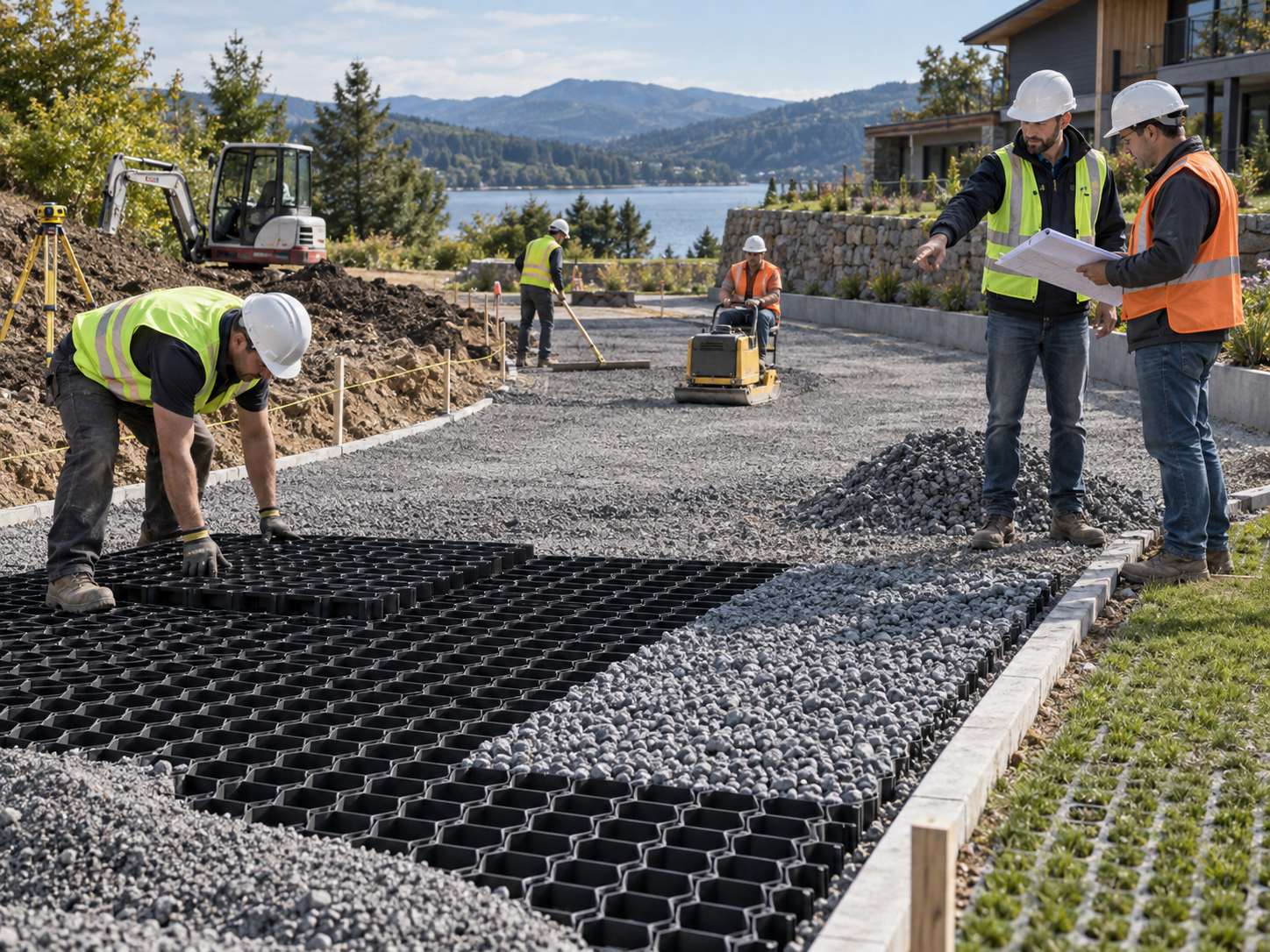
The process separates site design from product supply and installation. AQUA can supply the ordered product, supporting materials and product-related documents. The final ground works are the responsibility of the project designer and installer.
Provide drawings or photographs, dimensions, adjacent levels, traffic pattern, drainage route, fill and surface specification, required records, destination and project date before the offer is frozen.
-
Send application, area, site section, traffic and the intended surface.
-
Review subgrade, base, drainage, groundwater, sediment and edge conditions.
-
Map the project to an AQUA model and any support materials requested.
-
Confirm the quotation, order-specific schedule and applicable document scope.
-
Produce the moulded product and complete the agreed batch checks.
-
Pack, supervise loading where arranged and hand the export documents to the buyer.
-
Remote guidance, loading supervision and on-site technical support can be arranged. AQUA does not present itself as the installation contractor or undertake the full construction scope.
Quality Assurance and Factory Supply Evidence
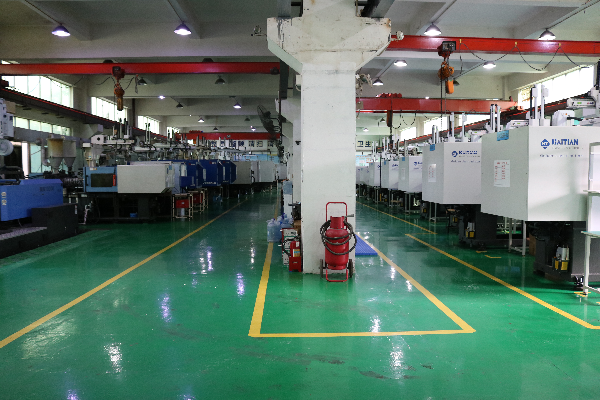
AQUA Rain Water was established in 2009 and has approximately 15 years of export experience. The core moulded-product operation uses 30 injection-moulding machines on a two-shift, 24-hour operation and includes in-house compression-test capability.

2009
Factory established
≈15 years
Export experience
30 machines
Injection-moulding operation
Two shifts
24-hour production operation
Export coordination
Main export regions include the Middle East, Europe and the Americas, with loading supervision available by arrangement.
Supporting supply
AQUA procures and coordinates supporting geotextile and geomembrane through its supply process.
Confidential handling
Project, customer and distributor identities are not disclosed unless specifically approved.
Capacity and container-timing figures published for the stormwater-module range are not applied to Ground Grid. The quotation confirms the Ground Grid schedule for the actual model, material preparation, order mix and season.
Request the applicable factory and order recordsApplication Limits and Better Routes
A grid should not be used to conceal an unresolved ground or water problem. Selecting the product before the drainage path is the wrong call; these stop-and-review conditions turn a risky specification into a concrete engineering or procurement action.[3]
| Condition | Why the grid alone is not enough | Better route |
|---|---|---|
| Unprepared soft or pumping subgrade | The support layer can deform or contaminate the base. | Complete a site and base review, including separation or stabilisation needs. |
| Unknown heavy, frequent-turning or braking traffic | Panel depth does not define the completed system’s traffic capacity. | Clarify design traffic and obtain project-specific structural review and evidence. |
| High water table or unknown drain-down path | A permeable surface cannot create an outlet or storage recovery by itself. | Review infiltration, groundwater separation, outlet or underdrain and local requirements. |
| Sediment-laden run-on | Accumulated fines can block surface voids and reduce infiltration. | Correct upstream erosion and sediment control, then set an inspection plan. |
| Hazardous spill or unresolved chemical exposure | Infiltration can create a soil or groundwater pathway, and product resistance is unverified. | Complete a spill-exposure and containment review or choose a verified alternative. |
| Exposed equestrian contact | Unfilled ribs are not the intended completed hoof-contact surface. | Fill the cells and provide a suitable equestrian surface above. |
| Mandatory durability or service-life evidence | Public UV, temperature, freeze-thaw, chemical-resistance, life and warranty data are not available. | Request the applicable evidence list or specify a verified alternative. |
Owner / Operator Checks
Inspect for fill loss, exposed or damaged grid, blocked drainage and sediment build-up. Set frequency and repair methods through the site use, designer and maintenance plan.
Grass-Surface Checks
Monitor cover, bare areas, rutting, irrigation and recovery after traffic. Restore the growing surface before ribs remain exposed.
Gravel-Surface Checks
Monitor aggregate migration at turns, edges and drainage points. Replenishment and grading should preserve the specified finished surface.
Ground Grid Applications & Ground Reinforcement Engineering Tools
Select the appropriate utility below to estimate project requirements, review model specifications, or verify your RFQ completeness.
Ground Grid Area and Panel Estimator
Calculate the exact number of panels and total coverage area required for your ground reinforcement project.
Ground Grid Model Review Router
Determine the appropriate ground grid model by reviewing site conditions, traffic loads, and application requirements.
Ground Grid RFQ Completeness Checker
Verify all necessary project specifications and requirements are included before submitting your request for quotation.
FAQ: Ground Reinforcement Grid Questions
Do gravel grids really work?
Only as one part of a designed and maintained surface system.
Do I still need base aggregate under a ground grid?
Often, yes, because the base contributes support and drainage. Its material and depth remain project decisions shaped by soil, traffic, frost, water and local requirements, so a generic installation detail cannot settle the question.
What goes under a gravel driveway grid?
Start with prepared subgrade, then add separation or filtration where specified, a designed aggregate base and any required level layer. Match the section to the site.
What fill is used in a ground reinforcement grid?
That depends on the finished surface. Gravel, planted and equestrian routes need different grading, drainage and maintenance decisions.
Will the grid remain visible after installation?
No exposed riding or traffic surface is intended. Fill the product for the application, inspect it in service and replenish lost material before ribs remain exposed.
Why do mud control grids sink or move?
Soft subgrade, inadequate support, water entry, poor drainage, edge movement or fill loss may each contribute. Diagnose the ground profile and water path first; replacing panels without resolving the cause can reproduce the same movement.
How should a horse paddock grid be surfaced?
Fill the cells and provide a suitable equestrian surface above.
Which AQUA model fits the project?
ARW-GR-38 and ARW-GR-50 differ in depth and panel mass, yet those facts do not assign a traffic class. Send the application, traffic action, subgrade, base, drainage, fill, finished surface and evidence needs for a model review.
What inspection and document options are available?
AQUA can review moulded-product configuration, dimensions, colour, appearance, compression, packing and loading. Witnessed testing, video and applicable records can be discussed for the order.
What should a ground grid RFQ include?
Begin with the application, area and traffic. Add ground and base conditions, slope, groundwater and drainage route, sediment or spill exposure, fill and finished surface, maintenance responsibility, colour, supporting materials, document needs, destination and required date; drawings or site photographs make the review more useful.
![Aquavoid System Shallow Surface Drainage [Guide]](https://aquarainwater.com/wp-content/uploads/2026/10/aquavoid-system-shallow-surface-drainage-blog-featured-150x150.png)


