Get in touch with AQUA Company
Stormwater Management Solutions & Product Routes
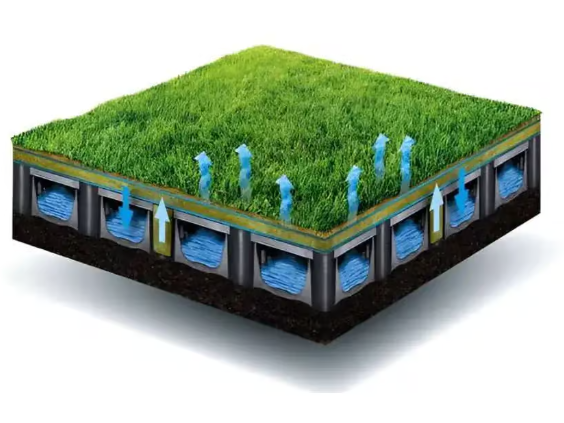
AQUA stormwater management solutions begin with the project outcome: temporary storage, controlled discharge, infiltration, reuse, or ground reinforcement. The review addresses modular products and supporting materials with respect to your design inputs and configurational control, inspection, packing and delivery.
- 7 current product families
- Model-specific review
- Moulded-batch inspection
- Export packing support
Project, customer and distributor identities remain confidential unless publication is specifically approved.
Core module production
One 40HQ in approximately 2–3 days; up to about 7 days excluding raw-material preparation
Main modular shipments
Full-container shipment preferred; suitable LCL and smaller-container orders reviewed
Ground Grid & Geotextile
No fixed minimum order quantity
Geomembrane orders
Starting from one small container
Factory audits
Accepted by appointment; a normal audit takes 1–2 days
Loading supervision
Available for 1–2 days according to the loading schedule
Stormwater Terms and Solution Routes
Project language varies based upon market, so we do not launch a product from one keyword. A buyer may request a retention tank, while in fact they may be requesting a temporary detention and controlled discharge. The first review verifies the hydraulic outcome, jurisdictional language, available area, soil and groundwater conditions, discharge point, and the intended use of water.1
Stormwater Terminology-to-Product Route Matrix
| Market term | Hydraulic objective | Project inputs | Product route / Supply review |
|---|---|---|---|
| Attenuation | Hold runoff temporarily and reduce the peak discharge. | Design volume, allowable outflow, footprint, invert level, cover and surface load. | Geocellular tank, module or shallow tank review with lining, outlet and inspection interfaces defined by the project team. |
| Detention / OSD | Store stormwater on site and release it through a controlled outlet. | Local OSD criteria, inflow hydrograph, permitted discharge, overflow, access and maintenance. | Modular underground storage and supporting-material review; hydraulic approval and outlet design remain with the responsible engineer. |
| Retention | Clarify whether the brief means a permanent pool, longer-term storage, infiltration or reuse. | Required water level, drawdown route, water-quality target, groundwater and local terminology. | The confirmed objective is routed to lined storage, infiltration or harvesting inputs instead of assuming one universal construction. |
| Infiltration | Return stored runoff to suitable ground and reduce off-site volume. | Field infiltration testing, soil profile, groundwater separation, contamination risk and authority requirements.2 | Geocellular storage with the project-specified geotextile and pretreatment interfaces, subject to geotechnical and regulatory review. |
| Soakaway | Provide a below-ground void that receives runoff and allows it to disperse into the surrounding soil. | Same-site infiltration evidence, seasonal groundwater, setbacks, pollutant source and maintenance access. | Module or tank review after the infiltration route is accepted by the project engineer and local authority. |
| Rainwater Harvesting | Store collected rainwater for a defined end use. | Source water, demand profile, end use, treatment target, pump/control scope and responsible authority. | The review covers the storage body and lining materials; treatment, pumps, controls and water-use approval are separate project scopes. |
| Ground Reinforcement | Stabilise filled parking, access, landscape or equestrian surfaces rather than store water. | Base preparation, fill, drainage, traffic or use condition and finished surface build-up. | ARW-GR-38 or ARW-GR-50 Ground Grid review, routed to the dedicated application brief when deeper design detail is required. |
Routing rule that prevents the expensive mistake
A term can describe a regulatory objective in one market and a physical asset in another. Put the required outcome and authority criteria on the enquiry before a model name; that keeps detention, infiltration and harvesting requirements from being collapsed into the same tank specification.
AQUA Product Families for Project Review
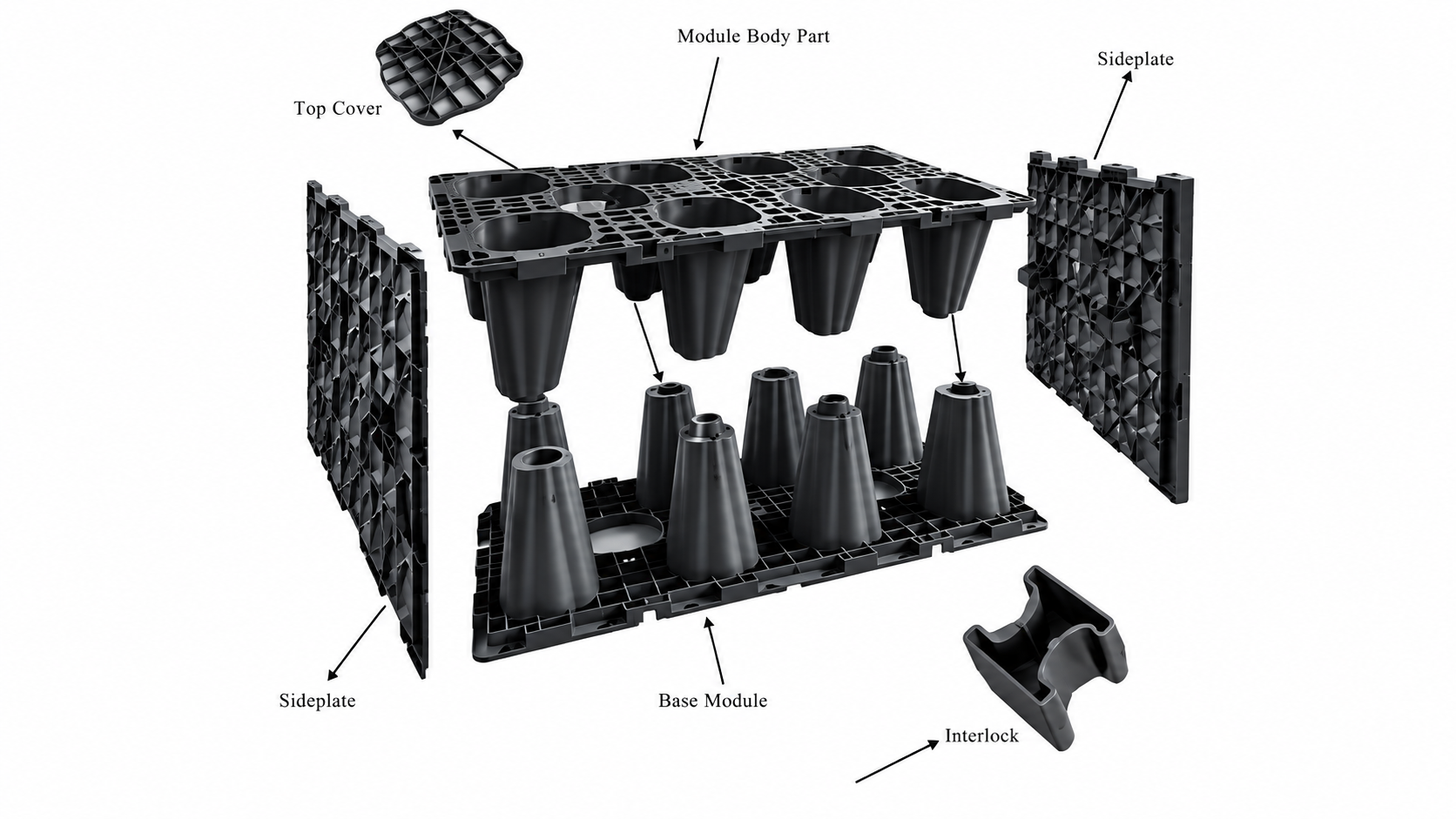
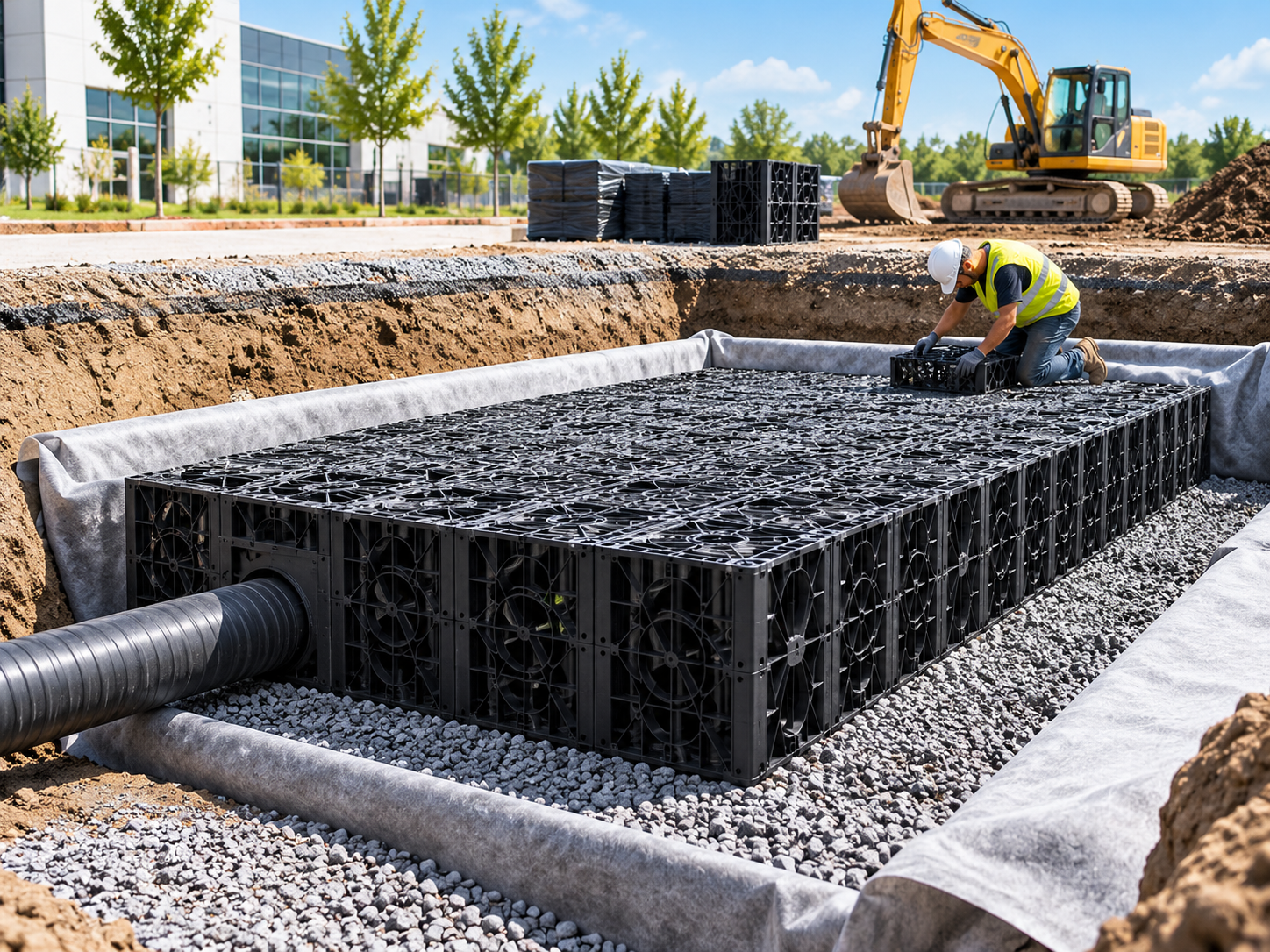
Our current stormwater management products cover modular storage bodies, shallow configurations, ground reinforcement and selected supporting materials. Each review fixes the public model family, interfaces, ordered standard and document scope before the configuration is released for production or procurement.
Geocellular Stormwater Tank
Public family: ARW-1050 in 500 mm and optional 400 mm heights.
We review storage volume, footprint, cover, loading direction, inlet/outlet sizes, inspection opening, wrap and lining requirement.
Geocellular Stormwater Module
Public series: ARW-8053, ARW-8025 and ARW-6841.
Series and stacking are reviewed against required volume, available depth, layout, connector detail, packing plan and the applicable structural evidence, including ASTM F3754-25 when specified by the project.
Shallow Attenuation Tank
Public models: ARW-SA-85, ARW-SA-150, ARW-SA-200 and ARW-SA-250.
The 1000 × 500 mm footprint supports low-height layouts where the correct single-height model is preferred before stacking is considered.
Ground Grid
Public models: ARW-GR-38 and ARW-GR-50.
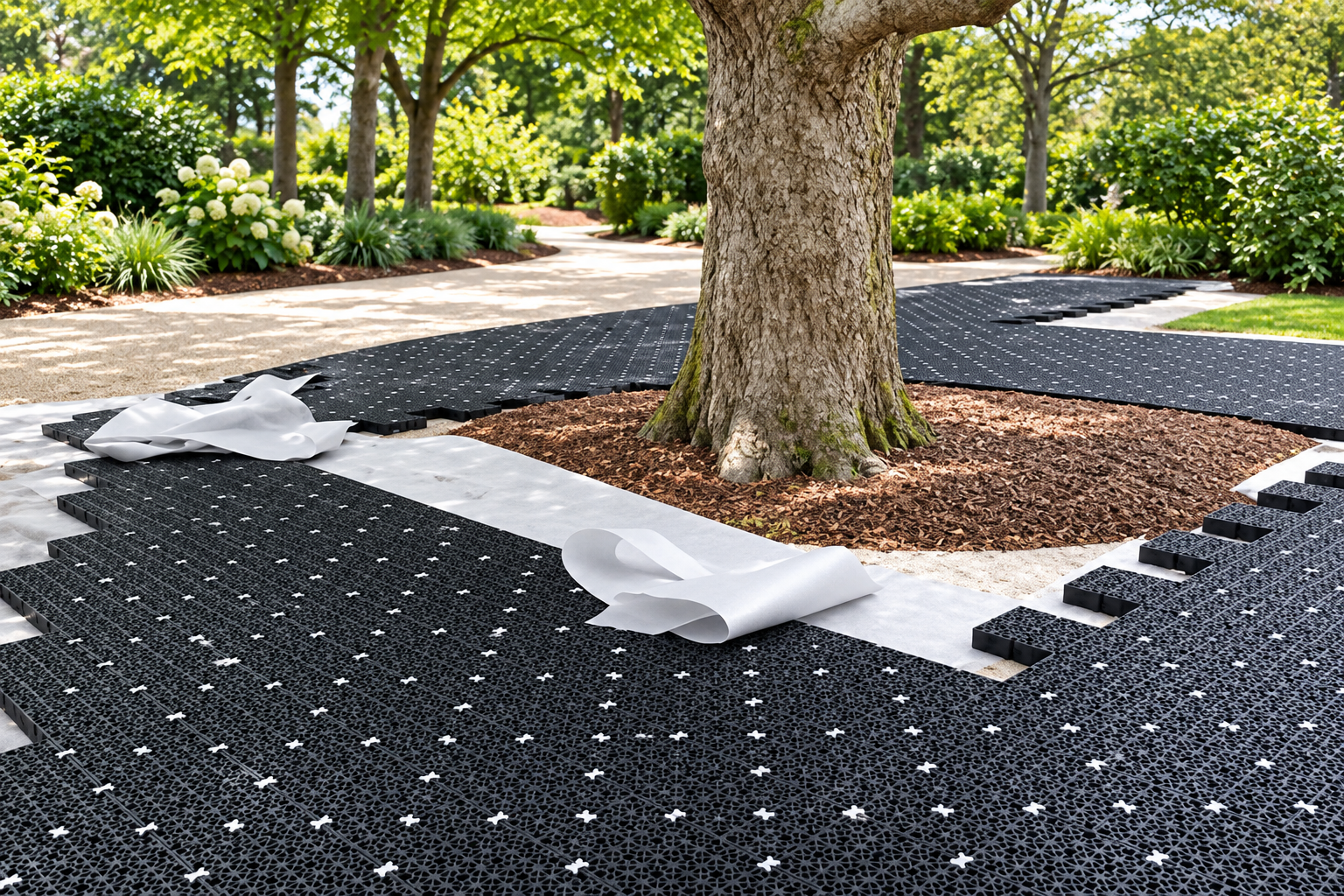
We review the filled surface system, base, drainage and use condition; the grid is not specified as an exposed plastic traffic or riding surface.
Geotextile
Range: 100–800 g/m² woven or nonwoven engineering geotextiles in ordered PP or PET construction.
We coordinate this procured material for filtration, separation, drainage, reinforcement or liner protection against the project specification.
Geomembrane
Range: 0.3–3.0 mm HDPE, with LLDPE available and smooth or ordered textured surfaces.
We coordinate the procured membrane, roll or pre-welded panel format, ordered GB/T or GRI route and any requested welding accessories.
EPDM Pond Liner
Public models: 35, 40, 45 and 60 mil, with rolls up to 8 m wide and custom joined panels available.
This is a separate pond-lining product route and is not automatically specified as part of a modular stormwater tank.
Geocellular Sub-base System
82 mm · H5082 / H2582 / H1582 / H1082 / H1382
An 82 mm cellular layer for shallow sub-base drainage and project-specific component layouts. This is a separate product family from the 85–250 mm shallow attenuation tanks.
System Interfaces and Supporting Materials
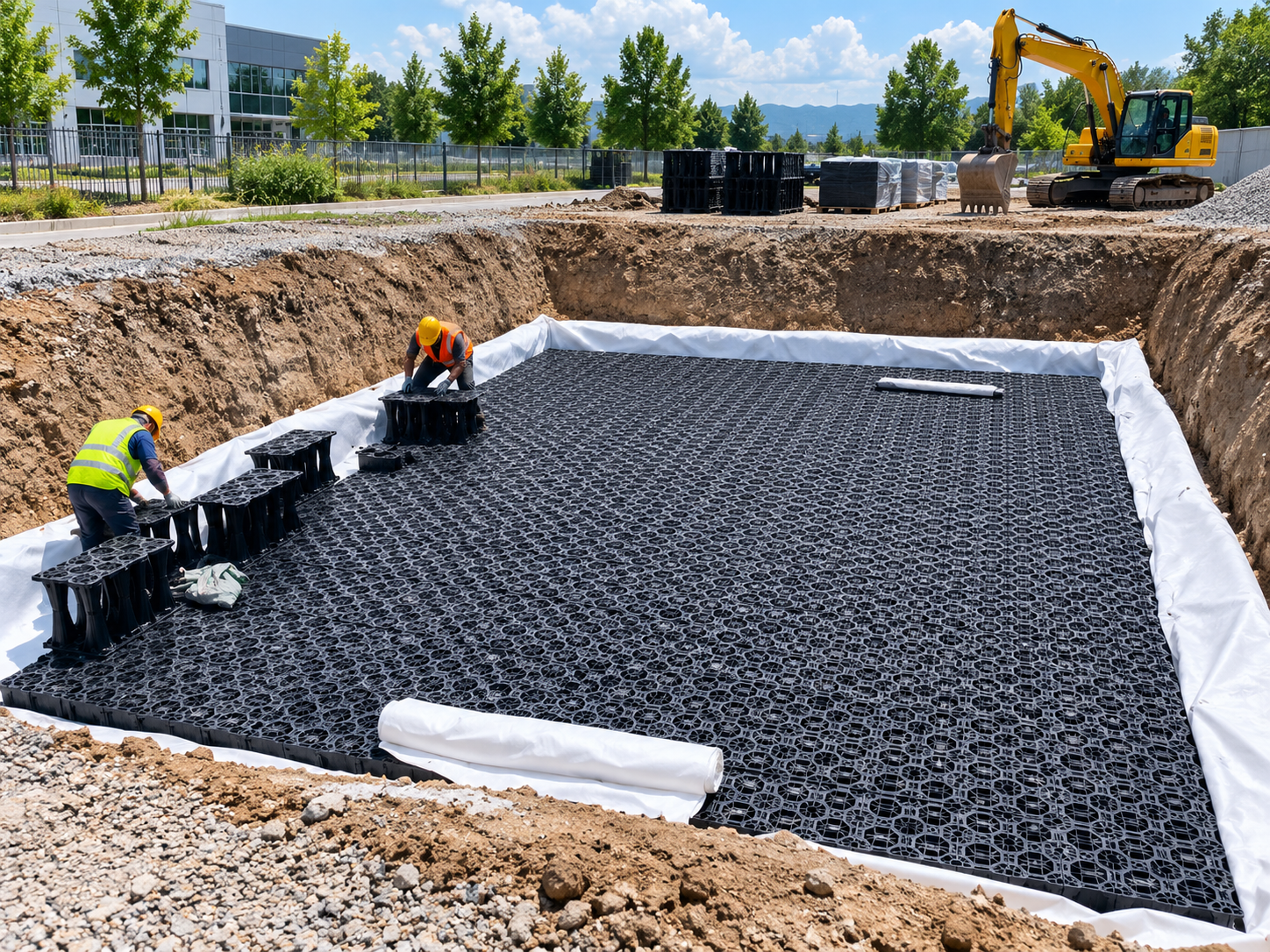
A modular storage body works solely as part of an engineered build-up. While we arrange the AQUA products, the project team confirms the hydraulic, structural, geotechnical, treatment and construction issues. 5 Underground storage can save surface area; however, inspection, cleaning and repair must be maintained.
| System layer or interface | AQUA supply or coordination | Input required from the buyer | Project-team confirmation |
|---|---|---|---|
| Storage body | Tank, module or shallow model and ordered component configuration | Design volume, footprint, depth and layout | Hydraulic routing and installed-system design |
| Panels and connectors | Side panels, covers, clips and model-specific accessories | Assembly layout and connection detail | Site method and construction sequence |
| Geotextile | Ordered woven/nonwoven material for separation, filtration or protection | Material, mass, roll size and required standard | Soil/filter compatibility and puncture-protection design |
| Geomembrane | Ordered HDPE or LLDPE membrane and arranged accessories | Material, thickness, surface, panel/roll and seam requirements | Liner design, seam acceptance and installation QA |
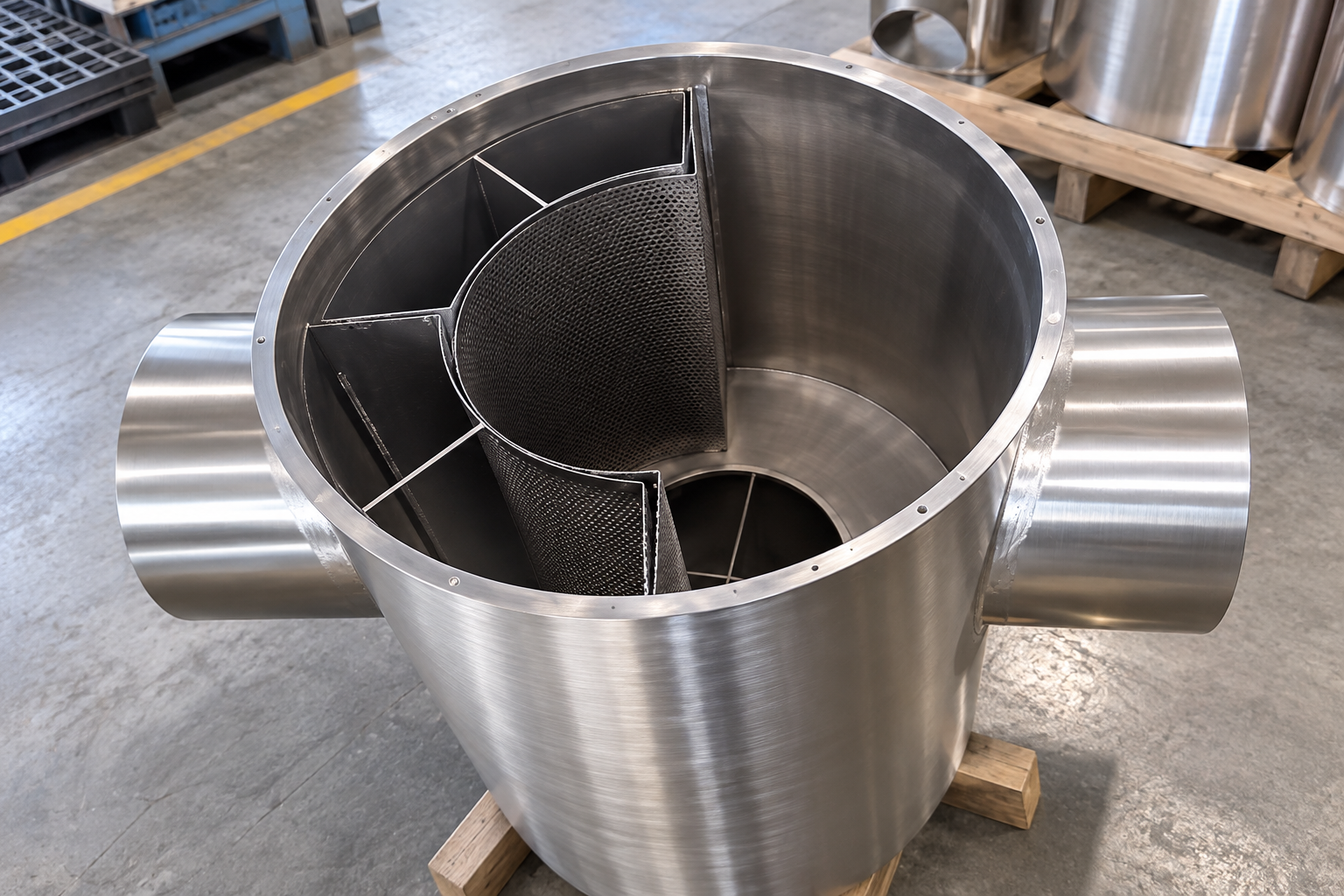
| Inlet, outlet and inspection | Available tank accessories reviewed with the chosen model | Pipe sizes, invert levels and access openings | Flow control, overflow, pretreatment and maintenance access |
| Ground Grid surface | ARW-GR panels in the ordered height and colour | Traffic/use condition, fill and finished surface | Subgrade, base, compaction and drainage |
| EPDM pond lining | Separate liner roll or custom joined panel | Pond geometry, thickness and panel size | Substrate preparation, seam layout and installation |
Outside the standard modular supply package
- Catchment and rainfall modelling
- Flow-control design and authority approval
- Water-treatment equipment, pumps and controls
- Earthworks, installation and construction management
Product Models and Project Selection Inputs
The comparison below uses current model records for size, void ratio, calculated usable storage and standard unit or panel-set weight. Structural suitability is reviewed separately because buried-system performance also depends on foundation, bedding, backfill, compaction, embedment, cover, live load and installation.4 The risk of overclaim arises because AQUA Rain Water unit data and project-system verification answer different questions.
| Model / configuration | Dimensions (L × W × H) | Void ratio | Calculated usable storage | Recorded weight |
|---|---|---|---|---|
| ARW-1050 standard | 1000 × 500 × 500 mm | 95% | 237.5 L | 9.8 kg complete unit |
| ARW-1050 low height | 1000 × 500 × 400 mm | 95% | 190 L | 9.8 kg complete unit |
| ARW-8053 standard | 800 × 490 × 530 mm | approximately 95% | approximately 197 L | 11.932 kg excluding connectors |
| ARW-8025 standard | 800 × 490 × 250 mm | 94% | approximately 92 L | approximately 7.94 kg excluding connectors |
| ARW-6841 standard | 680 × 410 × 450 mm | 95% | approximately 119.2 L | 8.028 kg excluding connectors |
| ARW-SA-85 | 1000 × 500 × 85 mm | 95% | 40.375 L | Confirmed with the order record |
| ARW-SA-150 | 1000 × 500 × 150 mm | 95% | 71.25 L | Confirmed with the order record |
| ARW-SA-200 | 1000 × 500 × 200 mm | 95% | 95 L | Confirmed with the order record |
| ARW-SA-250 | 1000 × 500 × 250 mm | 95% | 118.75 L | Confirmed with the order record |
Inputs required before model review
Confirm all site specific parameters prior to finalizing the system layout.
Send Project Inputs for Model Review- Required design storage volume
- Allowable discharge and receiving point
- Detention, infiltration or harvesting objective
- Available footprint and invert level
- Cover depth and finished ground level
- Traffic and construction loads
- Soil profile and measured infiltration rate
- Seasonal high groundwater
- Inlet, outlet and overflow sizes
- Inspection and maintenance access
- Project standard and document request
- Destination and required delivery date
Terminology Route Builder
Turn a market term into the hydraulic objective, missing inputs and AQUA review route.
Open the route builderPreliminary Storage Layout
Compare module counts and footprints from a design volume without turning the result into a final design.
Open the layout toolProject Input Checklist
Generate a copy-ready enquiry brief for technical and shipping review.
Build the checklistQuotation, Production and Shipment Planning
Quotation initiation is based upon the agreed objective, model or grade, quantity, accessories, geotextile or lining scope, packing plan, destination, required date and document scope. Without these inputs, there is no meaningful price.
What changes the quotation
| Driver | What it changes | What to send |
|---|---|---|
| Storage and layout | Module count, series, layers, footprint and accessories | Design volume, plan area and level information |
| Structural route | Model grade, configuration and evidence review | Cover, surface use, live loads and project standard |
| Wrap and lining | Geotextile, geomembrane and protection scope | Detention/infiltration objective and material specification |
| Interfaces | Inlet, outlet, inspection and connection accessories | Pipe schedule, invert levels and access requirement |
| Logistics | Pallets, accessory cases, container selection and consolidation | Destination, order mix and requested shipment date |
| Documents | Inspection, product report and company-certificate package | Required document list and acceptance stage |
Current commercial routes
-
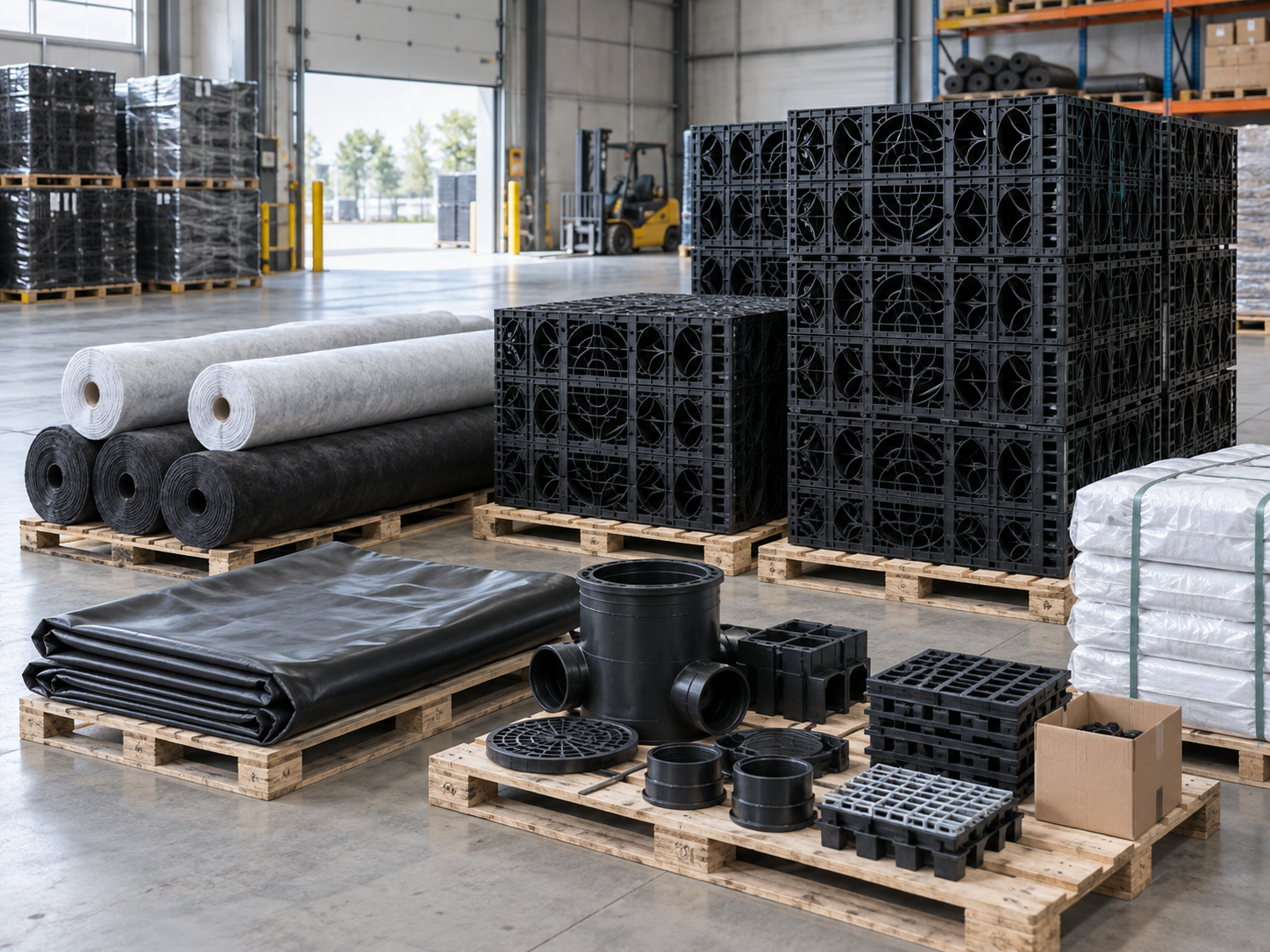
Core moulded modules
Core moulded module planning uses approximately 2–3 production days for one 40HQ and allows up to about 7 days excluding raw-material preparation. Model, order mix and peak-season loading determine the confirmed date.
-
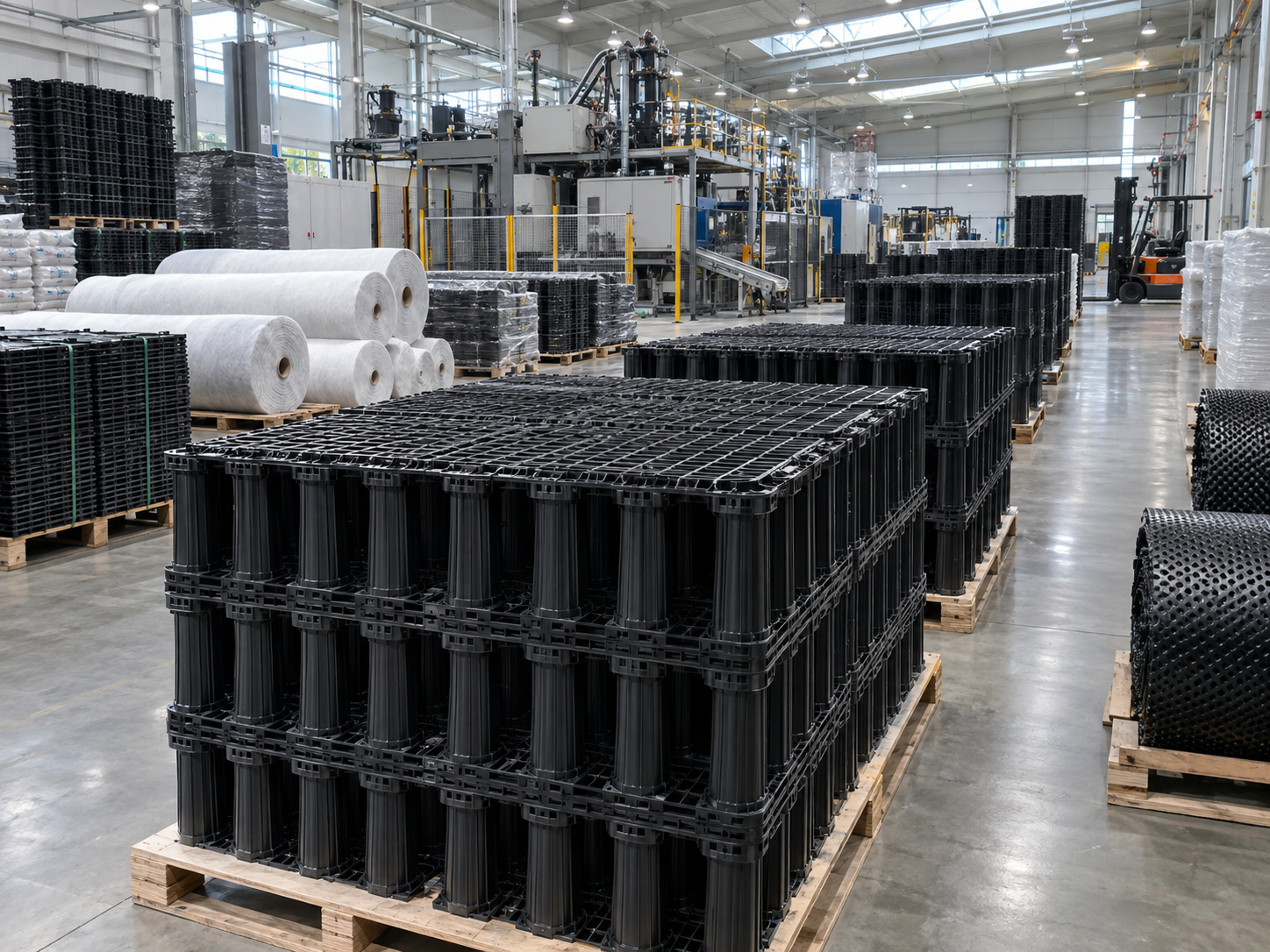
Container planning
Full-container shipment is preferred for the main modular products. Suitable LCL, smaller-container and multi-product consolidation routes are reviewed against packing protection and destination handling.
-
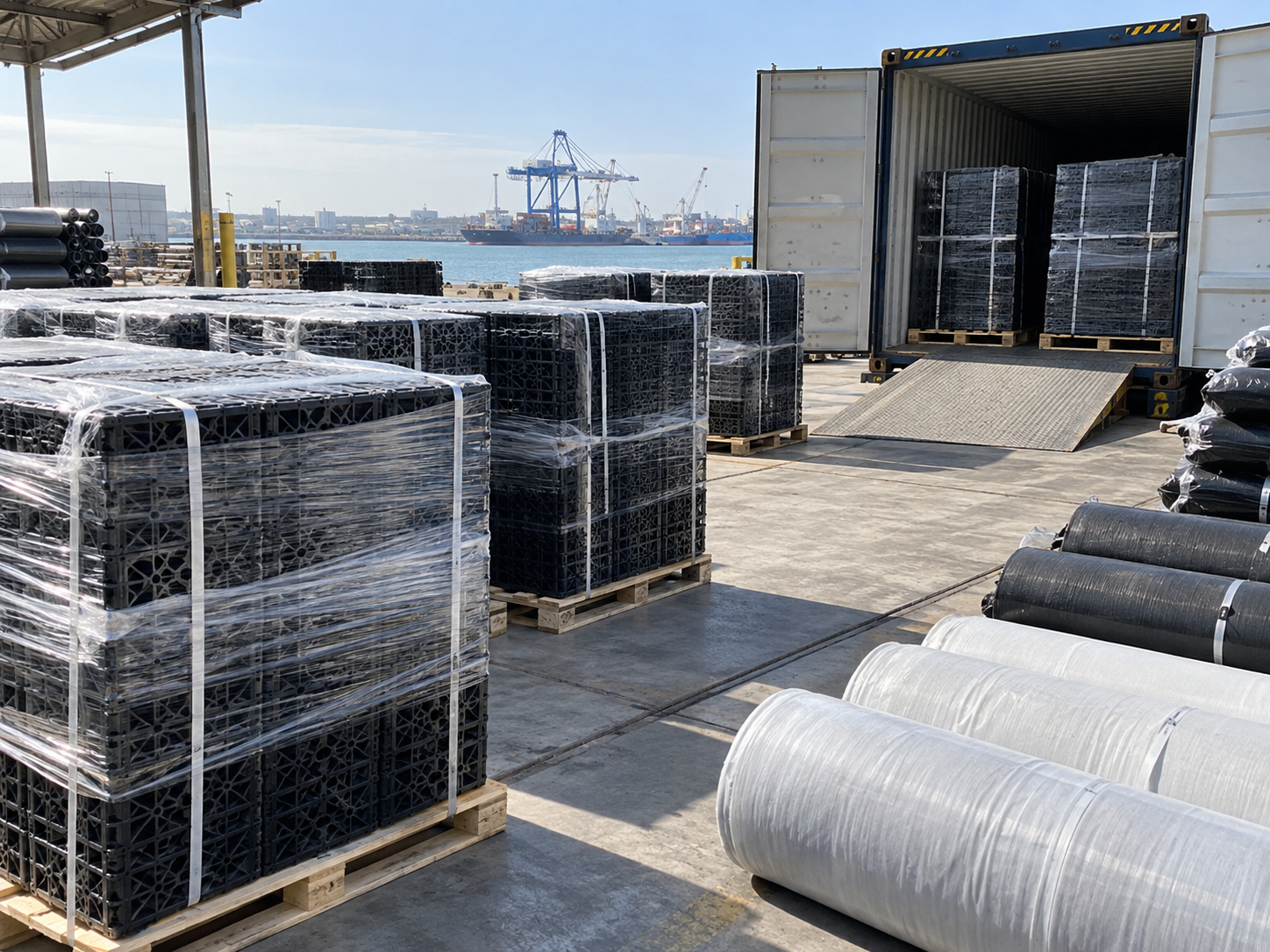
Supporting products
Ground Grid and Geotextile have no fixed minimum order quantity; Geomembrane starts from one small container. Sample, production and consolidation terms are confirmed by product and order.
Batch Inspection and Documentation
Prior to loading, the ordered configuration, the status of moulded product inspection, and packing are checked. For core moulded-product batches, the owner confirmed that the approximately 2% sampling activity covers dimensions, colour, appearance and compression. Confusing an inspection activity with a statistical acceptance plan creates a documentation risk.
Moulded-product batch workflow
Configuration review:
confirm model, load grade, components, accessories and ordered colour.
Approximately 2% sampling activity:
select items for dimensional, colour, appearance and compression checks.
Result and document review:
record the agreed inspection status and identify applicable product reports.
Packing and loading review:
check pallets, accessory cases or bags, securing, sealing and photographic records.
Inspection capability
- In-house compression testing machine for internal or witnessed testing
- Factory-witnessed tests or test video by prior agreement
- Dimension, colour and appearance checks for sampled moulded items
Document scope
- Product configuration and inspection status
- Packing and loading review records
- Selected product test reports and company certificates according to product and order
How to read the sampling figure
The approximately 2% figure describes an inspection activity, not a statistical lot-acceptance guarantee. A formal acceptance plan also needs a defined lot, selection method and decision rules; those elements are not inferred from a percentage alone.6
The moulded-product process is not extended to every procured Geotextile, Geomembrane or EPDM batch, and internal testing is not presented as third-party certification.
Project Review and Supply Process
Confirm the project outcome and missing inputs first; release a product configuration only when its model, interfaces and evidence scope are clear.
Step 01
Send project inputs:
provide the hydraulic objective, volume, layout, levels, loads, soil/groundwater, interfaces, destination and required date.
Step 02
Confirm the terminology:
we translate attenuation, detention, OSD, retention, infiltration, soakaway or harvesting language into the intended project outcome.
Step 03
Review the product route:
we compare current models and identify the geotextile, lining, connector and accessory scope to be quoted.
Step 04
Fix the order scope:
quotation, model, configuration, documents, packing, consolidation and delivery timing are recorded.
Step 05
Produce and inspect:
core moulded products enter the ordered production and batch-check workflow; procured materials follow their specified supply route.
Step 06
Pack and hand over:
we supervise the agreed loading steps and provide the product-related export handoff.

AQUA product-review principle
Inputs that prevent rework
| Input | Decision protected |
|---|---|
| Volume and discharge | Storage quantity and outlet objective |
| Footprint, invert and cover | Series, height and layer arrangement |
| Traffic and construction loading | Structural configuration and evidence route under ASTM F3754-25 when applicable |
| Soil and groundwater | Infiltration suitability, lining and uplift considerations |
| Pipe and inspection access | Accessories, interfaces and maintainability |
| Destination and document list | Packing, shipment and submittal scope |
Supply handoff
We supply products, supporting materials and product-related documentation, with remote guidance, loading supervision and arranged technical support. The project’s hydraulic, structural, geotechnical and regulatory approval, plus installation construction, remain with the appointed project team.
Factory and Supply Evidence
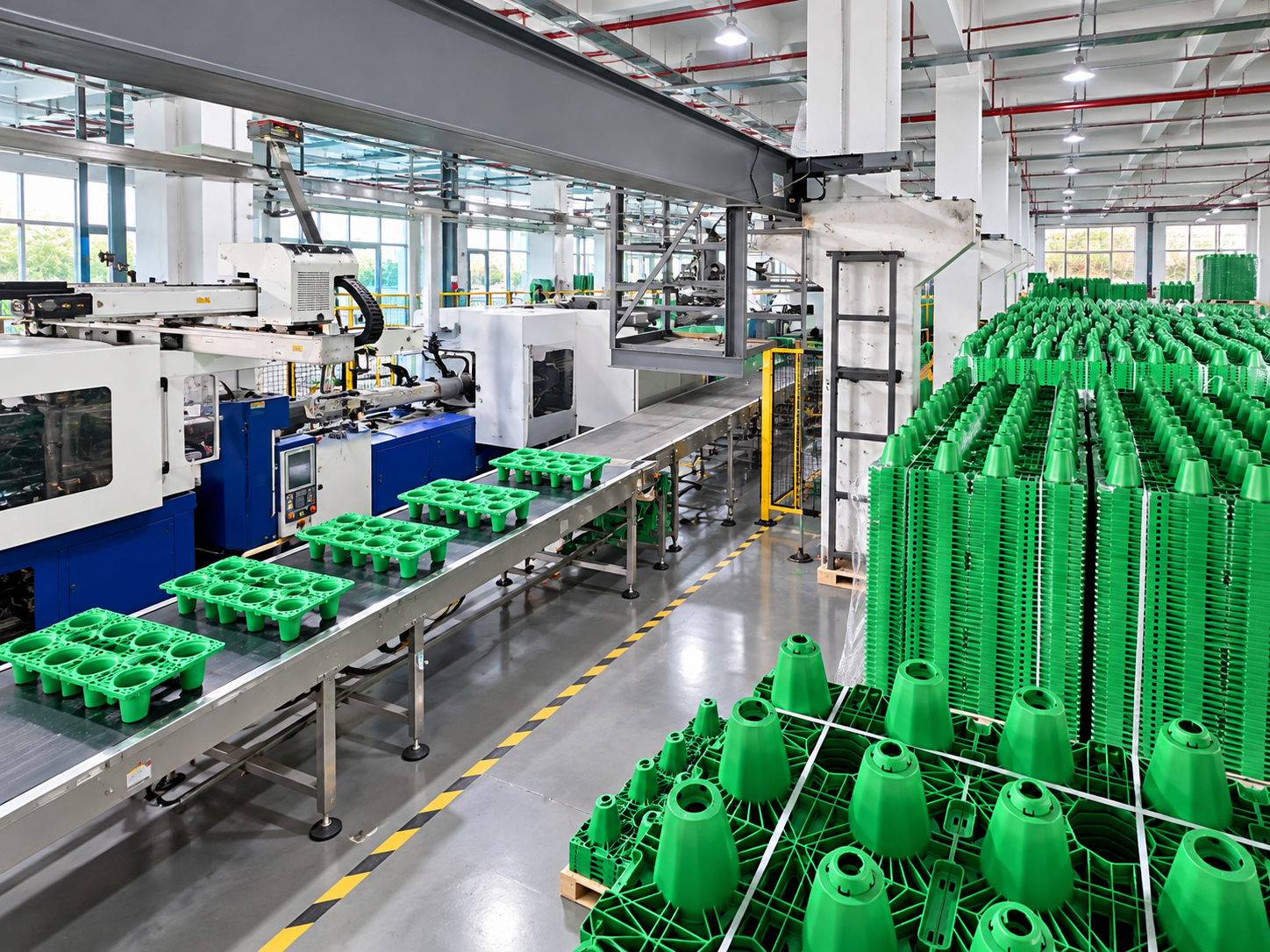
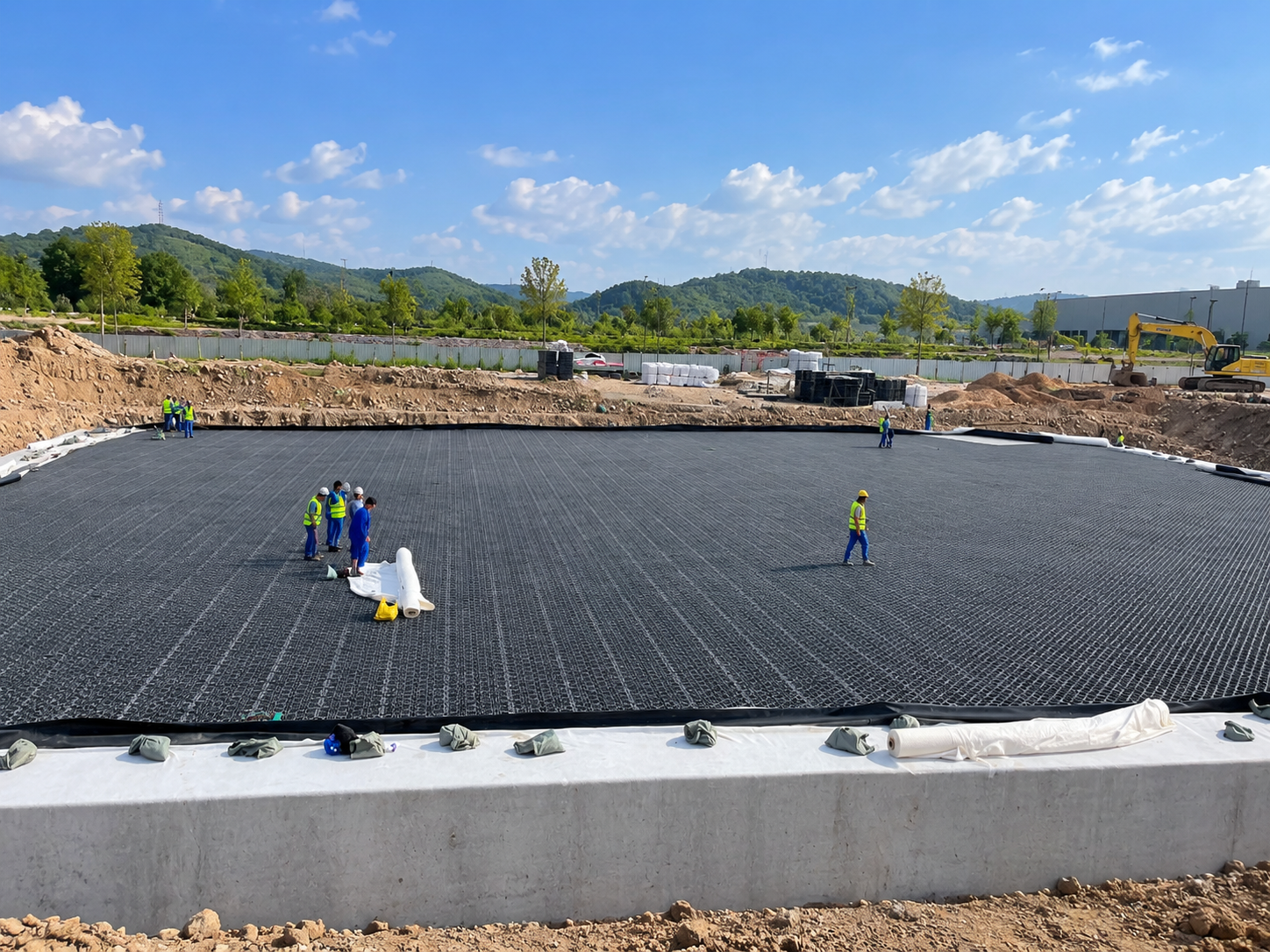
Our factory was established in 2009, and the business has approximately 15 years of export experience. The core moulded-product operation runs 30 injection-moulding machines on two shifts / 24-hour operation, with owner-confirmed working capacity of approximately 1,000 m³/day and annual export volume around 300,000 m³/year. The factory photographs below are used only for the activities visible in each frame.
Arrange a Factory or Loading Review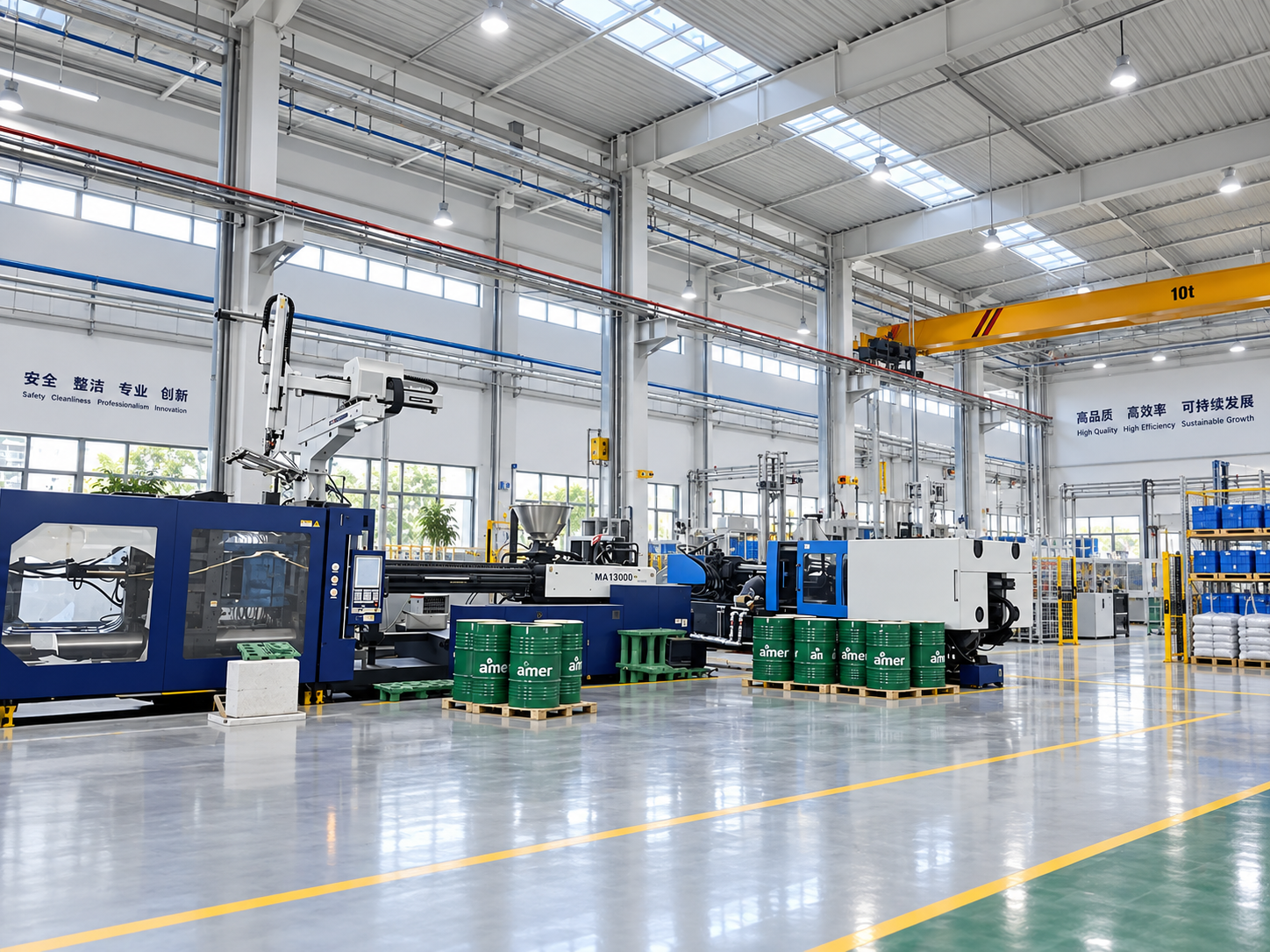
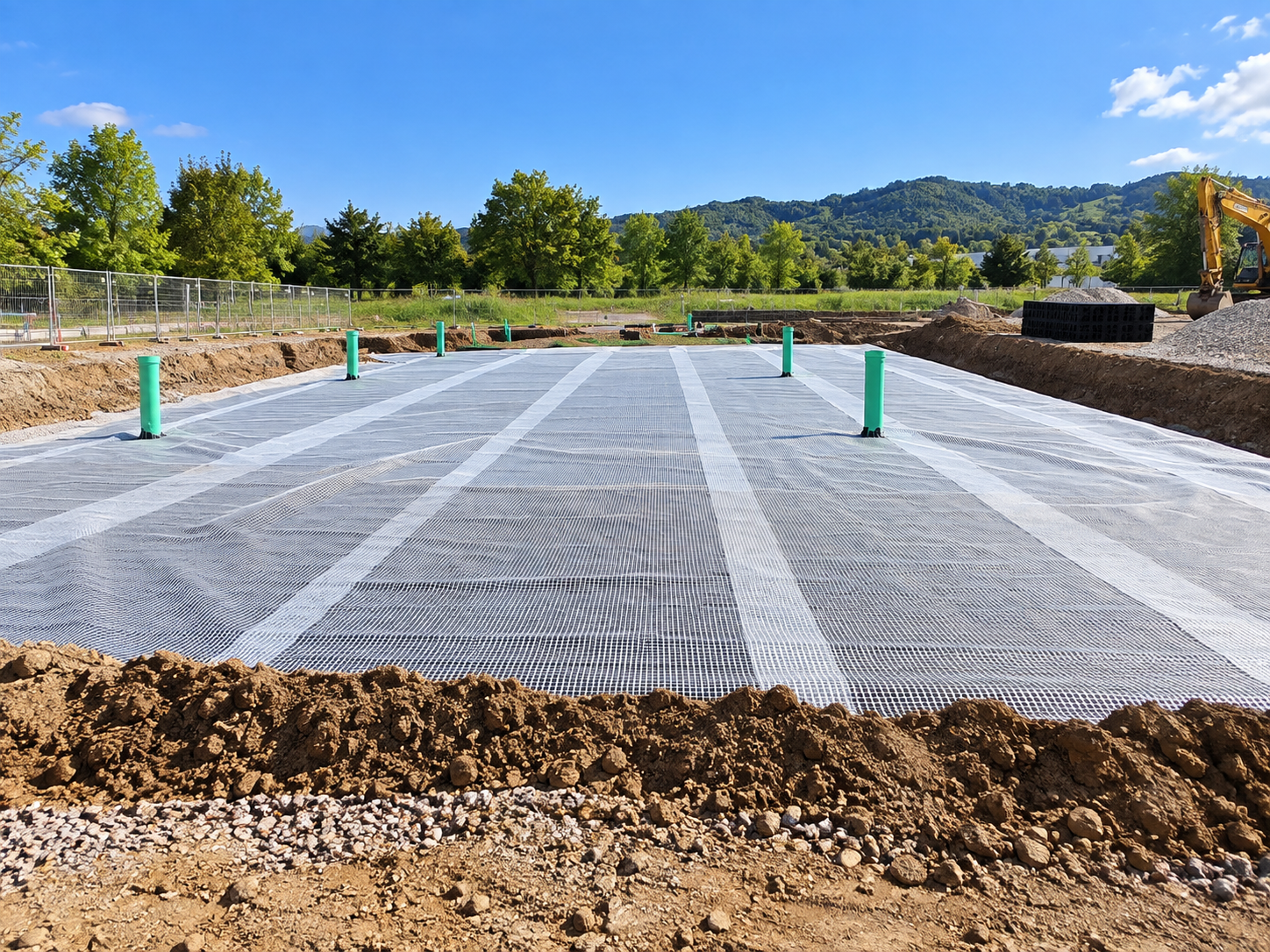
Factory review
Customer and third-party audits are accepted by appointment, and remote video inspection can be arranged; model-level evidence is reviewed against ASTM F3754-25 when it applies to the ordered crate configuration.
Loading supervision
We can review appearance, dimensions, production and quality records, packing, securing, sealing and photographic reporting.
Coordinated supply
Geotextile and Geomembrane are procured through selected suppliers and coordinated through our supply process; EPDM is handled as a separate lining product.
Route Limits and Better Next Steps
A great product review communicates that certain modular AQUA routes are premature or incomplete. Each limit listed has a direct next step, so the inquiry can continue to advance without transforming ambiguity into a product guarantee. A manufactured infiltration route is not always permit-neutral; unlike ordinary storage, it could potentially attract a jurisdiction-specific review risk.
Adjacent measures remain part of the engineer’s treatment train
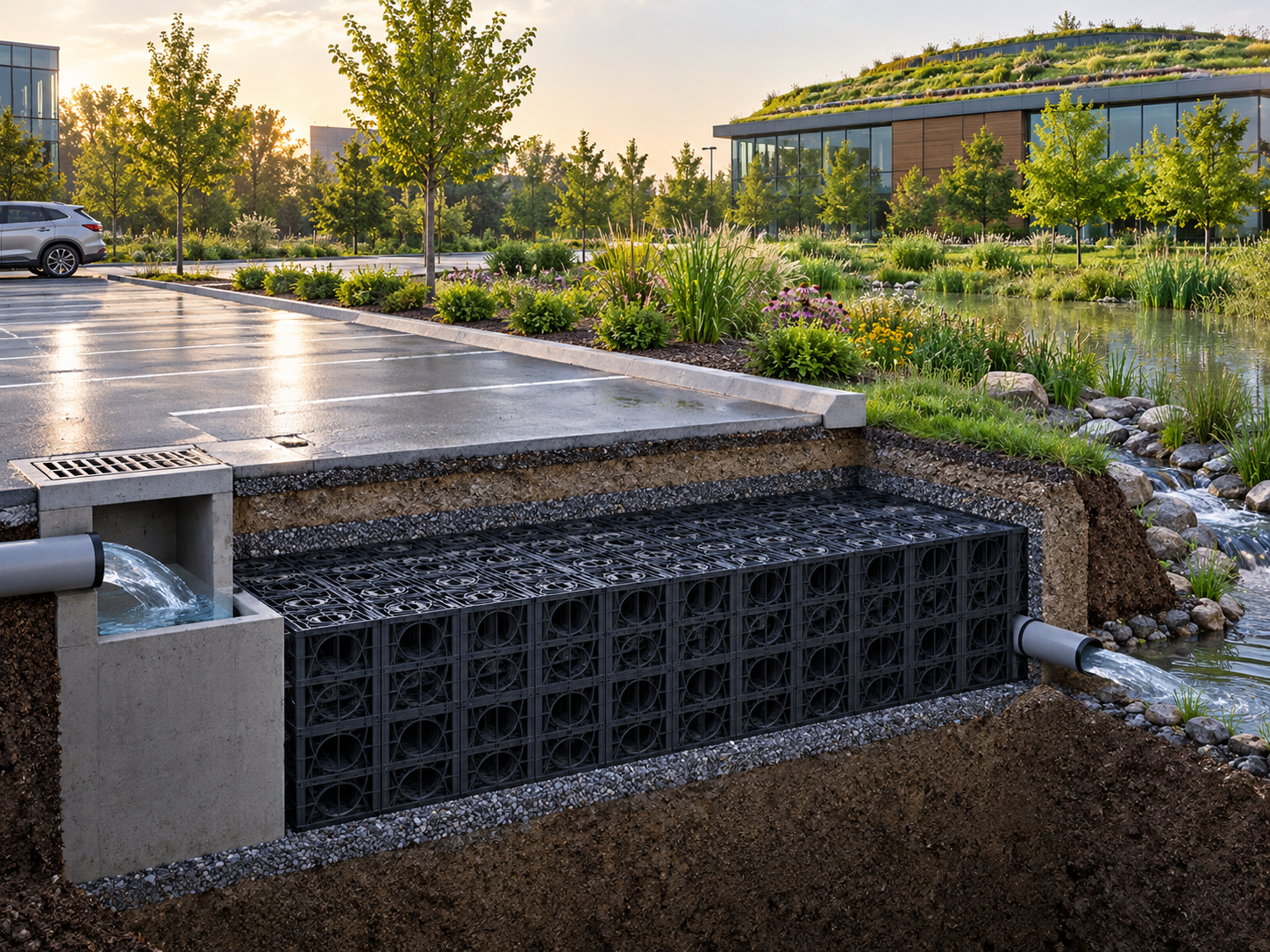
- A swale, wetland, green roof or vegetation-based measure can reduce runoff, support habitat and improve water quality at the surface.
- Stormwater runoff from parking lots may need drain, sediment, erosion, oil or contaminant controls before it reaches modular storage, an outlet or a sewer.
- AQUA’s supply service covers the seven listed product families and their project interfaces; it does not replace the design or supply of every surface treatment.
| Situation | Why the route is not ready | Better next step |
|---|---|---|
| The project needs treatment, conveyance or green-infrastructure components outside the seven-family supply range | A storage or lining product cannot stand in for a complete stormwater management system | Have the stormwater engineer set the full treatment train, then send the product interfaces for AQUA review |
| Infiltration or soakaway without site test data | Soil permeability, groundwater separation and pollution risk control whether discharge to ground is suitable | Complete geotechnical and infiltration assessment before selecting the wrap and module route |
| Unknown cover or traffic load | A unit test value does not define the installed system under earth, construction and live loads | Provide the load case, cover, foundation and applicable standard for structural review |
| United States manufactured infiltration device | The configuration can fall within the Class V stormwater drainage-well route | Check federal, state, tribal and local requirements with the responsible authority before release |
| Harvesting without an end-use brief | Storage volume alone does not fix water quality, treatment, pump or control requirements | Define source water, demand, intended use, treatment target and responsible authority |
| Installation-contractor requirement | Product supply and technical support do not replace earthworks, assembly, welding or construction responsibility | Appoint a qualified local contractor and coordinate AQUA product guidance with the approved method |
| EPDM proposed as a modular-tank liner by default | The pond-liner route and the underground system liner specification are separate decisions | Review geomembrane, protection geotextile and seam requirements against the tank design |
Stormwater Engineering & Planning Tools
Stormwater Terminology Route Builder
Navigate complex stormwater terminology to find the right drainage and retention solutions for your specific site requirements.
Access Tool →Preliminary Stormwater Storage Layout
Estimate module counts, footprint areas, and configurations based on your project’s required design storage volume.
Access Tool →Stormwater Project Input Checklist
Ensure all critical site data, load grade requirements, and discharge limits are gathered before starting your system design.
Access Tool →Stormwater Solution FAQs
How do attenuation and detention terms differ in a project brief?
Both can describe temporary storage and peak-flow control, while local usage differs. We confirm the required volume, allowable discharge, drawdown and authority terminology before routing a product.1
Is OSD the same as an attenuation tank?
OSD usually describes the on-site detention objective and its controlled release, not one mandatory product form. An attenuation tank can be one component when its volume, outlet, overflow and maintenance access match the approved design.
How is retention different from detention?
In many briefs, detention empties through a controlled outlet while retention keeps a permanent pool or holds water for infiltration or reuse. Because market usage is inconsistent, the intended outcome takes precedence over the label.
When is infiltration or a soakaway route appropriate?
Use this route only after site-specific soil, infiltration-rate, groundwater and pollution-risk checks support discharge to ground. The United Kingdom national standards, for example, require suitable ground and measured infiltration rates.2
Can the same modular tank support harvesting and attenuation?
The storage body may be reviewed for either objective, but the surrounding system changes. Harvesting additionally needs a source, demand profile, water-quality target, treatment, pump/control and authority brief.
Which AQUA product families support underground storage?
The current routes are ARW-1050 Geocellular Stormwater Tank, ARW-8053 / ARW-8025 / ARW-6841 Geocellular Stormwater Module and ARW-SA-85 / 150 / 200 / 250 Shallow Attenuation Tank. Final selection follows project volume, depth, load, layout and interface review.
Which models fit shallow installation depths?
The dedicated shallow range provides 85, 150, 200 and 250 mm heights on a 1000 × 500 mm footprint. ARW-8025 adds a 250 mm module route, and ARW-1050 has an optional 400 mm height.
What load and cover information is needed?
Send finished cover, pavement build-up, earth load, vehicle or equipment load, construction traffic, groundwater and foundation conditions. Those inputs connect the selected model and configuration to the installed-system structural review under standards such as ASTM F3754-25.4
When are geotextile and geomembrane included?
Geotextile can provide separation, filtration or membrane protection; a geomembrane can form the ordered impermeable lining route. Material, mass or thickness, roll/panel format, seam detail and project standard must be stated in the order specification.
How are moulded-product batches inspected?
The owner-confirmed approximately 2% sampling activity checks dimensions, colour, appearance and compression for core moulded-product batches. It is an inspection activity rather than a claim that every batch follows a statistical AQL acceptance plan.
What production and shipment routes are available?
One 40HQ of core moulded stormwater modules runs at approximately 2–3 days of production and up to about 7 days excluding raw-material preparation. Full containers are preferred for main modular products; suitable LCL, smaller containers and consolidation are reviewed per order.
Which test reports and documents can be requested?
We can provide selected product test reports and company certificates according to the product and order, together with agreed inspection and packing information. Every report is checked against the ordered model, sample or configuration instead of treated as a blanket portfolio certificate.
What should a product and supply review include?
Send the objective, market, volume, discharge, footprint, levels, loads, soil/groundwater, pipe interfaces, access, supporting materials, documents, destination and required date. For harvesting, add source water, intended end use, treatment target and responsible authority.