
Residential Stormwater Infiltration — Australia & New Zealand
Project Name: Backyard Rainwater Infiltration System
Location: Residential neighborhoods, Australia & New Zealand
Client: Private homeowners & property developers
Project Duration: Early 2021 – Mid 2024
Scope: Installation of modular underground stormwater ARW Crate system for detention, retention, and infiltration
Project Overview
In Australia and New Zealand, sustainable stormwater management in residential areas often requires managing runoff directly at the source. This project aimed to reduce surface flooding, improve water retention, and comply with Water-Sensitive Urban Design (WSUD) standards by installing underground modular infiltration systems beneath backyards and landscaped areas. The system integrates seamlessly into the residential environment without compromising green space or functionality.
Design & Objectives
Capture and infiltrate roof and surface runoff to reduce peak flows.
Increase on-site water retention and support potential rainwater reuse.
Minimize excavation and preserve garden and landscape areas.
Utilize a modular, flexible ARW Crate system adaptable to varying pit sizes and shapes.

Construction Highlights
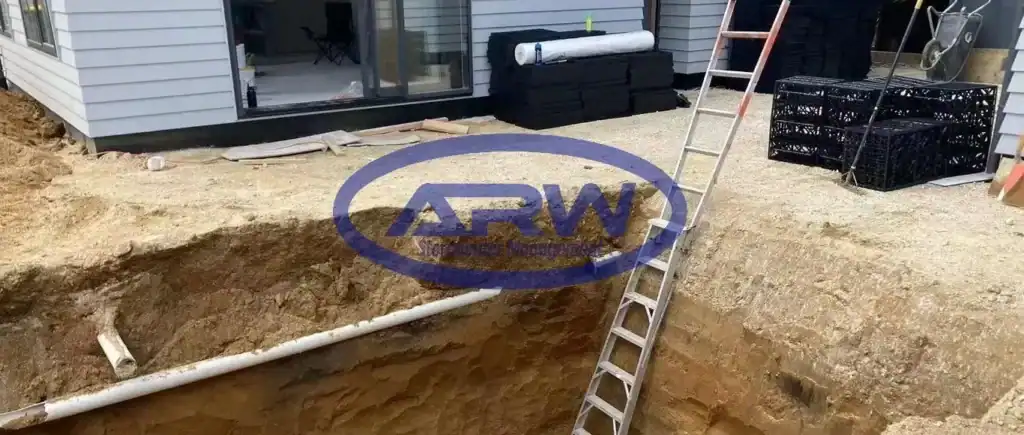
Excavation & Base Preparation: A pit was excavated according to design dimensions. The base was compacted and covered with a gravel layer to provide stability and drainage.
Geotextile Lining: High-quality geotextile was laid to prevent soil migration and maintain long-term system efficiency.
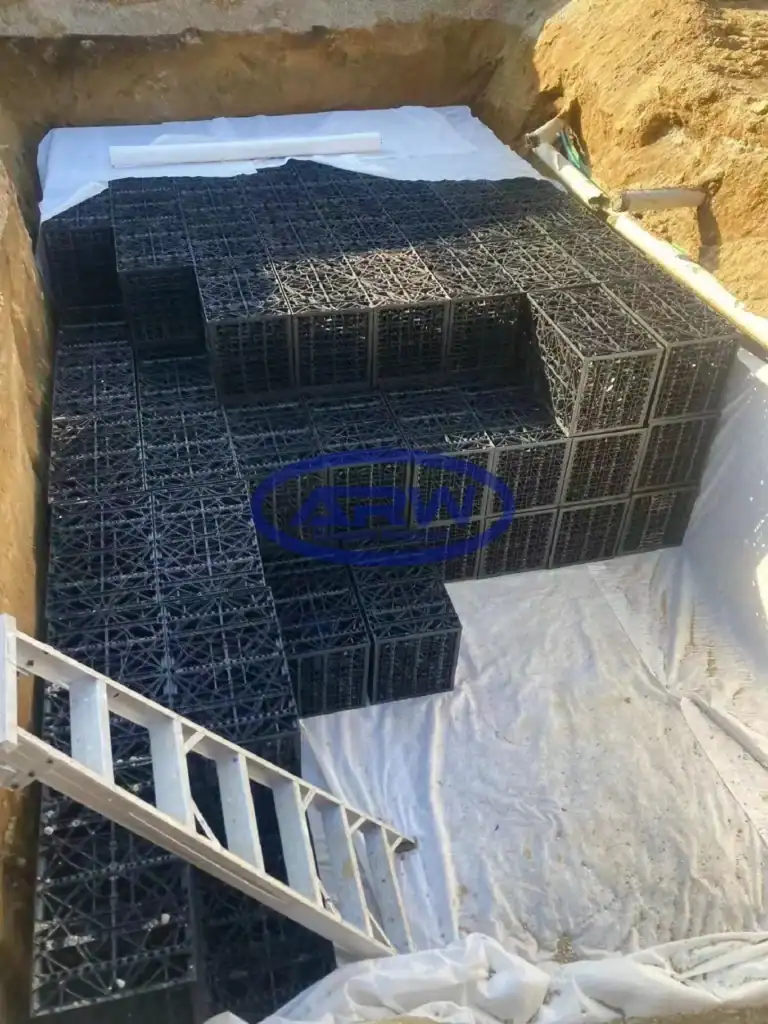
ARW Crate Installation: Modular ARW Crates, made from durable polypropylene with 95% void ratio, were assembled to form a high-capacity underground soakaway system.
Connection to Household Drainage: Rainwater from rooftops and paved areas was directed into the system via connected drainage pipes.
Cover & Backfill: Modules were covered with geotextile, and surrounding soil and gravel were backfilled and compacted.
Surface Restoration: Topsoil and landscaping were restored to integrate the system seamlessly into the backyard.
Technical Specifications
Module Size & Heights: Refer to Product Size & Specifications; adaptable for square, rectangular, multi-layer or irregular layouts.
Load Capacity: Suitable for light traffic areas such as pathways and landscaped driveways.
Material & Durability: High-strength, chemical-resistant polypropylene with a service life exceeding 40 years.
System Capacity: Designed to handle typical residential runoff volumes efficiently.
Compliance: Meets WSUD and local stormwater management requirements.

Project Benefits
Efficient Stormwater Management: Rapid infiltration and detention reduce surface runoff and flooding risk.
Space-Saving & Modular: Flexible design adapts to different yard layouts without sacrificing green space.
Durable & Low Maintenance: Robust construction with virtually no post-installation maintenance.
Sustainable & Eco-Friendly: Recyclable materials and alignment with WSUD principles promote environmental responsibility.
Seamless Integration: The system is buried underground, preserving aesthetics and landscape usability.

Result
The project successfully implemented an efficient, sustainable, and reliable residential stormwater solution. ARW Crate systems now provide homeowners with enhanced water management, reduced flood risk, and compliance with local environmental standards while maintaining the beauty and usability of their outdoor spaces.
 English
 Arabic
 French
 Russian
 Spanish