
Shallow Geocellular Sub-base Replacement System (Alternative to Deep Dig)
High-strength interlocking modules designed to replace aggregate sub-bases in high water table and hardscape projects.
Key Benefits of Shallow Dig Attenuation
95% High-Capacity Void Ratio
elivers 3x the storage of gravel aggregate. Maximizes water retention in ultra-shallow sub-base layers without raising ground levels.
Adaptable Low Profiles (85–250mm)
Specific shallow depths designed to tackle sites with high water tables or bedrock, avoiding deep dig constraints.
Rapid Modular Assembly
Lightweight 1000×500mm units allow for fast manual installation, speeding up project timelines and reducing labor costs.
Up to 30% less Cuts Excavation Costs by 30%
Shallow profile significantly reduces earthworks and muck-away fees, minimizing the environmental impact of soil removal.
Heavy-Duty Interlocking Raft
Unique clip-locks create a rigid, horizontal raft structure. Ensures lateral stability for permeable paving under vehicle loads.
Avoids Utility Conflicts
Sits safely above existing pipes and cables. Eliminates the need for expensive utility diversions on complex brownfield sites.
What is a Shallow Sub-base Replacement System?
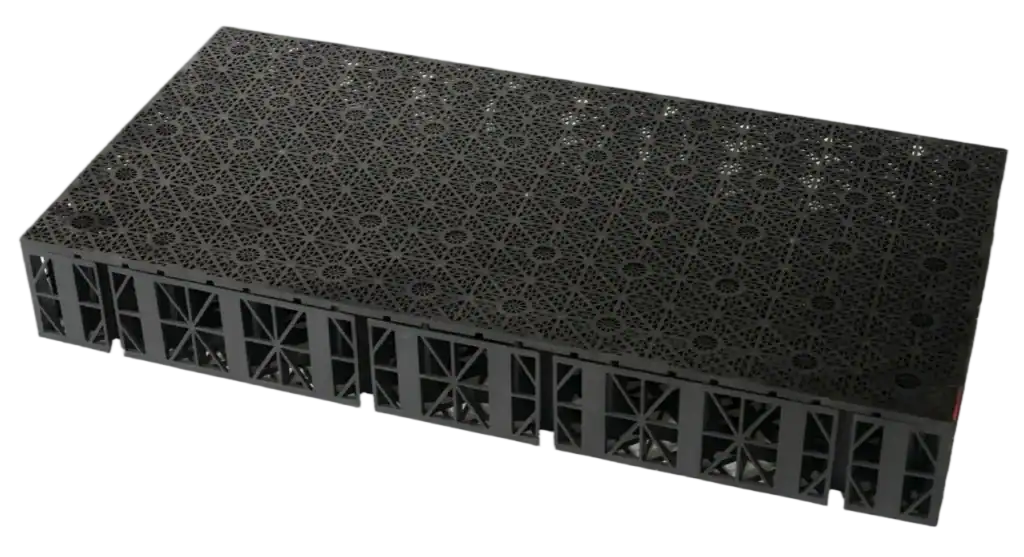
Shallow attenuation is a modern SuDS (Sustainable Drainage Systems) strategy designed to manage stormwater at the source. Instead of burying large soakaway crates deep underground, this system utilizes low-profile geocellular modules installed directly beneath the surface finish.
Functioning as a structural sub-base replacement, the system replaces traditional aggregate layers. The modules interlock to create a high-strength “raft” that supports traffic loads while providing a void space for water storage. This approach is specifically engineered for sites where deep excavation is impossible due to:
- High Groundwater Tables: Keeping the system above the water line prevents floatation and saturation.
- Shallow Bedrock or Rock: Eliminating the need for expensive rock breaking or blasting.
- Contaminated Soil: Avoiding the disturbance of hazardous ground layers on brownfield sites.
Applications
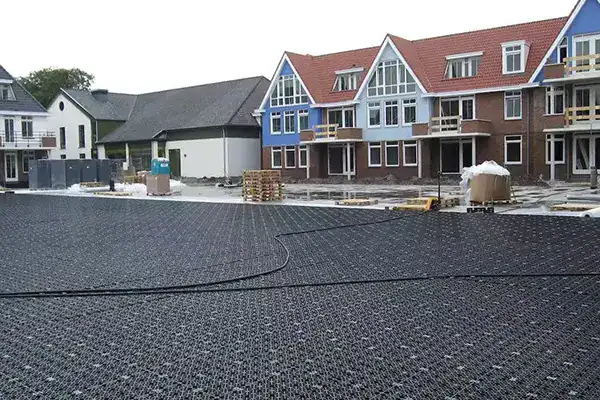
Permeable Paving Sub-base
Functions as a high-strength structural raft to replace stone aggregate. Supports permeable block paving and porous asphalt, preventing surface rutting under heavy vehicle traffic.
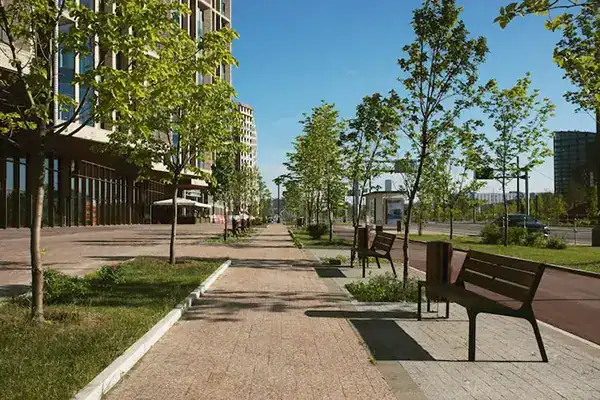
Urban Plazas & Hardscapes
Delivers robust underground storage for pedestrian zones and emergency access routes. The shallow design navigates easily around complex existing utilities in crowded city centers.
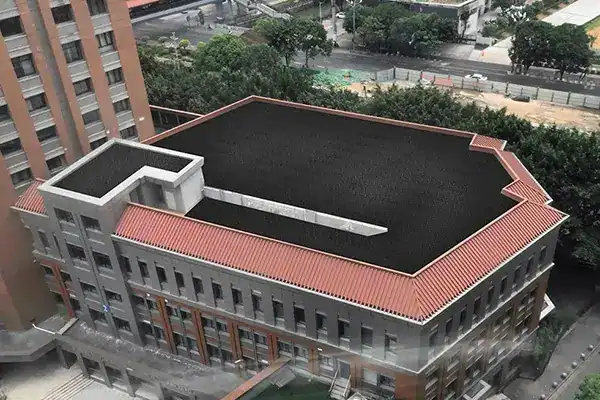
Blue/Green Roofs & Podiums
A lightweight, high-void attenuation layer for podium decks and roof gardens. Protects sensitive waterproofing membranes while managing stormwater volume in restricted depth profiles.
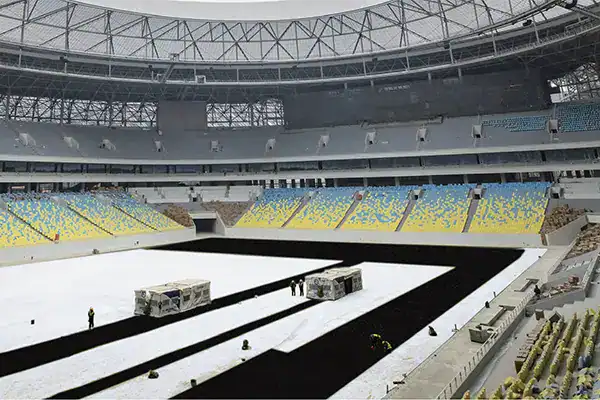
Sports Pitches & Soft Landscapes
Ensures invisible, high-speed drainage beneath natural or artificial turf. Keeps playing surfaces dry and stable during storms, eliminating the need for deep, invasive trenching.
Installation guide
- Prepare Subgrade
Excavate to design level and compact the formation. Ensure the subgrade meets the required CBR (California Bearing Ratio) to support the structural raft. - Lining Strategy
For Infiltration: Line with non-woven geotextile to allow groundwater recharge.
For Attenuation: Seal with impermeable geomembrane to create a watertight tank. - Install Tank Modules
Place Shallow Attenuation Tank modules. Secure with clip-lock connectors to form a monolithic, high-strength structural raft that resists lateral movement. - Connect & CloseInstall
Inlets, outlets, and inspection ports. Wrap the system completely with the specified geosynthetics (geotextile or geomembrane) to prevent silt ingress. - Surface Finish
Place the bedding layer directly on the tank, followed by permeable block paving, porous asphalt, or concrete finish.
Partner with us. Low input. High return. Full support.
Distribute and install our engineered water and ground solutions—with full technical support, marketing tools, and access to qualified project leads.
 English
 Arabic
 French
 Russian
 Spanish